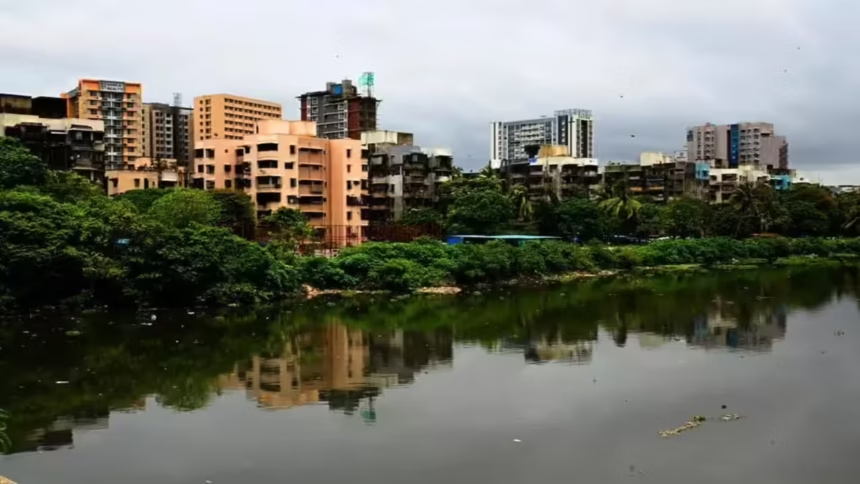
In the ₹ 65.5-crore Mithi River desilting scam, two contractors were arrested by the Mumbai Police Economic Offences Wing. The case has also brought to the fore deep-seated corruption within civic operations meant to prevent monsoon flooding. The total number of accused taken into custody now rose to five with these arrests, as the investigation is widening across multiple BMC departments and private firms.
The Scam: Fake Bills, Bogus MoUs & Inflated Work Claims
Investigators said the scam relates to fake billing for desilting work either done partially or not at all. The contractors allegedly submitted forged MoUs, manipulated measurements of silt removed from the riverbed and issued inflated invoices to siphon off crores of rupees.
EOW officials said several documents submitted to the BMC were forged showing work orders, receipts and even clearance certificates that did not match the ground reality.
What really makes this case alarming is the importance of the Mithi River in Mumbai’s flood management system. The desilting work of the river is an annual affair to prevent overflow in case of heavy rainfall. Negligence or corruption in any form directly increases the chances of devastating floods, like the one that occurred in 2005, due to the overflow of Mithi contributing to the citywide deluge.
How the Fraud Was Detected
The scam came to light when there were discrepancies in claimed quantities of desilting and the measurements from the independent verification teams. Civic auditors also found that the quantity of silt shown in the reports received from the contractors was several times what was physically possible.
Further internal investigations revealed that :
Inflated de-silting logs
Fake supporting documents
MoUs inked with Shell subcontractors
Payments released without cross-verification
These findings led the BMC to file a detailed complaint, following which the EOW registered a criminal investigation.
Arrests & Charges
The two latest arrests include principal contractors who are alleged to have played leading roles in generating forged paperwork and coordinating with internal civic officials. Their identities are not being released pending further investigation, but officers have stated that they served as central figures in the scam’s execution.
They are charged with:
IPC Sections 420: cheating
465, 467, 468, 471 (forgery and use of forged documents)
120B criminal conspiracy
The EOW is now scrutinizing the financial trails, bank statements, and communications between contractors and civic officials to identify any other beneficiaries.
Impact on Mumbai’s Flood Preparedness
The scam has serious implications for Mumbai’s monsoon preparedness. The Mithi River is a lifeline for the drainage of stormwater, particularly in densely populated areas such as Kurla, Bandra-Kurla Complex (BKC), Saki Naka, and Marol. Inadequate desilting increases water levels during rainfall, causing backflow, road flooding, and disruption to transport networks.
Experts warn corruption in desilting work puts the city at risk, especially with climate change bringing heavier and more unpredictable rainfall. Had it not been discovered, Mumbai could have faced potential severe flooding in the coming seasons.
EOW’s Next Steps
The investigation remains active, and law enforcement officials say that more arrests are probably forthcoming. The EOW is presently:
Carrying out forensic audits of the desilting bills of previous years
Verifying the consistency between GPS and photographic evidence submitted by contractors
Questioning BMC engineers, supervisors, and field officers
Tracing financial kickbacks and irregular transactions
The officials added that the scam is likely to be much bigger than what was initially estimated, and that the figure of ₹65.5 crore may increase further as more evidence comes to light.
BMC’s Response
The BMC has suspended a few officials linked with the desilting department and has now ordered tighter monitoring. These include:
Photos with geo-tagging for compulsory desilting work
Real-time digital logging
Third-party audits
Increased on-ground verification
Accountability will be ensured, civic leaders have pledged, while this season’s monsoon-preparedness work will be closely monitored.
Public Trust & Larger Questions The case has led to public debates on corruption in civic contracts. Considering the fact that infrastructure and monsoon management is crucial for Mumbai’s safety, this scam has brought about questions concerning transparency, contractor networks, and departmental supervision. City policy analysts say systemic reforms, not individual arrests, are needed for lasting change.