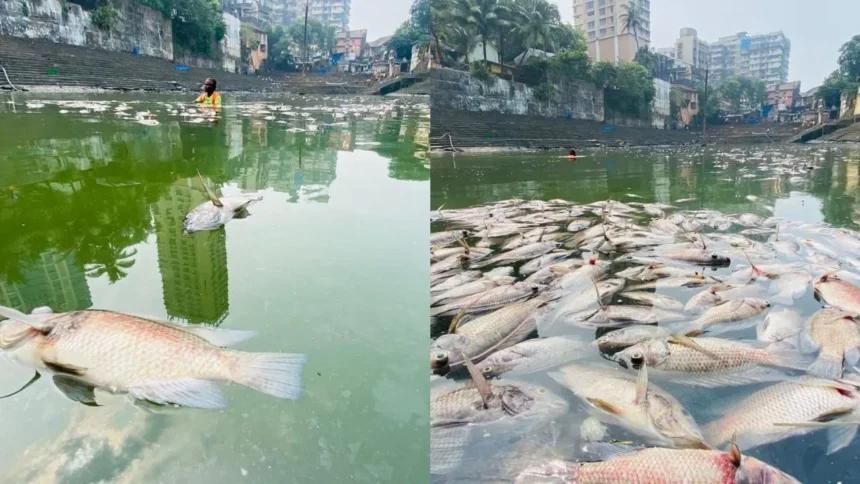
The ancient Banganga Tank in the Walkeshwar Temple complex in Mumbai is once again at the center of environmental attention. After annual Pitru Paksha rituals, where devotees offer food and flower offerings to their forefathers, the tank has experienced a huge ecological loss. This year, the Brihanmumbai Municipal Corporation (BMC) took out around 10,000 kg of dead fish and ritual offerings from the water body.
The Rituals and Their Impact
Pitru Paksha, the time for ancestral worship, witnesses thousands of pilgrims submerging offerings into the Banganga Tank. Though these rituals are traditional, the high volumes of food and flower offerings tend to create a glut of organic matter in the water. This can lower oxygen levels, creating hypoxic conditions that are harmful to aquatic life. The rotting of these offerings can also lead to the release of toxins further worsening the situation
Mongabay-India
This has been described by environmentalists as an “annual tragedy,” pointing to systemic lack of attention by the concerned authorities like Archaeological Survey of India (ASI), Maharashtra Pollution Control Board (MPCB), and BMC.
Despite several such incidents, residents as well as environmentalists pummel the absence of a well-defined governmental policy for handling ritual waste at the site.
BMC’s Response and Measures
To curb the rising trend, the BMC has taken a number of steps to counter the negative impact. They have installed dewatering pumps to fill the tank with more oxygen and artificial ponds to channel future offerings. The artificial ponds are meant to offer devotees an alternative platform for their religious practices, thus lessening the environmental load on the Banganga Tank
The Times of India.
The Call for Sustainable Practices
Although initiatives of the BMC are welcomed, environmentalists suggest that a more elaborate solution is needed. They propound setting up permanent artificial lakes with filtration systems to deal with the deluge of offerings during special ritual seasons. There also is a call for public campaigns to make devotees aware of the environmental consequences of their activities and promote responsible behavior.
The Bombay High Court has also intervened in the issue, reiterating the urgency for guidelines to avoid immersing idols and offerings in natural water bodies. The court directions are intended to safeguard the sanctity and ecological equilibrium of heritage places such as the Banganga Tank.
Conclusion
The recurring fish deaths at Banganga Tank serve as a stark reminder of the delicate balance between cultural practices and environmental preservation. While rituals hold significant spiritual value, it is imperative to adopt sustainable practices that safeguard our natural heritage. The establishment of artificial ponds, coupled with public awareness and stringent regulations, can pave the way for a harmonious coexistence of tradition and ecology.