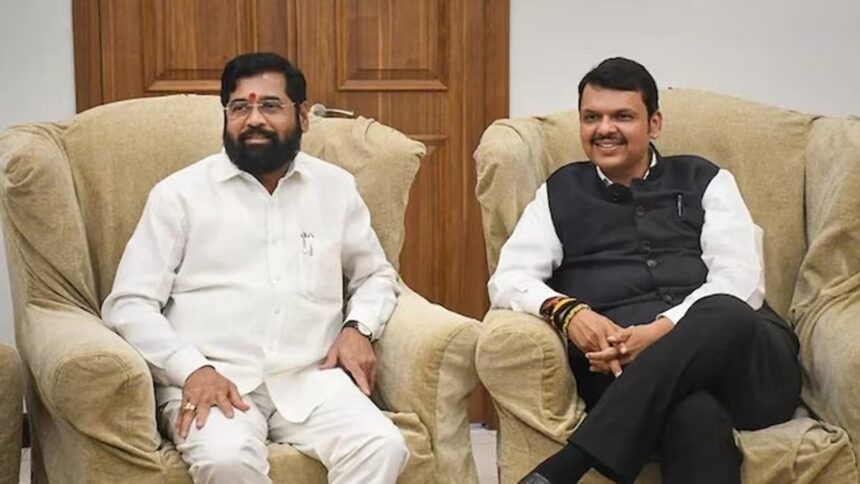
Friction within the ruling alliance has mounted as Maharashtra gears up for a series of crucial civic elections. The Shiv Sena, led by Chief Minister Eknath Shinde, and the Bharatiya Janata Party have publicly raised concerns about the “poaching” of party workers. Tensions rose after the Shiv Sena officially conveyed its discontent with BJP’s state leadership, forcing a high-level meeting between the two top leaders of the alliance government, Chief Minister Eknath Shinde and Deputy Chief Minister Devendra Fadnavis. After discussions, both leaders agreed on a mutual no-poaching pact to prevent workers from switching sides ahead of the elections.
The civic polls-expected to be some of the most closely watched in the state-carry a high degree of political weight, especially in Mumbai, Thane, Pune, and Nashik. Municipal corporations control billions in local development funds, decisions on urban planning, and grassroots political influence. The ruling alliance, collectively referred to as the Mahayuti, is keen on maintaining unity, but recent internal tensions have raised concerns for both parties.
The Trigger: Worker Shifts and Internal Grievances
According to senior Shiv Sena leaders, several of their local workers and office-bearers have recently shifted loyalties to the BJP in key urban pockets. The Sena leadership alleges that these moves were “influenced” rather than voluntary—an accusation which caused unease within the alliance.
In reply, BJP leaders insisted that workers who change parties do so on their own volition, but promised to allay the apprehensions voiced by their allies. The issue was serious enough for Chief Minister Shinde and Deputy CM Fadnavis to have a direct intervention, leading to the agreement that neither party would henceforth try to lure or induct the other’s grass-root workers.
Why the Civic Polls Matter
Municipal elections in Maharashtra are heavily contested, and the BMC is known as the richest civic body in India. Political influence here dictates infrastructure projects, redevelopment priorities, business regulations, and real estate patterns, right down to local governance.
The stakes are high, especially for the Shiv Sena, which has traditionally been dominant in the BMC. The forthcoming polls are considered a litmus test of grassroots support after the split within the party in 2022 and the formation of the Shinde-led government with BJP support. For the BJP, too, capturing civic bodies is crucial for consolidation of political supremacy, having expanded steadily across urban Maharashtra.
This dynamic makes worker loyalty an important asset in local elections, where grassroots mobilization often decides the outcome.
Alliance Stability Under Pressure
While both the partners have publicly been insisting that the alliance was rock-solid, political analysts see the ongoing tussle as symptomatic of deeper tensions. Sharing of power, control of civic bodies and strategies over booth-level mobilisation have been sensitive points in the politics of Maharashtra.
Sources in the alliance say differences might resurface when seat-sharing is discussed, especially in Mumbai and Thane, where both parties have traditionally had big organisational bases.
However, the leadership on both sides has tried to project cohesion. Fadnavis has asserted that the alliance would “fight the civic polls together and win together,” while Shinde has spoken of co-operation and co-ordination between the coalition partners. The no-poaching pact is thus being positioned as one that will help maintain harmony and avoid misunderstanding during the critical pre-election period.
Opposition Eyes an Opportunity
The MVA—that includes the Uddhav Balasaheb Thackeray-led Sena, Nationalist Congress Party (Sharad Pawar faction) and Congress—is keeping tabs on the developments. The Opposition leaders say that public spats within Mahayuti show “cracks” in the ruling coalition.
Since the MVA is also grappling with internal friction, the opposition hopes this discomfort of the ruling alliance will translate into gains in coming elections, especially in the urban Marathi-speaking belts where party loyalty and local standing becomes vital.
A Ground Strength Test for Both Parties The coming weeks are going to be crucial as both the BJP and Shinde-led Shiv Sena intensify campaigning, finalize candidate lists, and try to energize workers. The no-poaching agreement may have reduced immediate tensions, but political watchers believe competitive pressures will remain high until the final votes are cast. For now, the ruling alliance in Maharashtra is concerned with appearing united, but the undercurrents of frictions underscore how vital, competitive, and high-stakes the coming civic polls really are.