A major traffic crisis unfolded on the Mumbai–Pune Expressway this week after a gas tanker accident triggered one of the longest gridlocks in the highway’s history. Thousands of commuters were stranded for hours, some for more than a full day, without access to drinking water, food, or basic facilities.
The incident not only disrupted travel between Mumbai and Pune but also exposed serious concerns about emergency preparedness on one of India’s busiest expressways.
Here is a clear and simplified look at what happened, why the traffic chaos lasted so long, how commuters were affected, and what authorities are saying about preventing such situations in the future.
What Caused the Massive Traffic Jam
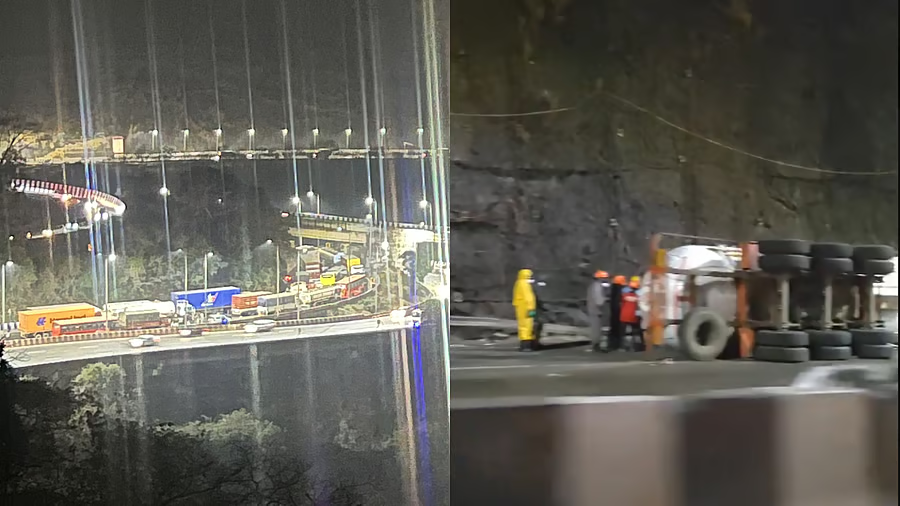
The disruption began on Tuesday evening when a tanker carrying highly flammable propylene gas overturned near the Adoshi tunnel in the Borghat section of the expressway. The tanker was reportedly travelling from Kochi to Surat.
The accident caused a gas leak, which immediately raised safety concerns. Authorities shut down the Mumbai-bound lane as a precaution to prevent any possible fire or explosion.
Because the Mumbai–Pune Expressway is a crucial link used daily by nearly one lakh vehicles, the closure quickly led to severe congestion on both sides.
Traffic started building up around 5:15 pm on Tuesday and continued through the next day. The situation improved only late Wednesday night after the tanker was emptied and removed.
Scale of the Gridlock
The expressway stretch witnessed extremely long queues of vehicles.
Traffic towards Pune backed up till the Khalapur toll plaza.
On the Mumbai-bound side, queues stretched around 10 to 12 kilometres.
Many travellers remained stuck for nearly 27 to 30 hours, making it one of the most prolonged traffic disruptions on this route.
Gradual traffic movement resumed around midnight after safety clearance was given.
Why Clearing the Tanker Took So Long
Handling the accident was not straightforward because the tanker was carrying propylene gas under high pressure.
Emergency teams including the National Disaster Response Force, fire brigade units, highway police, and a specialised chemical response team rushed to the site. However, containment took time due to several factors:
High internal pressure inside the tanker
Cracked valves making gas transfer risky
Need to prevent ignition at all costs
Safety perimeter of about 500 metres created
Officials had to carefully transfer nearly 21 tonnes of gas into another tanker before removing the damaged vehicle.
To reduce fire risk, fire brigade teams continuously sprayed water to keep temperatures under control while containment operations continued.
Commuters Faced Severe Hardships
For thousands of commuters, the experience turned into an exhausting ordeal rather than just a traffic delay.
Many people reported:
Running out of drinking water
No access to toilets
Food shortages
Health discomfort from long sitting hours
Anxiety and fatigue
Families travelling with children, elderly passengers, and those with medical conditions faced the biggest challenges.
Some travellers said they had to ration water, skip meals, and remain inside vehicles overnight without any movement.
Families With Children Faced Special Challenges
Parents travelling with young children had an especially tough time.
One commuter travelling with two toddlers described how milk supplies ran out and managing diapers inside a parked car became extremely stressful. With limited space and no facilities nearby, families struggled to keep children comfortable during the long wait.
Such experiences highlighted the need for emergency arrangements on highways.
Elderly Passengers Also Affected
Senior citizens were among the worst affected groups. Sitting continuously without restrooms caused physical discomfort, dehydration, and health concerns.
Some travellers had to take alternative routes later to reach urgent medical appointments, further increasing travel time and stress.
Alternative Routes Also Became Congested
Authorities advised commuters to take alternate routes via Tamhini Ghat, Karjat, Malshej Ghat, and Aale Phata.
However, these secondary routes soon became crowded as well. Many travellers reported that these roads lacked adequate facilities and could not efficiently handle the sudden surge in traffic.
This created additional delays and frustration.
Extreme Measures Taken by Some Travellers
In one unusual instance, a businessman arranged a helicopter ride after being stuck for several hours. He later shared aerial views of the traffic jam and suggested that emergency evacuation options should be planned on major highways.
While such solutions are not practical for most commuters, the situation sparked discussion about better emergency infrastructure on critical routes.
Government Response and Inquiry Ordered
The scale of the disruption prompted the Maharashtra Chief Minister to order an inquiry into the incident.
Authorities have been asked to:
Investigate the cause of the accident
Review emergency response efficiency
Recommend improvements for future incidents
Officials aim to identify gaps in disaster management so similar situations can be handled faster in the future.
Police Investigation Details
According to police records, the accident occurred due to negligent driving at a dangerous speed without considering road conditions.
The tanker driver sustained injuries and received medical treatment. A formal case has been registered, and investigations are ongoing.
Authorities are examining all factors including vehicle condition, driving speed, and safety compliance.
Lessons From the Incident
This episode has highlighted several key concerns about highway safety and emergency management.
Emergency preparedness
Major highways need quick-response plans, including access to water, food, medical support, and sanitation facilities.
Traffic diversion systems
Better diversion planning can prevent extremely long traffic queues during accidents.
Public communication
Real-time updates can help travellers choose alternate routes earlier.
Infrastructure upgrades
Experts suggest more emergency exits, rest points, and safety facilities along expressways.
Importance of Safety Measures for Hazardous Transport
Transporting hazardous materials like flammable gas requires strict safety protocols.
Proper vehicle maintenance
Careful driving in ghat sections
Real-time monitoring systems
Emergency response coordination
Such precautions reduce the risk of accidents and large-scale disruptions.
Future Outlook for Highway Management
Authorities are expected to review current disaster response strategies. Improved coordination between police, disaster teams, highway authorities, and local administration may help handle future incidents more efficiently.
Technology such as smart traffic monitoring, early warning systems, and digital alerts could also play a bigger role.
Final Thoughts
The Mumbai–Pune Expressway gridlock was more than just a traffic problem. It became a real-life crisis for thousands of commuters who found themselves stranded without basic necessities.
While safety precautions were necessary due to the hazardous gas leak, the incident has raised important questions about infrastructure readiness and emergency planning on major highways.
Ensuring smoother crisis management, better traveller support, and stronger safety systems will be essential to prevent similar situations in the future