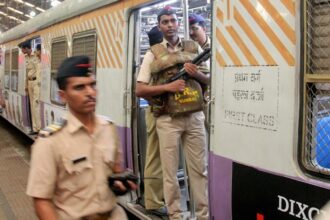
In a shocking incident, an attendant of a patient brutally assaulted some resident doctors at the R. N. Cooper Municipal General Hospital, commonly known as Cooper Hospital, in Vile Parle (Juhu), while trying to save a critically ill patient. The incident underlines the pressing concern of hospital security, apart from highlighting questions regarding the safety of health professionals at work.
Late on Friday night, 7 November 2025, doctors in the casualty ward of Cooper Hospital began to conduct CPR on an unconscious female patient with no pulse. Despite several attempts to revive her, she could not be saved. According to sources within the hospital, shortly after the declaration of death, one of the patient’s attendants suddenly turned violent and attacked three of the medical staff on duty: the CMO, a resident doctor from medicine, and an intern.
According to the statement issued by the Maharashtra Association of Resident Doctors, the attacker repeatedly hit the doctors’ face, chest, and abdomen while they were on duty. MARD condemned the “brutal and unprovoked assault” and expressed criticism against the hospital’s security staff, who though present in the ward, did not intervene. Free The doctors have sustained injuries and are being kept under observation. A formal complaint has been lodged with the local police at Juhu.
Why This Matters
Safety of healthcare professionals: Hospitals, especially in public‐sector settings with high patient volumes, must provide secure and safe environments for staff to carry out lifesaving tasks. Attacks like this undermine morale and can make doctors more hesitant to take risks or stay late in emergency settings.
Impact on the care of the patients: If physicians feel threatened, it will hamper care-delivery: delays and fear of confrontation or avoidance of complex cases follow. This may escalate patient risk, particularly in casualty or ICU settings.
Public trust and system stress: When healthcare providers are attacked, the message is sent to the public and the workforce that frontline healthcare may not be protected. That has broader implications for retention of staff and recruitment of new talent in government hospitals.
Security and structural lapses: The incident brings into focus the structural deficiencies in security personnel deployment, hospital design, visitor access control, and conflict de‑escalation protocols.
Underlying Factors
High-stress environment: Emergency wards have critically ill patients, families under stress, and unpredictable outcomes. The death of a patient is often associated with high emotions, and in absence of clear communication or counseling, tensions may flare.
Inadequate security: The doctors said that even though there were security guards present in the ward, the assault occurred un‑checked. MARD has demanded deployment of trained, armed and accountable security personnel in critical areas like casualty, ICU and maternity wards. Free Press Journal
Gaps in communication: There is not always timely communication with families over prognosis, chances of survival, or post‑mortem procedures. This may exacerbate resentment if the outcomes are bad.
Visitor management:visitor policies may be less strict for visitors in the EDs, promoting crowding, unmonitored attendants, and an increased risk of violence.
What is being demanded
MARD has urged the arrest of the attacker immediately and exemplary punishment under relevant laws. Free Press Journal
Suspension and review of the security staff of the hospital who failed to prevent the incident.
Round-the-clock security teams in casualty, ICU, emergency, and other high-risk zones, backed by CCTV surveillance.
The management of the hospital should audit and upgrade safety protocols, conflict‑management training, and visitor handling along with the municipal authorities, the BMC.
Greater awareness campaigns for attendants regarding hospital policies, emergency procedures, and expected outcomes.
Wider Context
Violence against doctors at Cooper Hospital is nothing new. Several high-profile cases of assaults on healthcare staff in hospitals have been reported across India, especially in incidents related to patient deaths or perceived negligence. Just this past August 2024, in the nearby Sion Hospital, there was an incident in which a female resident doctor was assaulted by an intoxicated patient and relatives following a routine procedure.
Such incidents are symptomatic of deeper issues: overloaded public healthcare facilities, staffing shortages, limited time per patient, and emotional stress for patients’ relatives. Added to inadequate security infrastructure, this places health workers at risk.
Moving Forward
For Cooper Hospital and institutions like it, the road forward requires both immediate and long‑term measures:
Short term: Speedy legal action against the assailants; support for the assaulted doctors-medical, psychological, and legal; enhancement of security presence and rules relating to visitors.
Medium term: Train casualty and ICU staff in de‑escalation techniques and verbal communications with relatives; create visible signage and information points about emergency processes; streamline casualty access for relatives to reduce confusion.
Long-term measures would include redesigning hospital architecture to segregate high-risk areas, creating security command centers, installing surveillance cameras, conducting regular security audits, and providing adequate staff so that doctors do not get overworked, which could lead to burnout and mistakes.
The attack on doctors at Cooper Hospital serves as a wake‑up call. When even the people who rush to save others’ lives are threatened while discharging their duties, the healthcare system stands to lose one of its strongest pillars: its people. Safety for doctors is not solely an issue of job security; it is about sustaining quality patient care and the integrity of public health institutions. If action is taken swiftly and comprehensively—not just to reprimand this one incident, but to transform hospital safety culture—Cooper Hospital has a chance to turn this tragedy into a catalyst for meaningful reform: protection of those who heal is non-negotiable.