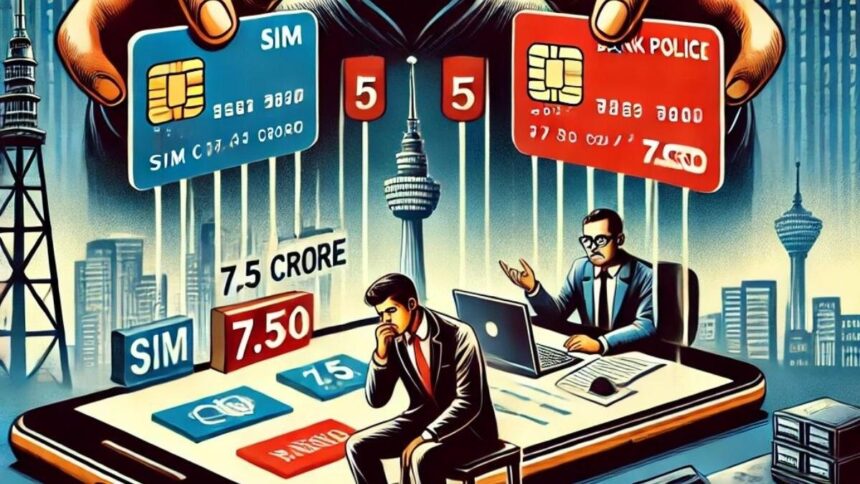
In a court decision that helps people who buy things a High Court has told a bank to give back ₹38 lakh to a customer who lost money in a SIM swap scam. The court said clearly that customers can’t be blamed if they didn’t do anything
What is SIM Swap Scam?
SIM swap scam is when bad people get control of your phone number by copying it to another SIM card. Then they can see the codes sent to your phone and use them to take money from your bank account without you knowing.
In this case the customers phone number was. The bad people took a lot of money from their bank account.
Courts Important Point
The court said that a customer can’t be blamed unless they did something
The customer didn’t share their codes or passwords.
There was no proof that the customer was careless or didn’t keep their information safe.
The scam happened because of problems with the banks system not because of something the customer did.
The court decided that the bank must give the customer back the ₹38 lakh they lost.
Banks Responsibility
The decision reminds banks that they must keep their systems safe. Banks should:
- Watch for activity in accounts
- Use ways to check if someone is who they say they are
- Act fast if they see something
- Work well with phone companies to prevent SIM scams
The court said that customers trust banks to keep their money safe and banks can’t blame customers if something goes wrong.
What This Means for Online Banking
This decision will likely affect how online banking works in India. As more people use banking and apps to send money there are more cases of scams. So protecting customers is very important.
Experts think this decision sets an example:
- Banks might need to make their systems better to catch scams
- Customers might have protection if theres a disagreement
- Rules might change to make banks more responsible
Advice for Customers
Even though the court decided in favor of the customer people should still be careful:
- Never share your secret codes, PINs or passwords
- Tell your bank away if you lose your phone signal (this might mean someone is trying to swap your SIM)
- Set up alerts and limits for your transactions
- Contact your bank away if you see something suspicious
The High Courts decision is clear: people who are victims of online scams can’t be blamed for problems with the system. By making the bank responsible the decision helps people trust the system, in India and shows that stronger cybersecurity is needed in a digital economy.