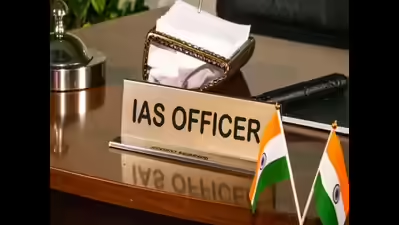
In a significant anti-corruption crackdown, the Central Bureau of Investigation (CBI) has registered a case against an Indian Administrative Service (IAS) officer and a private city-based firm in connection with an alleged ₹1 crore bribery scandal.
Case Registered Under Anti-Corruption Laws
According to officials, the case has been filed under provisions of the Prevention of Corruption Act. The CBI alleges that the IAS officer accepted or facilitated illegal gratification in exchange for granting undue favors to the private firm.
The agency has named both the senior bureaucrat and representatives of the firm in its FIR, indicating a coordinated nexus between public office and private interests.
Raids and Evidence Collection
CBI teams conducted search operations at multiple locations, including residential premises and office spaces linked to the accused. During the raids, officials reportedly seized:
Financial documents
Digital records
Transaction details
Communication evidence
These materials are expected to play a key role in establishing the money trail and proving quid pro quo arrangements.
Alleged Modus Operandi
Preliminary findings suggest that the bribe—estimated at around ₹1 crore—was linked to securing approvals, clearances, or favorable decisions from the concerned government department.
Investigators are examining whether the payments were routed through intermediaries, shell entities, or disguised as legitimate transactions to avoid detection.
Legal and Administrative Implications
If proven, the case could have serious consequences for the accused IAS officer, including:
Suspension or dismissal from service
Criminal prosecution
Attachment of assets
For the private firm, potential penalties include blacklisting, financial scrutiny, and legal action against key executives.
Wider Impact
This development highlights ongoing efforts by investigative agencies to crack down on corruption within administrative systems. It also sends a strong signal regarding accountability in both public and corporate sectors.
Experts note that such cases often uncover broader networks, and further arrests or summons may follow as the investigation progresses.
Conclusion
The ₹1 crore bribery case underscores persistent challenges in governance and the need for transparency in public dealings. With the CBI actively pursuing evidence and expanding the probe, the case is expected to evolve in the coming days, potentially exposing deeper links between officials and private entities.