NCP Struggles in Western Maharashtra Despite Pawar Reunion in Civic Polls
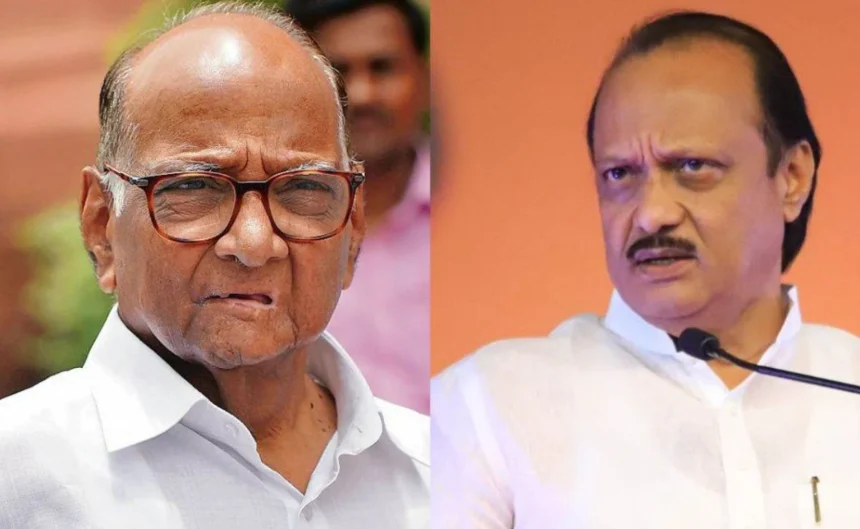
The Nationalist Congress Party (NCP) suffered a major blow in the 2026 civic elections across western Maharashtra, raising serious questions about the party’s future in urban politics. Despite a rare reunion between Ajit Pawar and his uncle Sharad Pawar ahead of the polls, the party failed to make a meaningful impact in key cities like Pune and Pimpri-Chinchwad.
Instead, the Bharatiya Janata Party (BJP) delivered a sweeping victory, firmly establishing itself as the dominant urban force in a region once considered the undisputed stronghold of the Pawar family.
High Hopes From Pawar Reunion, Low Returns on Ground
The 2023 split between Ajit Pawar and Sharad Pawar had divided the NCP into two factions. When the two sides decided to come together for the civic polls, many party workers believed it would revive the NCP’s fortunes, especially in western Maharashtra.
This region has historically been the Pawars’ power base, with deep influence over cooperatives, local bodies, and urban administrations. The reunion raised expectations that the party could regain lost ground and challenge the BJP’s growing dominance.
However, the election results told a very different story.
BJP’s Massive Win in Pune Municipal Corporation
The most striking setback for the NCP came in the Pune Municipal Corporation (PMC).
The BJP contested all 165 seats in the civic body and emerged with a massive lead, winning around 123 seats. The scale of the victory left little room for doubt about the party’s dominance in Pune.
In contrast, the combined performance of the Ajit Pawar-led NCP and the Sharad Pawar-led NCP (SP) remained weak. Together, they were leading in only around 24 seats. Of these, Ajit Pawar’s faction accounted for 21 seats, while NCP (SP) managed just three.
The Congress fared slightly better, leading in 15 wards, further highlighting how marginal the NCP’s presence had become in a city it once controlled.
NCP (SP) Fails to Open Account in Key Cities
Perhaps the most damaging outcome for Sharad Pawar’s faction was its inability to make any impact in several major urban centres.
NCP (SP) failed to win a single seat in 12 municipal corporations, including Pimpri-Chinchwad, Nashik, and Kolhapur. These cities were once considered strongholds of Sharad Pawar’s influence.
This poor showing came despite an active campaign led by Supriya Sule, who had earlier expressed confidence that the party would perform strongly in multiple regions.
The results instead exposed the shrinking reach of the party’s organisation in urban Maharashtra.
Pimpri-Chinchwad: A Symbolic Collapse
The results in Pimpri-Chinchwad Municipal Corporation (PCMC) were especially symbolic.
For years, the undivided NCP had controlled the civic body, ruling from 2017 until the end of its term in 2022. Ajit Pawar, in particular, was seen as the key power centre behind PCMC’s administration.
This time, however, the BJP swept the civic body, leading in 83 of the 128 wards.
The NCP lagged far behind, leading in around 37 seats, while NCP (SP) barely registered its presence. Shiv Sena managed to stay ahead in around seven seats.
The results marked a dramatic shift in a city that once defined NCP’s urban strength.
Why the Pawar Strategy Failed
Political observers believe the Pawar reunion failed to translate into votes for several reasons.
First, years of internal conflict weakened the party organisation at the grassroots level. Workers were confused about leadership, messaging, and alliances, leaving the BJP free to consolidate its position.
Second, Ajit Pawar’s role as deputy chief minister in the BJP-led government did not automatically translate into civic-level support. Voters appeared to judge candidates on local performance rather than alliance arithmetic.
Third, the BJP’s aggressive and well-organised campaign outmatched the NCP’s efforts in urban areas, where governance, infrastructure, and service delivery were key election issues.
Ajit Pawar Responds to the Setback
Reacting to the disappointing results, Ajit Pawar struck a conciliatory tone.
He acknowledged the verdict of the people and assured party workers that the NCP would work harder to regain public trust. He also urged candidates who lost to remain committed to public service and not lose morale.
However, political analysts point out that the timing of the results could further weaken Ajit Pawar’s position within the ruling Mahayuti alliance.
Shadow of Controversy Looms Large
The civic election results come amid controversy surrounding the Mundhwa land scam, in which Ajit Pawar’s son, Parth Pawar, has been named.
While the allegations are yet to be legally resolved, the controversy is believed to have affected public perception and may have dented Ajit Pawar’s political capital during the campaign.
Analysts say this could reduce his bargaining power within the alliance and complicate his efforts to rebuild the party’s urban base.
BJP Dominates Across Western Maharashtra
Beyond Pune and Pimpri-Chinchwad, the BJP continued its strong performance across western Maharashtra.
The party led in or won a majority of seats in municipal corporations such as Ichalkaranji, Sangli, Solapur, and Kolhapur. In Kolhapur, the BJP led in 27 seats, closely followed by the Congress with 23.
In many places, Mahayuti partners came together tactically, but the BJP remained the clear driving force behind the alliance’s success.
A Lone Bright Spot for NCP
The only significant relief for the NCP came from Ahilyanagar, where the party managed to lead.
Party leaders credited this performance largely to the influence of local MLA Sangram Jagtap. Observers noted that this result highlighted a key trend from the elections: strong local leadership mattered more than party alliances.
Where individual leaders enjoyed credibility and grassroots support, parties performed better, regardless of broader political turbulence.
What the Results Mean for NCP’s Future
The civic poll results point to a shrinking urban footprint for the NCP in western Maharashtra.
While the Pawar reunion may have helped prevent total collapse, it has clearly failed to spark a revival. The gap between top-level reconciliation and ground-level mobilisation remains wide.
For the NCP, the challenge ahead is clear. Without rebuilding its organisation, reconnecting with urban voters, and addressing internal divisions, the party risks becoming increasingly irrelevant in Maharashtra’s cities.
Unity at the Top, Weakness on the Ground
The 2026 civic elections delivered a harsh reality check for the NCP.
Despite the Pawars joining hands, voters in western Maharashtra showed little enthusiasm for the party’s comeback. The BJP’s decisive victories in Pune, Pimpri-Chinchwad, and beyond underline a broader shift in the region’s political landscape.
For now, the Pawar alliance remains united on paper. Whether that unity can translate into real electoral strength remains an open question.