Major Boost to Mumbai’s Transit: Metro Line 3 Nears Completion
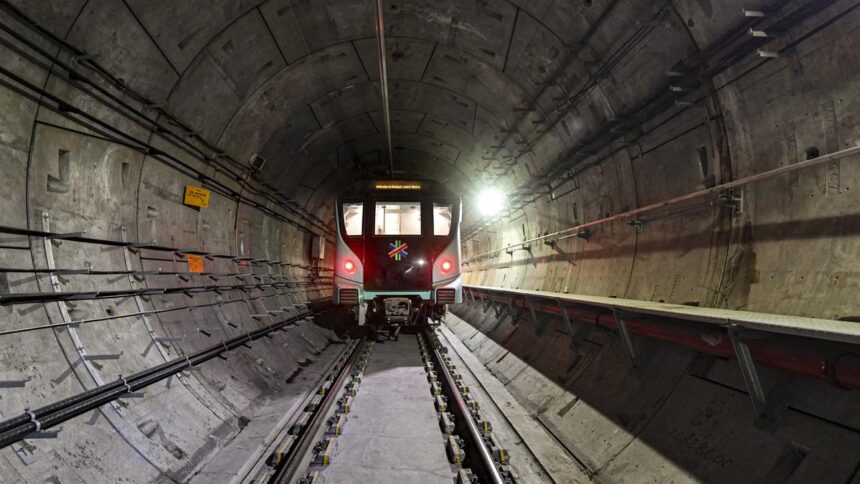
Prime Minister Narendra Modi has inaugurated the final phase of Mumbai’s Metro Line 3, marking a major milestone for the city’s urban transport infrastructure. This is Mumbai’s first fully underground metro line and is expected to significantly ease congestion across key parts of the city.
The event marks the near completion of one of the most ambitious public transport projects in the country. Once fully operational, Metro Line 3 will play a critical role in transforming daily commutes for thousands of residents.
What is Metro Line 3?
Metro Line 3, also known as the Colaba–Bandra–SEEPZ line, is a fully underground metro corridor stretching across 33.5 kilometers. The line will connect the southern tip of Mumbai to the central and northern business hubs, providing seamless and faster connectivity across one of the most densely populated urban zones in India.
Key Highlights of the Final Phase
According to the Mumbai Metro Rail Corporation (MMRC), the final phase includes critical stretches that will directly connect:
- South Mumbai with Central Mumbai
- Areas like Kalbadevi, Girgaum, Mahalaxmi, and Worli
- Business and financial hubs
- International and domestic airports
- Residential zones to commercial areas
Once complete, the line will have 27 stations, all located underground, making it the first metro line in the city to run entirely beneath the surface.
Faster, Cleaner, and Safer Commutes
The metro line is expected to:
- Cut travel time between Colaba and SEEPZ by nearly 50 percent
- Reduce traffic congestion on roads such as the Western Express Highway and Lala Lajpat Rai Road
- Lower vehicular pollution by encouraging a shift from private to public transport
- Offer air-conditioned, high-frequency trains with modern safety features
Commuters will be able to enjoy quieter, cleaner, and significantly faster daily travel once the full line is operational.
Economic and Urban Development Impact
Metro Line 3 is being seen as more than just a transport solution. It is also expected to:
- Spur economic growth in connected zones
- Improve property values and commercial viability in surrounding areas
- Support Mumbai’s growing demand for reliable public infrastructure
- Strengthen last-mile connectivity with feeder buses, autos, and shared mobility options
Urban planners believe that the metro will be instrumental in reshaping commuting patterns and helping decongest Mumbai’s overburdened suburban railway network.
Project Timeline and Operations
While most of the civil works for the project are nearing completion, trial runs and safety checks will continue in the coming months. Commercial operations are expected to begin shortly after the final round of testing and approvals.
Authorities have also assured that key interchange stations will be well integrated with existing rail lines, BEST bus routes, and upcoming metro corridors to provide smooth transitions for passengers.
The inauguration of the final phase of Mumbai’s Metro Line 3 is a historic moment for the city. As the first fully underground metro system in Mumbai, it sets the stage for a more efficient, sustainable, and connected urban future.
With Prime Minister Modi’s launch, the final chapter of the metro’s construction enters its last leg, bringing Mumbai one step closer to a world-class public transport system.