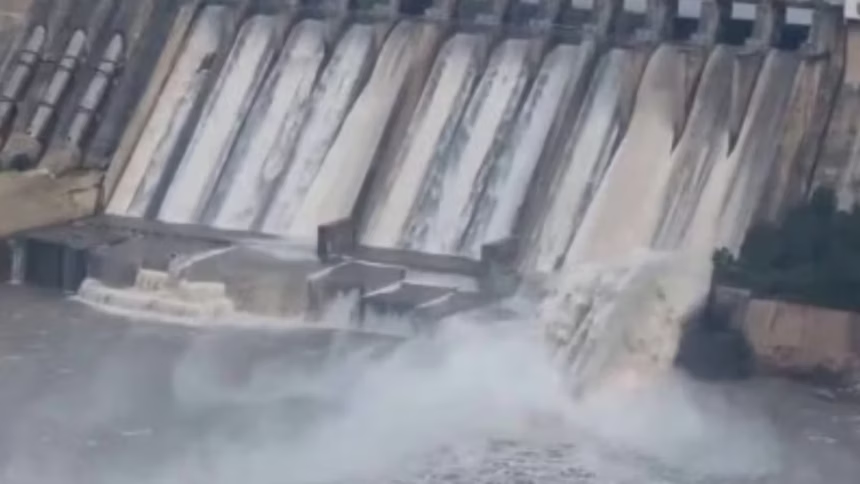
The Gargai dam project has finally taken off with the Brihanmumbai Municipal Corporation sanctioning a crucial administrative approval of ₹3,000 crore amid severe rainfall in Mumbai, marking a major leap for Mumbai’s long-term water security. The dam, upon being constructed, will provide an additional supply of as much as 440 million litres per day to the city-the metropolitan which faces recurring shortages, rapid population growth, and increasing stress on its existing reservoirs.
A Long-Awaited Project Finally Moves Forward
The Gargai dam project was conceptualized and planned to diversify and increase Mumbai’s water sources. Presently, the city draws on the Tansa, Vaitarna, and Bhatsa reservoirs-all three susceptible to the capricious monsoons and increasing demand. The new dam is going to be constructed in the Palghar district, at a distance of about 130 km from Mumbai, and is expected to work together with the existing Vaitarna system.
The BMC’s nod is the biggest push to the project after 2014, when the feasibility studies were commissioned. Some of the reasons the plan was stalled so far included environmental clearances, land acquisition problems, rehabilitation of tribals, and the huge investment needed. Now, with the civic body clearing the financial outlay, tenders are likely to be floated soon, paving the way for commencement of construction.
Why Gargai is a necessity for Mumbai
Currently, Mumbai receives approximately 3,850 MLD water against an always rising demand beyond 4,200 MLD. There have been seasonal cuts, especially during weak monsoons. The addition of Gargai’s 440 MLD will not bridge the deficit completely but will lessen the dependence on existing lakes considerably and make the city resilient.
The fact that Mumbai could face acute scarcity in the next ten years without newer sources of water supply has been reiterated time and again by city planners. Its floating population, haphazard redevelopment, and growing high-rises have ensured increased consumption. The Gargai project therefore is being considered integral to any future growth in Mumbai.
Environmental & Rehabilitation Considerations
The site of the project comes under the buffer zone of Tansa Wildlife Sanctuary, and hence environmental monitoring has to be strict. The BMC has been holding consultations with forest authorities to ensure that ecological norms are followed. A key feature of the approval was the rehabilitation package for the tribals living in the surroundings of the project site. This rehabilitation package has been expanded to include housing, livelihood support, and compensation, addressing concerns raised during public hearings.
Environmentalists have welcomed the accelerated approvals but stressed the need for sustained monitoring. The compensatory afforestation and wildlife management plans will be done in keeping with the statutory requirement, officials said, as the dam is likely to submerge forested patches.
Project Structure & Implementation Timeline
Work will include the construction of a gravity dam, intake structures, pumping stations, and a transmission system to connect the Gargai with the existing network at Vaitarna. According to preliminary estimates, once the work commences, the construction period could be 4 to 5 years considering timely clearances, land acquisition, and mobilization of the contractor.
The ₹3,000 crore approval would be utilized to cover the preliminary works such as surveys, land acquisition payments, compensation disbursals, and preparatory civil work. The cost of the project is likely to go up after detailed engineering studies, like in most major infrastructure projects in this region.
Potential Impact on Mumbai’s Water Landscape
When functional, the Gargai dam will be the first major addition in over a decade to Mumbai’s water infrastructure. It will ease the pressure on the already existing reservoirs and help maintain stable supply during the lean periods. Equitable water distribution in the city is also likely to get a boost from the project and, therefore, may help cut intermittent water supply in the densely populated zones.
The dam will also support the growth corridors of Dahisar, Borivali, Mira-Bhayander, and beyond, all of which depend on Mumbai’s water systems. Thus, a strong water infrastructure was imminent for the ever-expanding metropolitan region.
Looking Ahead
The BMC’s approval for the Gargai dam project is being viewed as a pathbreaking decision that reinforces the commitment of the city to strengthening basic infrastructure. Though there are still challenges to be faced regarding environmental clearances, rehabilitation, and cost escalations, yet the stakeholders exude optimism that the project would progress steadily. For a city like Mumbai, whose water supplies are determined by every passing monsoon, the Gargai dam promises a long-term buffer that can change the face of its water security for decades to come.