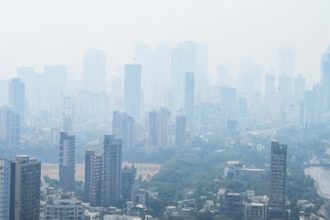
In a significant intervention to address the rapidly deteriorating air quality in Mumbai, the Bombay High Court has directed the Maharashtra government, civic authorities, and pollution-control bodies to submit a detailed Action-Taken Report on the measures implemented to control air pollution in the city. This order was issued during a hearing this week and reflects the growing concern of the court over the rapid deterioration in the air quality of Mumbai, especially during the ongoing winter season when the pollutant levels usually surge.
The order has come at a time when there is growing public outcry over the pollution levels in Mumbai, often breaching dangerous limits that have affected visibility, daily life, and public health. The court’s strong stance suggests a realization that despite several warnings and advisories in the past, response to the unfolding crisis has been partial and inadequate in the city.
Court Questions State’s Preparedness
During the hearing, the division bench observed that Mumbai’s air pollution is no longer temporary or sporadic but part of an alarming pattern. The court expressed dissatisfaction with the state’s earlier explanations, saying pollution levels were deteriorating even before recent external factors such as atmospheric dust or international weather disturbances.
The bench went on to stress that air pollution in Mumbai has reached a stage where immediate and sustained intervention is necessary. They pointed out that the authorities have failed to enforce their own guidelines strictly, particularly in matters like construction management, traffic regulation, and industrial emissions.
The court said the city was growing rapidly, be it in terms of infrastructure or population, but environmental safeguards had not kept pace with this growth. “Development cannot come at the cost of public health,” the court said, as it called for immediate coordination among the departments concerned.
Action Taken Report Due By December
The High Court has directed the state government, the Maharashtra Pollution Control Board, and the civic body, the Brihanmumbai Municipal Corporation, to file a detailed ATR within a fixed timeline. In its report, the following should be specified:
Steps taken to curb construction-related dust
Enforcement of AQI norms and functional monitoring systems
Industrially emitted gases regulation measures
Actions regarding vehicular pollution, particularly older, more polluting vehicles.
Deployment of inspection teams across vulnerable zones
Plans to address recurring surges of pollution
The court also asked the governments to explain how many construction sites had been inspected recently, how many were found violating norms, and what penalties were imposed.
New Inspection Committee to Oversee Compliance
As part of the said order, a five-member inspection committee is to be formed that shall undertake surprise checks at the building sites in the city. The members of this committee are expected to come from:
BMC
MPCB
State health authorities
Environmental experts
Civil-society organisations
The committee’s mandate is to verify whether construction sites are following dust-control rules such as the use of barricades, green screens, water sprinklers, fogging machines, covered debris transport, and functional air-quality sensors.
It also expressed that despite repeated guidelines issued over the last two years, compliance at construction sites has been abysmally low and contributed immensely to particulate pollution. Its findings will be necessary for designing future enforcement strategies.
Construction Dust and Traffic Emerge as Major Culprits
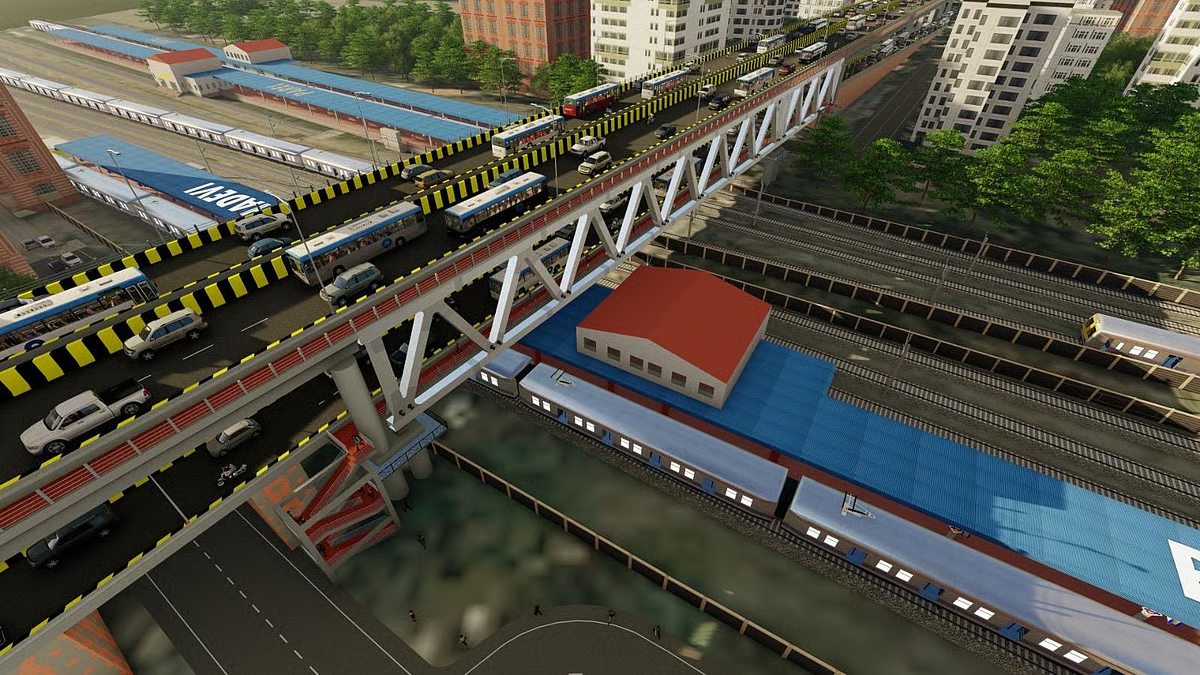
The High Court has mentioned that construction dust and vehicular emissions also join the forefront in polluting the metropolis’ air. As several mega-projects are underway, including metro lines, extensions of coastal highways, real-estate towers, and bridges, the city is plagued by an increase in dust emissions owing to improper management at the site itself.
In addition, the increase in private vehicles, traffic congestion, and slow adaptation of cleaner fuel have further exacerbated pollution.
The court also noted that whereas factors such as climate and wind patterns remain uncontrollable, construction dust is “fully preventable with strict on-ground enforcement.”
Impact on Public Health Triggers Alarm
The fast deteriorating AQI in Mumbai has sparked a visible spike in health concerns with hospitals reporting increasing cases of breathing difficulties, allergies, coughing, and eye irritation. The worst hit are children and elderly citizens.
The court has emphasized that poor air quality is not solely an environmental issue but a serious public-health threat. It criticized the lack of transparency in communicating health risks to the public and called for more proactive awareness campaigns by the authorities.
The Road Ahead
The High Court’s directive is likely to push the government and civic bodies into quicker and more coordinated action. With the urban growth of Mumbai showing no signs of abatement, the need for sustainable environmental governance assumes new urgency. In case major gaps are revealed through ATR and subsequent inspections, the court may consider ordering stricter penalties or structural reforms in pollution management. For now, the writing is on the wall: Mumbai’s air crisis demands immediate remediation, accountability, and long-term planning — not excuses or quick fixes.