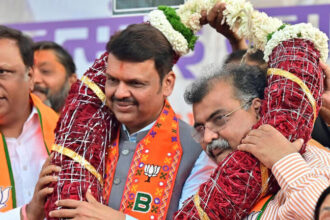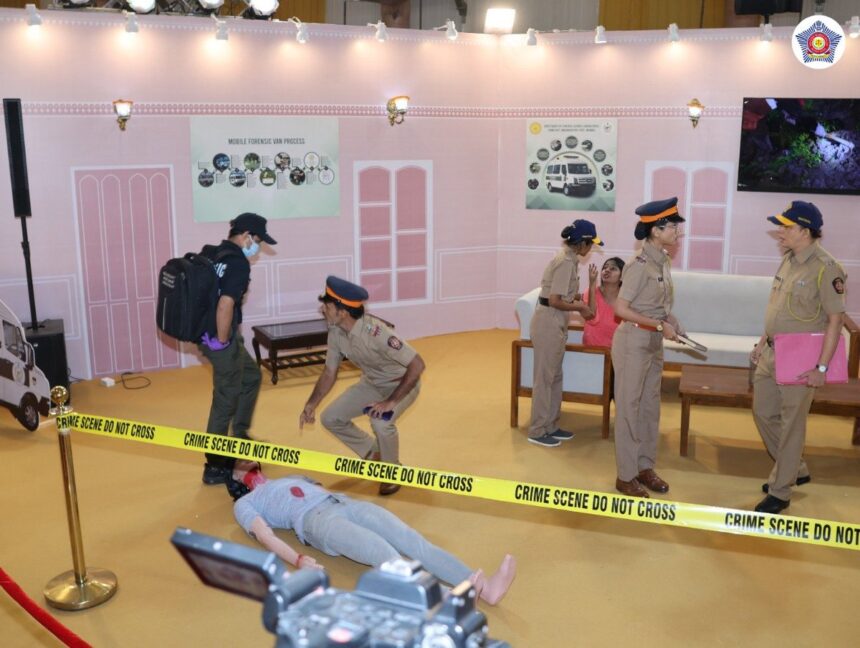
In a major public outreach exercise to spread awareness about the new criminal laws of India and the advances made by Maharashtra in policing, the Chief Minister Devendra Fadnavis inaugurated a five-day exhibition at Azad Maidan in Mumbai. The exhibition, which is one of the largest public information events held within the state this year, has been organized on the implementation of updated criminal legislations and the deep structural reforms carried out within Maharashtra Police.
The event is happening at the most opportune time when modernization efforts are underway in the justice system across India, following the introduction of new codes to replace the IPC, CrPC, and Evidence Act. It is an important educative forum for citizens, students, lawyers, and police professionals to understand the changes and how they reshape policing and justice delivery.
Conviction Rate Leaps from 9% to 53%
At the inauguration, Fadnavis highlighted how much the conviction rate in Maharashtra had increased-from a low of 9% in 2013 to a significantly higher 53% today. He said this was due to a combination of technology upgrade, forensic enhancement, better training, and systematic reforms within the police department.
He said the improved conviction rates are the surest barometer for a functional law-enforcement ecosystem. The state, he mentioned, has been able to bring more offenders to book on account of stronger evidence-collection processes, superior case documentation, and coherence between police and prosecution. This improvement, according to senior police officials who attended the exhibition, is helping to regain people’s faith and trust in law-enforcement institutions.
Displaying Modern Policing Tools
The exhibition features various types of displays that demonstrate:
Digital case-management systems
Cybercrime detection tools,
Body-worn cameras,
Drone-based surveillance
Enhanced forensic capabilities,
Advanced crime-mapping and analytics platforms.
These exhibitions showcase the modernization of policing in Maharashtra, matching up to international standards. The visitors can participate in real-time simulations, evidence-processing models, and interactive sessions conducted by officers specializing in cybercrime, women’s safety, anti-narcotics operations, and counter-terror strategies.
The state officials further mentioned that this infusion of modern equipment has directly strengthened the policing at the frontline. Increased digital documentation, along with CCTV analytics, has ensured that cases are stronger, procedural lapses fewer, and investigations are concluded faster.
Public Awareness of New Criminal Laws
One of the major purposes of the exhibition is to make citizens familiar with newly promulgated criminal laws, which have replaced century-old legal codes stemming from the colonial era. These include updated provisions for:
Revised definitions of offences
Stronger victim-protective measures,
Stricter punishments for crimes against women and children,
Faster investigation timelines for serious crimes
Expanded admissibility of electronic evidence.
Legal experts present in the event elaborated how the new laws aim to create a more resilient and victim-centric justice framework. The public can attend short seminars conducted by senior advocates and judicial officers who simplify complex provisions by explaining them in an easy-to-understand manner.
Emphasis on Women’s Safety and Community Policing
A steady stream of visitors passed through the most sought-after part of the exhibition, which showcased schemes for women’s security like Nirbhaya squads, self-defence programmes and helpline services. Officials also showcased how police have adopted community-oriented models to effect crime reduction and facilitate greater public participation in safety like beat policing, citizen-volunteer programs, and school-based safety awareness drives.
The development underlines that the police service is gradually moving away from an enforcement-based model to one that integrates partnership with the citizens, clarity of procedure, and proactiveness.
A Greater Transformation in the State’s Policing Culture
During the last ten years, Maharashtra has invested heavily to reshape its policing systems. The CM underlined the fact that reforms are not merely technological, but involve training, accountability frameworks, personnel welfare, and improved coordination with the judiciary and prosecution wings.
As senior officials noted, this improved conviction rate is a reflection of a deeper cultural shift: an emphasis on transparent investigations with reduced dependency on confessions and a greater reliance on scientific evidence.
A Step Towards Public-First Governance
This exhibition is an important step toward opening up policing and legal processes to the public. Through the direct involvement of citizens and showing improvements in real life in case-handling, the Maharashtra government tries to bridge the communication gap between law-enforcement agencies and the people they serve. As Mumbai continues to grow in scale and complexity, such initiatives highlight the state’s effort to create a smarter, safer, and more accountable policing environment for an increasingly urbanized population.