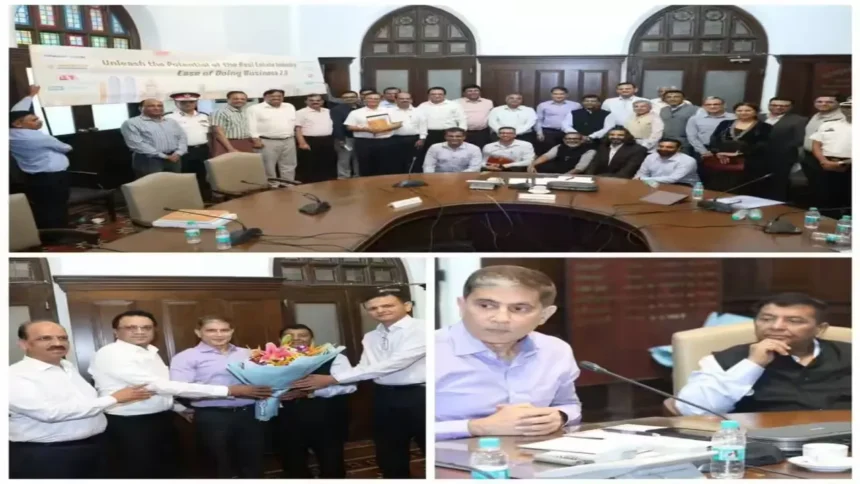
Mumbai, 28 Oct, 2025 — In a significant initiative to rejuvenate the city’s real estate scene, prominent developers and representatives of influential real estate bodies came together to meet the Brihanmumbai Municipal Corporation (BMC) Commissioner Bhushan Gagrani on Monday to address policy hurdles and suggest long-overdue changes in the premium payment system regulating development projects.
The session, hosted by representatives from CREDAI-MCHI, the Developers’ Welfare Association, and leading realty companies, touched upon several challenges that are currently delaying project clearances and making builders’ bills more expensive. Developers pointed out that existing premium structures—fees to the civic body for extra construction rights and development permissions—have become economically unviable, which is causing delays in projects and driving up their costs.
Real Estate Premiums Under the Spotlight
In Mumbai’s highly regulated real estate sector, premiums constitute a major share of project costs. Developers often pay premiums to the BMC for components such as floor space index (FSI) usage, open space deficiency, and staircase/lift area concessions. While these premiums are meant to fund civic infrastructure, the industry has long argued that the cumulative burden is excessive, especially amid rising input costs.
Those present at the meeting told sources that the sector called for a review of premium rates and launching of a rationalized, transparent formula in accordance with market conditions. “Developers are not opposed to paying premiums but the prevailing rates—coupled with GST and stamp duty—render projects nonviable, especially in mid-income and redevelopment segments,” said a CREDAI-MCHI spokesperson.
Steering Committee for Reform
Realizing the industry’s apprehensions, Commissioner Gagrani is said to have agreed to constitute a steering committee that includes BMC officials, Urban Development Department representatives, and developer community members. The committee will examine the current premium structure, approval timing, and procedural obstacles and make suggestions within a specified time frame.
The aim, officials explained, is to make the system more efficient, enhance transparency, and ensure civic revenues as well as housing supply targets are in harmony. “We are receptive to meaningful dialogue,” said a senior BMC official. “Our goal is to facilitate quicker clearances while ensuring the city’s infrastructure commitment is fulfilled.”
Bottlenecks Affecting Housing Supply
Developers also highlighted the administrative bottlenecks that continue to hamper Mumbai’s redevelopment projects—especially those related to old and dilapidated buildings in central suburbs and South Mumbai. Slow approvals, overlapping permissions between civic and state departments, and inconsistent interpretation of planning norms were cited as major issues.
“Redevelopment is the only way to meet Mumbai’s housing demand and improve living standards,” said a representative from a leading realty group. “However, the process has become so complex and expensive that even reputed developers hesitate to take up older properties.”
The developers urged the civic body to introduce a single-window approval mechanism, similar to models adopted in cities like Hyderabad and Ahmedabad, to accelerate the pace of project execution.
Economic Impact of Reform
Mumbai alone contributes almost a third of the real estate value in India, with redevelopment schemes alone having an estimated over ₹5 lakh crore investment potential. With rising regulatory expenses, however, there are various projects that have been stalled or postponed.
Experts opine that streamlining the premium regime will unlock thousands of stalled projects, especially in low-cost and affordable housing. “Cutting premiums by even 20-25% would spark new construction activity, generate jobs, and increase state revenues through increased sales and registrations,” property analyst Ramesh Nair pointed out.
The move also comes at a time when Mumbai’s property market is witnessing an upswing in luxury and high-end demand—highlighted by recent multi-crore transactions in South Mumbai. While that segment remains strong, the mid-market and redevelopment segments, which house the majority of citizens, continue to face viability challenges.
Balancing Growth and Governance
For the BMC, high-end fees are a crucial source of revenue—of major proportion in its yearly budget. Any reform, therefore, will have to juggle fiscal prudence with economic growth. Developers, for their part, have promised cooperation with civic bodies to see that loosening of regulations leads to quicker project implementation and not speculative profits.
As the steering committee prepares to begin its review, the meeting marks a positive shift in public-private collaboration within Mumbai’s urban development ecosystem. Both sides appear aligned on the need for simplification, digitalization, and fairness in policy execution.
If implemented effectively, these reforms can not only alleviate cost pressures on developers but also usher in quicker urban regeneration, low-cost housing supply, and a more robust realty market for India’s economic capital.