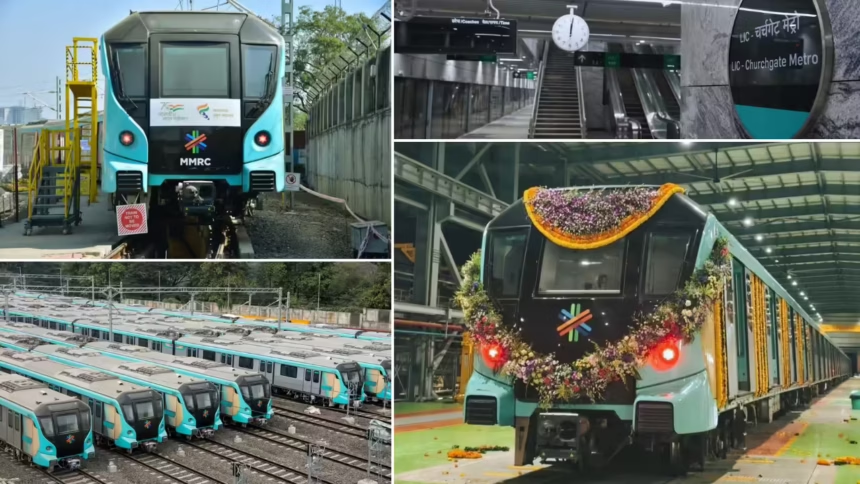
Mumbai, October 9, 2025 – Commuters traveling on the Andheri to Bandra Kurla Complex (BKC) stretch of Mumbai Metro Line 3 faced significant disruptions on Wednesday, October 9, due to a sudden mobile network and internet outage. The outage, which lasted several hours during peak travel times, affected thousands of passengers who rely on the metro for daily commuting, creating a ripple effect across the city’s transport system.
The disruption primarily impacted passengers attempting to purchase tickets through online platforms, including the official Mumbai Metro mobile app and digital ticketing portals. With mobile data and Wi-Fi services down in certain sections, travelers were unable to access e-tickets or recharge their metro cards digitally. Additionally, the connectivity issues disrupted phone calls, leaving many stranded and frustrated as they attempted to coordinate rides or inform their workplaces about delays.
“I was traveling from Andheri to BKC for a client meeting, and I couldn’t buy my ticket because the app wouldn’t load,” said Rahul Mehta, a daily commuter. “It caused a lot of panic among passengers, especially those who were unaware of the offline ticketing options.”
The Mumbai Metro Rail Corporation (MMRC) acknowledged the problem and said that the outage was due to technical glitches with the mobile network providers operating along the metro corridor. A spokesperson for MMRC stated, “We are aware of the network disruptions affecting Metro Line 3 and are coordinating with telecom companies to restore connectivity. Passenger safety and convenience are our top priorities, and alternative solutions are being explored.”
In response to the outage, MMRC activated its backup offline ticketing system, allowing commuters to purchase tickets manually at metro stations. Staff at the stations assisted passengers who were unable to use digital platforms. Despite these measures, delays occurred as queues grew longer than usual, and some passengers missed connecting trains due to the lack of real-time ticketing information.
Experts point out that connectivity is critical for the smooth functioning of modern metro systems. “Digital ticketing and real-time communication are now integral to urban transport systems. Any disruption in internet or mobile services can severely affect commuter experience and operational efficiency,” explained Dr. Anil Sharma, a transport systems analyst.
In addition to ticketing problems, the network outage also affected security and communication protocols within the metro system. Station authorities rely on internet-connected systems for surveillance, train monitoring, and emergency response coordination. While no major safety incidents were reported during the outage, officials emphasized the importance of robust connectivity to ensure passenger security.
To prevent similar disruptions in the future, MMRC has announced plans to enhance digital infrastructure along Metro Line 3. This includes installing dedicated Wi-Fi services at key stations, improving network redundancy, and working with telecom operators to ensure uninterrupted service along the entire metro route. The MMRC spokesperson noted, “We are committed to implementing long-term solutions to enhance passenger experience and minimize inconvenience caused by technical failures.”
The connectivity issues on Metro Line 3 also highlight the challenges of integrating technology in public transportation. As metro systems expand and rely more on digital platforms, maintaining uninterrupted service becomes essential not only for commuter convenience but also for operational safety and efficiency.
Commuters have expressed a mix of frustration and hope. Many stressed the importance of reliable service, especially for those who depend on Metro 3 for daily commutes to business hubs like BKC. Meanwhile, urban transport experts recommend adopting multi-layered contingency plans, including offline ticketing systems and backup communication channels, to ensure metro operations remain smooth even during unforeseen disruptions.
As Mumbai continues to expand its metro network to meet the demands of its growing population, integrating resilient technological solutions will be crucial. The recent disruption on Metro Line 3 serves as a reminder of the delicate balance between technology and traditional systems, underscoring the need for continuous improvement in infrastructure and digital services.
With MMRC taking proactive measures to address the connectivity challenges, commuters can expect a more reliable and seamless experience on Metro Line 3 in the coming months.