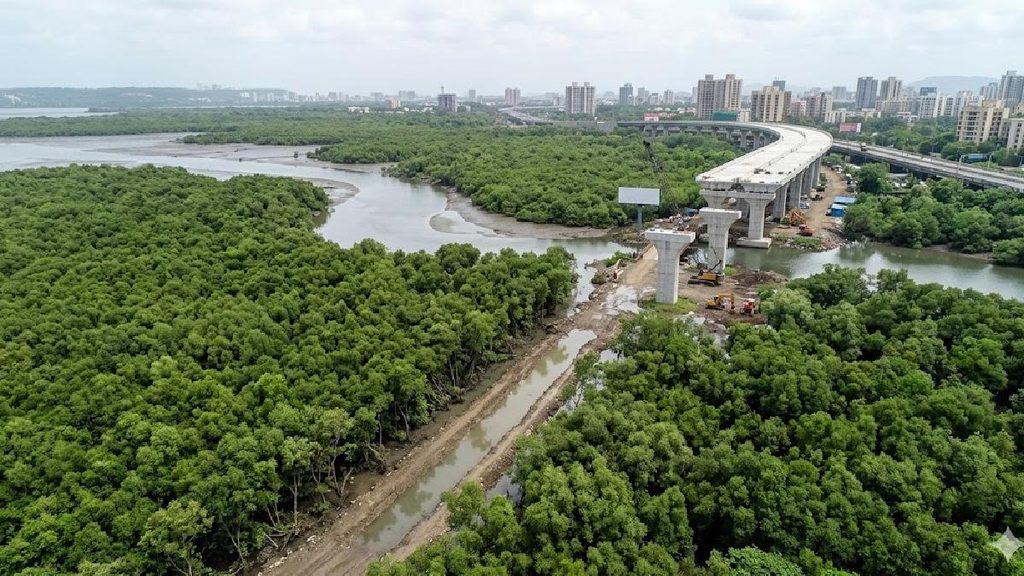
The proposed Thane Coastal Road project has come under renewed environmental scrutiny, with concerns over its impact on mangroves, tidal waterways and the fragile ecology of Thane Creek. The issue is particularly significant as the Mumbai Metropolitan Region Development Authority (MMRDA) is developing the major road corridor to ease congestion on Ghodbunder Road and improve connectivity across the Mumbai Metropolitan Region.
The first phase of the project, a 13.45-km six-lane greenfield road connecting Balkum and Gaimukh, is already under construction. MMRDA says the corridor will separate heavy commercial traffic from local traffic on Ghodbunder Road and improve movement towards major logistics hubs.
Environmental concerns over the alignment
The proposed alignment passes through areas classified under different Coastal Regulation Zone (CRZ) categories, including mangrove and intertidal areas. Environmental authorities have previously emphasised that alternative alignments should be examined wherever they can reduce damage to mangrove vegetation and creek biodiversity.
Government records relating to the project show that authorities had specifically asked the project proponents to explore alternative alignments with the objective of minimising the impact on mangroves. The environmental assessment was also expected to examine alternatives and their potential effects on the creek ecosystem.
Mangroves are particularly important in the Thane Creek region because they provide habitat for wildlife, support coastal biodiversity and help protect low-lying areas from flooding and storm surges.
Flooding risk adds another layer
Environmental concerns have become more pressing following a local Tehsildar survey that highlighted possible flooding risks along sections of the coastal road corridor. The survey reportedly found that construction activity, temporary access roads and debris had narrowed or obstructed natural drainage channels carrying rainwater towards the creek.
One drainage channel near the Balkum-Kolshet area was reportedly reduced considerably in width, raising concerns that heavy monsoon rainfall could result in waterlogging and flash flooding in surrounding residential areas.
The findings have added to calls for authorities to ensure that natural waterways remain unobstructed during construction and that adequate drainage arrangements are incorporated into the final road design.
Project aims to ease Ghodbunder Road congestion
The Thane Coastal Road was conceived as an alternative route for heavy vehicles and regional traffic. According to MMRDA, the existing Ghodbunder Road experiences significant congestion because of a combination of commercial freight movement and rapid urbanisation.
The planned road will run from the Balkum area near the Mumbai-Nashik Highway to Gaimukh. MMRDA’s project details state that major portions will use elevated structures, including a viaduct through sensitive creek-side areas.
The authority has also promoted the elevated design as a way of reducing the project’s footprint on environmentally sensitive areas. Recent project updates said more than half of the foundation work for the elevated viaduct had been completed earlier this year.
Phase II faces fresh ecological scrutiny
The environmental debate is also relevant to Thane Coastal Road Phase II. MMRDA recently sought CRZ clearance for the proposed ₹5,140.92-crore, 7.13-km second phase connecting Balkum and Kasheli with Anand Nagar in Mulund East.
Project documents indicate that the proposed alignment could affect around 12.72 hectares of mangroves, with approximately 1,733 mangrove trees proposed for removal. A portion of the alignment also falls within the Eco-Sensitive Zone of the Thane Creek Flamingo Sanctuary.
The authority has submitted environmental assessments and said forest clearance and compensatory afforestation measures are being pursued as part of the statutory approval process.
Balancing infrastructure and ecology
The Thane Coastal Road represents a major attempt to address the region’s growing transport pressures, but its location makes environmental safeguards equally important. Any change in alignment would have to balance engineering feasibility, land requirements, traffic benefits and ecological protection.
For authorities, the central challenge is therefore not simply completing the road but ensuring that construction does not permanently disrupt mangroves, tidal flows or natural drainage systems. As environmental clearances and project implementation progress, scrutiny of the alignment and mitigation measures is likely to remain an important part of the Thane Coastal Road’s development.