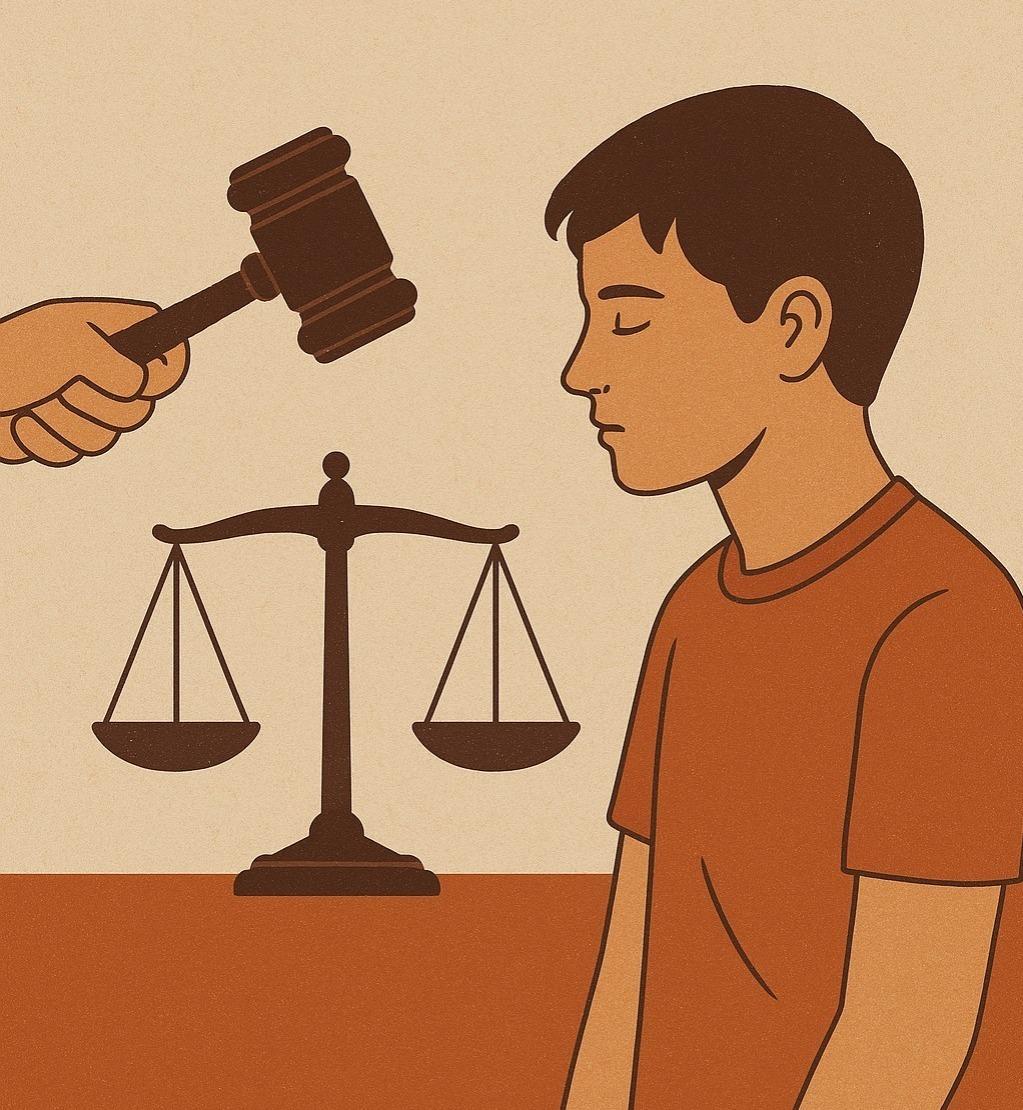
The Bombay High Court has ruled that slapping a minor, by itself, does not amount to a sexual act, setting aside charges under the Protection of Children from Sexual Offences (POCSO) Act against a teenage boy. The court observed that, in the absence of sexual intent, the alleged act could not be treated as a sexual offence under the law.
The case arose from an incident in which a teenage boy allegedly slapped a minor girl during an altercation. Investigators had invoked provisions of the POCSO Act along with other criminal charges. However, while examining the case, the High Court emphasized that the POCSO Act specifically criminalizes acts involving sexual intent and cannot be applied to every instance of physical assault involving a child.
The court noted that for an offence to qualify as sexual assault under the POCSO Act, the prosecution must establish that the accused acted with a sexual motive or intent. A physical act such as a slap, without any allegation or evidence of sexual intent or sexually motivated conduct, does not satisfy the legal requirements of the statute. The judges observed that criminal laws must be interpreted according to their specific provisions and should not be expanded beyond the scope intended by Parliament.
While quashing the POCSO charge, the High Court clarified that its decision does not condone violence against children. The bench stated that if an act amounts to assault or another criminal offence under general criminal law, the accused may still face prosecution under the relevant provisions of the Bharatiya Nyaya Sanhita (or the applicable penal law, depending on the date of the incident). The ruling was limited to determining whether the alleged conduct fell within the ambit of the POCSO Act.
Legal experts say the judgment reinforces an important principle that sexual intent is a necessary ingredient for offences under the POCSO Act. They note that the legislation was enacted to protect children from sexual abuse and exploitation, and courts have consistently held that its provisions should be invoked only when the alleged conduct has a clear sexual element.
The ruling is expected to serve as a reference in future cases involving disputes over the applicability of the POCSO Act. It highlights the distinction between ordinary physical assault and offences involving sexual misconduct, while reiterating that children remain protected under other criminal laws where appropriate.