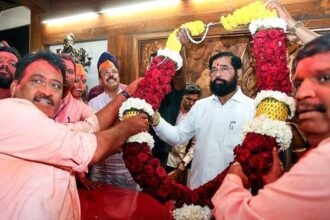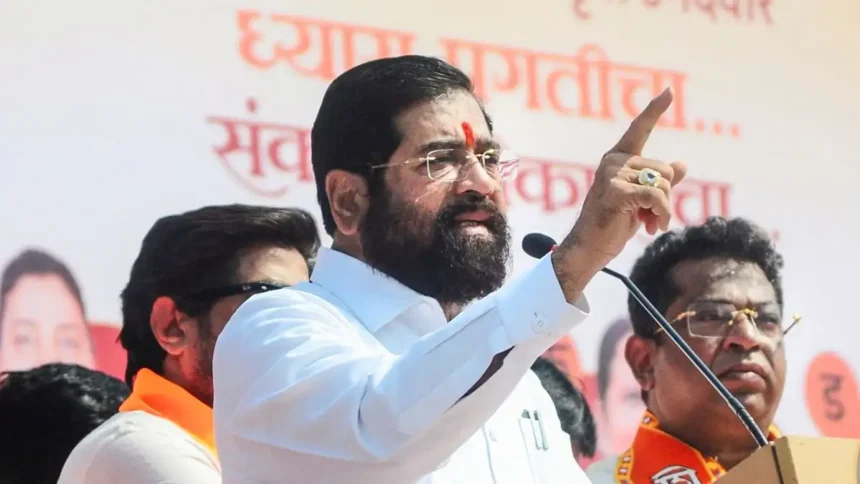
Mumbai is witnessing a return of “resort politics” as the city braces for a tense showdown over who will control the mayor’s post in the Brihanmumbai Municipal Corporation (BMC). After the BJP and Eknath Shinde-led Shiv Sena alliance won a majority in the city elections, the political chess game has entered a new phase.
Deputy Chief Minister Eknath Shinde has moved his newly elected corporators into a five-star hotel in Mumbai, a day after it became clear that his faction would play a kingmaker role in the BMC elections.
Why the Hotel Move Matters
Sources suggest two major reasons behind Shinde’s decision to house corporators in a luxury hotel:
- Preventing Defections: There is concern that Opposition parties could attempt to poach corporators before the ruling alliance formally assumes control of India’s richest municipal body.
- Bargaining Power: The move strengthens Shinde’s hand in negotiations with the BJP for the mayor’s post, even though his faction holds fewer seats in the alliance.
This strategy is reminiscent of past resort politics in Maharashtra, where political parties have often used luxury hotels as temporary “safe havens” to maintain loyalty and prevent defections.
Understanding the Numbers
The BMC has 227 wards, and the majority mark is 114. The election results were as follows:
- BJP: 89 seats
- Shinde-led Shiv Sena: 29 seats
- Together: 118 seats (enough to cross the majority)
On the opposition side:
- Shiv Sena (UBT): 65 seats
- Maharashtra Navnirman Sena: 6 seats
- NCP (Sharad Pawar faction): 1 seat
- Congress: 24 seats
- AIMIM: 8 seats
- Samajwadi Party: 2 seats
If all opposition parties unite, they would hold 106 seats—just eight short of the majority mark. This narrow gap explains the fear of defections and political maneuvering by the Shinde camp.
Opposition Could Pose a Threat
The hotel move reflects the concern that opposition forces may attempt to topple the alliance by convincing a few corporators to switch sides. Even a small number of defections could create uncertainty for the BJP-Shinde combine.
Sena (UBT) and other opposition leaders have already indicated that they could challenge the alliance if corporators can be persuaded to join them, keeping the suspense alive over the control of Mumbai’s civic body.
Shinde’s Strategic Position
Being a junior partner in the alliance, Shinde’s faction is using this moment to assert its influence. Sources suggest that many corporators from Shinde’s camp want the mayoral post to remain with the Shiv Sena, reflecting internal pressure on the deputy chief minister not to compromise.
Shinde’s strategy seems twofold:
- Ensure loyalty within his own ranks
- Increase bargaining leverage with the BJP to secure the prestigious mayoral position
Historically, the mayor’s post has been a symbolic and powerful position, especially for Shiv Sena, which held control of the BMC for 25 years before the BJP’s recent landslide victory.
BJP-Shinde Alliance: Clear Majority, but Delicate Balance
Despite crossing the majority mark comfortably, the BJP cannot take the mayoral post for granted. Internal dynamics within the alliance, coupled with potential opposition tactics, mean that careful negotiations will be required to maintain unity.
Deputy CM Shinde and BJP leaders are likely to discuss the power-sharing formula, including the mayoral term, standing committee chairmanship, and other key posts. The hotel stay is being interpreted as a preparatory step for these discussions.
Lessons from Resort Politics
Resort politics in Maharashtra has been a recurring phenomenon, especially when tight numbers create uncertainty. The practice usually serves three purposes:
- Maintain discipline and prevent corporators from defecting
- Provide a controlled environment for strategic planning
- Signal bargaining strength in alliance negotiations
Shinde’s move mirrors these objectives, demonstrating how political strategy often extends beyond election day.
What Comes Next
The mayoral election in Mumbai is expected to take place soon, and the city is watching closely as political negotiations unfold. Key questions include:
- Will Shinde’s faction secure the mayor’s post despite being the junior partner?
- Can the opposition sway enough corporators to challenge the alliance?
- How will the BJP balance alliance unity with Shinde’s demands?
With stakes this high, the coming weeks could reshape Mumbai’s civic governance and influence Maharashtra’s broader political landscape.
High-Stakes Politics in Mumbai
As India’s financial capital prepares for a new civic term, resort politics has once again taken center stage. Eknath Shinde’s strategic hotel move highlights the delicate balance of power in the city’s politics. While the BJP-Shinde alliance has numerical strength, securing the mayor’s post requires careful negotiation and alliance management.
The upcoming mayoral election promises drama, strategy, and political maneuvering, making Mumbai a city to watch in 2026.