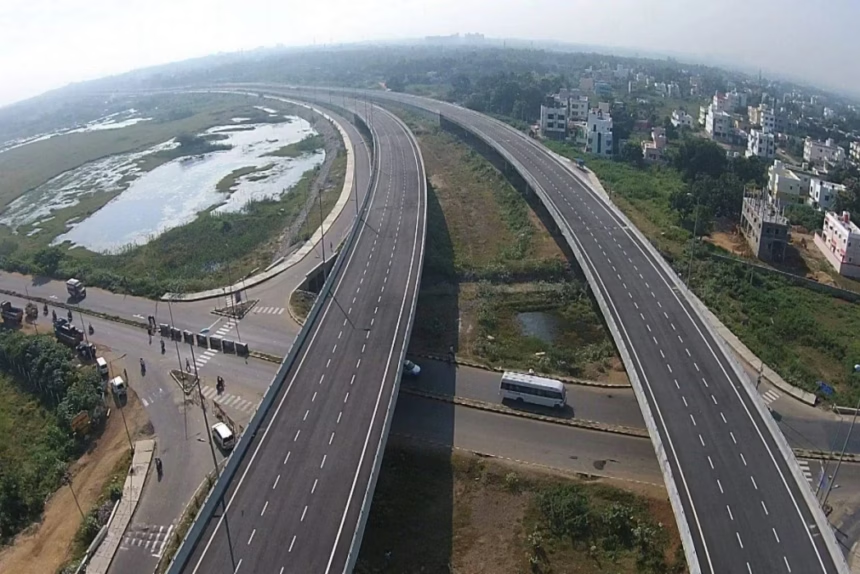
The ambitious Nagpur-Goa Shaktipeeth Expressway project in Maharashtra has become a major talking point again after its estimated cost increased sharply. The project, originally announced as a large infrastructure initiative aimed at improving connectivity across the state, is now expected to cost around ₹96,000 crore following a change in its alignment.
The revised plan comes after strong resistance from farmers in several districts, particularly in Kolhapur. With the route altered, the expressway will now be longer and pass through more districts and villages than initially planned.
Here is a simple and detailed explanation of what changed, why the cost increased, how farmers influenced the decision, and what lies ahead for this massive highway project.
Overview of the Shaktipeeth Expressway Project
The Nagpur-Goa Shaktipeeth Expressway is planned as a major highway connecting eastern Maharashtra to the coastal region of Goa. The project aims to improve travel time, boost trade and tourism, and strengthen connectivity between important religious, economic, and industrial hubs.
When first announced in March 2023, the estimated cost was about ₹83,600 crore. At that time, the project was positioned as a key infrastructure push that could accelerate regional development.
However, like many large infrastructure projects, it soon encountered challenges, especially regarding land acquisition.
Why the Cost Increased So Much
The biggest reason behind the cost jump is the change in the expressway’s alignment. The revised route has increased the length of the highway by more than 50 kilometres, pushing the total stretch from around 802 km to approximately 856 km.
A longer road naturally means higher expenses in several areas:
Land acquisition costs
Construction and materials
Bridges, tunnels, and engineering work
Environmental mitigation measures
Administrative and logistical expenses
Officials estimate that the revised cost now stands between ₹95,000 crore and ₹96,000 crore, representing an increase of over ₹12,000 crore from earlier projections.
Farmer Protests Played a Major Role
Farmer resistance was a key factor behind the route revision. Farmers in regions such as Marathwada and western Maharashtra, particularly the Kagal and Hatkanangle talukas in Kolhapur district, raised strong objections to land acquisition.
Many farmers questioned the necessity of a new highway when an existing road between Nagpur and Goa was already operational. Concerns included:
Loss of agricultural land
Impact on livelihoods
Compensation disputes
Environmental effects
Long-term economic uncertainty
These protests gained political attention, especially ahead of the 2024 Maharashtra assembly elections.
Political Response and Temporary Halt
As farmer protests intensified, several political leaders began supporting their concerns. At the time, the state leadership assured farmers that the project would not be forced upon them without proper consultation.
Land acquisition processes were paused ahead of the elections, reflecting the sensitivity of the issue. This pause gave authorities time to reconsider the project’s alignment and explore alternatives that would minimize resistance.
After the government returned to power, officials revisited the project with a modified plan.
New Route Details and Expanded Coverage
The revised expressway alignment now passes through more areas than originally planned.
Initially, the project covered:
12 districts
Around 350 villages
Under the revised alignment:
13 districts will now be covered
Approximately 395 villages fall along the route
Excluding certain protest-affected areas required rerouting, which added distance and complexity to the project.
Government Push to Accelerate Work
Despite the changes, the state government remains committed to completing the expressway. Authorities have emphasized speeding up land acquisition while maintaining dialogue with local communities.
Officials have been directed to:
Engage with local governance bodies
Communicate with farmers and stakeholders
Resolve land acquisition concerns quickly
Aim for project completion within three years
The government believes faster execution will help control further cost escalation.
Importance of Land Acquisition in Infrastructure Projects
Land acquisition is often one of the most challenging aspects of large infrastructure projects in India. Delays can significantly increase costs due to:
Rising land prices
Inflation in construction materials
Project redesign expenses
Administrative delays
In the case of the Shaktipeeth Expressway, prolonged negotiations and alignment changes contributed directly to the cost escalation.
Economic and Development Expectations
Supporters of the expressway argue that it could bring several long-term benefits.
Faster connectivity between Nagpur and Goa
Improved tourism access to coastal and religious destinations
Better logistics for agriculture and industry
Regional economic growth
Employment opportunities during construction
Such infrastructure projects often have multiplier effects on local economies, though these benefits sometimes take years to materialize.
Concerns Still Being Raised
Even after alignment changes, some concerns remain among local communities and observers.
Environmental impact is one major issue. Large highways can affect forests, water bodies, and wildlife habitats.
There are also questions about financial feasibility. Projects of this scale require significant public investment, and cost overruns can strain budgets.
Transparency in compensation and rehabilitation for affected communities continues to be another important topic.
What Happens Next
Before final approval, the revised proposal will undergo scrutiny by the state government. This includes reviewing:
Updated cost estimates
Environmental clearances
Land acquisition status
Technical feasibility
Funding arrangements
Only after these approvals can full-scale construction proceed smoothly.
Timeline Expectations
Authorities aim to complete the project within three years once land acquisition is finalized. However, infrastructure projects of this magnitude often face unforeseen delays due to regulatory approvals, environmental concerns, or logistical challenges.
Close coordination between government agencies, contractors, and local communities will be crucial to staying on schedule.
Broader Infrastructure Context in Maharashtra
Maharashtra has been investing heavily in road infrastructure to support economic growth. Expressways, highways, and urban connectivity projects are being expanded to accommodate increasing traffic and industrial activity.
The Shaktipeeth Expressway is seen as part of this broader development strategy, linking multiple regions across the state.
Final Thoughts
The Nagpur-Goa Shaktipeeth Expressway remains one of Maharashtra’s most ambitious road projects, but its rising cost highlights the complexities involved in large infrastructure development.
Balancing development goals with farmer concerns, environmental considerations, and financial sustainability is never simple. The recent alignment changes reflect attempts to address these challenges while keeping the project on track.
Whether the expressway ultimately delivers its expected economic and connectivity benefits will depend on how effectively these issues are managed in the coming years