Bombay High Court Refuses to Lift Stay on Ice Hockey Team Selection
In a strong message on fairness and sporting integrity, the Bombay High Court has refused to lift its stay on the selection of Maharashtra’s Ice Hockey team for the upcoming Khelo India Winter Games 2026. The court made it clear that a selection process for an ice sport cannot be conducted without ice, regardless of logistical challenges or timelines.
The decision has sparked widespread discussion within the sports community, especially among athletes who were either excluded from the trials or questioned the credibility of the selection process.
What Is the Case About?
Selection Process Under Judicial Scrutiny
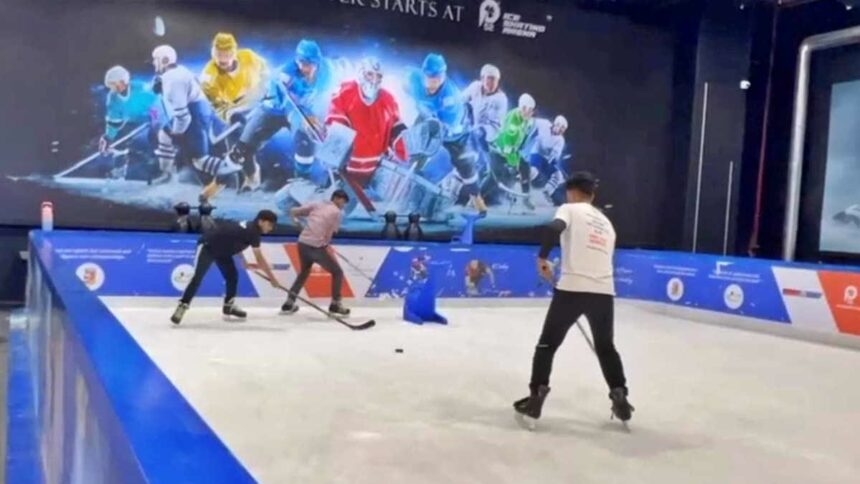
The case revolves around the selection of Maharashtra’s Ice Hockey team for the Khelo India Winter Games 2026, which are organised by the Sports Authority of India. The selection trials were conducted in Pune at a skating facility in Nigdi. However, instead of ice, the trials were held on a rough, tiled surface where players used roller skates.
Five ice hockey players from Pune and Sangli challenged this process, arguing that the trials were fundamentally flawed and unfair to experienced players who train and compete on ice.
Court’s Key Observation: Ice Hockey Needs Ice
Trials Without Ice Declared Unacceptable
The division bench of Justice Ravindra Ghuge and Justice Abhay Mantri firmly rejected arguments seeking to vacate the stay. The judges reiterated that ice hockey selection trials conducted on a non-ice surface cannot be treated as valid.
The court observed that skills required to play ice hockey on ice using skating blades are vastly different from roller skating on tiles. Allowing such trials, the bench said, would compromise the very essence of the sport.
Plea to Vacate Stay Rejected
Claims of Valid Selection Process Dismissed
The plea to lift the stay was filed by Prashant Chavan, who claimed to represent the Maharashtra Ice Hockey Association. He argued that the stay was based on incorrect facts and alleged that crucial details had been suppressed earlier.
According to him, 33 players participated in the trials, 23 were found eligible, and 19 were selected after due process. He further claimed that continuing the stay would harm innocent players and could result in Maharashtra missing out on participation in the Winter Games.
However, the court was not convinced. The judges maintained that the manner in which the trials were conducted was itself questionable, making the results unreliable.
Ignoring Experienced National Players Raises Red Flags
Court Expresses Serious Concern
One of the strongest observations made by the court was regarding the exclusion of experienced players. Nearly 20 national-level ice hockey players from Maharashtra were allegedly ignored during the selection process.
Notably, two of these players have represented India at the under-20 international level. The court expressed displeasure over how such seasoned athletes were sidelined without proper justification.
This aspect of the case strengthened the argument that the selection process lacked transparency and fairness.
Background: Why the Stay Was Imposed Earlier
Roller Skates Instead of Ice Blades
Earlier, the High Court had already stayed the selection process after it was revealed that the trials were conducted using roller skates instead of ice skating blades. Ice hockey players typically train for years to master balance, speed, and control on ice, which cannot be replicated on a tiled surface.
The court had taken note of this discrepancy and ruled that allowing such trials would undermine the integrity of the sport.
Petition Filed by Players Highlights Core Issues
Athletes Demand Fair Play
The petition was filed by five ice hockey players who argued that the trials violated basic principles of fair competition. Their lawyers informed the court that the sports commissioner of Maharashtra issued a notification on January 12, 2026, announcing the trials.
Shockingly, the very next day, trials were conducted on a rough surface, leaving players no time to prepare or adapt. The petitioners claimed this hurried and improper process disadvantaged genuine ice hockey players.
Impact on Maharashtra’s Participation in Winter Games
Participation at Risk, But Rules Come First
While concerns were raised that the stay could jeopardize Maharashtra’s participation in the Khelo India Winter Games 2026, the court made it clear that procedural correctness cannot be sacrificed for convenience.
The judges emphasized that a flawed selection would be more damaging in the long run than missing a single edition of the tournament. Upholding sporting standards, they indicated, was non-negotiable.
Broader Questions About Sports Administration
Accountability and Infrastructure Gaps
This case has once again highlighted the challenges faced by winter sports in states with limited ice facilities. It has also raised uncomfortable questions about planning, accountability, and the seriousness with which niche sports are treated.
Sports experts have pointed out that if Maharashtra wishes to promote ice hockey, it must invest in proper infrastructure and ensure that selection processes reflect international standards.
What Happens Next?
Selection Process Remains on Hold
With the High Court refusing to vacate the stay, the current selection process stands invalid. Authorities will now have to rethink how to conduct fair trials, likely requiring access to ice rinks or suitable alternative arrangements that truly test ice hockey skills.
Any future selection will have to satisfy judicial scrutiny and ensure equal opportunity for experienced and emerging players alike.
A Wake-Up Call for Indian Winter Sports
Fair Trials Matter More Than Fast Decisions
The Bombay High Court’s decision serves as a reminder that sports governance must prioritize fairness, expertise, and credibility. Athletes dedicate years of training to their sport, and selection processes must respect that commitment.
As India slowly builds its presence in winter sports, cases like this underline the need for better planning, proper facilities, and transparent systems that put players first.