A Beauty Legacy Hidden in Mumbai’s Old Lanes
Mumbai is often seen as a city that lives only in the present, always racing ahead. Skyscrapers rise overnight, trends change every season, and traditions often get left behind. But in the narrow bylanes of Dongri, one small workshop quietly challenges that idea.
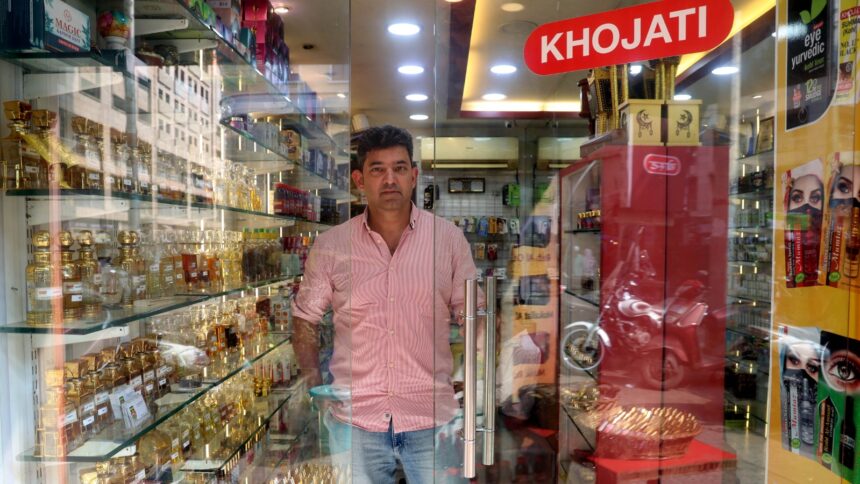
Here, in Pala Gali, a family has been making surma since 1847. Long before cosmetic brands, influencers, or even electricity, Khojati began crafting this traditional eye cosmetic. Nearly 179 years later, the same business continues to survive, grow, and even attract younger generations.
This is not just the story of a product. It is the story of faith, patience, family, and the power of staying true to one’s roots.
How a Simple Act of Kindness Changed Everything
A prophecy that shaped generations
The origins of Khojati are deeply tied to a story passed down through generations of the Banatwalla family. According to Shakir Banatwalla, the current custodian and sixth-generation member of the family, everything began with his great-great-great-grandmother, Bai Rantanbai.
The family were originally spindlers by profession, which is how they got the surname Banatwalla. Bai Rantanbai was known in the neighbourhood for her generosity. Every day, she would set aside a portion of the family’s earnings to feed the poor. People would line up outside her home, expecting alms.
One day, an elderly man refused money and asked for a warm meal instead. After eating, he handed her a few handwritten papers. He asked her to study them and make the products described inside. He promised that if she followed the instructions, her family would be sustained for seven generations.
That moment marked the beginning of a journey that continues nearly two centuries later.
The Birth of a Surma Identity
From home-made to household name
For almost 100 years, the family made only one product: surma. Initially, it was prepared and sold directly from their home. Over time, demand grew. A small shop followed, and soon their surma was being sold outside mosques and at attar stores across Bombay.
The product slowly travelled beyond the city. Kerala emerged as one of the strongest markets, contributing a significant share of domestic sales. So familiar did customers become with the family that one of Banatwalla’s ancestors began being called “Ti” by buyers in the region.
When the next generation split the business, one branch retained the original Budhia name. The other combined “Khoja,” referring to their community, and “Ti,” giving birth to the name Khojati. While the name changed, the recipe did not.
Holding on to Tradition While Moving Forward
Same formula, wider range
Even today, the surma made by Khojati follows the same formulations written down generations ago. But over time, the family expanded their offerings to meet broader needs.
Today, Khojati also produces pain relief balms, massage oils, ointments, eye drops, and skincare products. This expansion was guided by Banatwalla’s father, a trained hakim with a degree in Unani medicine.
Despite the wider product range, surma remains at the heart of the business. It is not treated as a trend or a seasonal item, but as a craft that deserves patience and care.
When Tradition Faced Its Biggest Test
The lead controversy of the 1990s
Surma’s popularity took a hit in the 1990s when reports linked it to lead poisoning. Many traditional surma makers shut shop or saw demand collapse.
Banatwalla explains that surma is made from an ore and must be processed carefully. At Khojati, the ore undergoes a two-week treatment process. It is soaked in rose water and purified repeatedly to remove lead. Cooling and therapeutic ingredients are then added.
Premium varieties include moti surma, made using crushed Basra pearls, and mamira surma, which uses Himalayan mamira root.
For over 30 years now, every batch produced by the company has been lab-tested. All their surmas and kajals meet FDA safety standards, helping rebuild trust among consumers.
Clearing the Myths Around Surma
Why surma spreads and why that’s normal
One common complaint about surma is that it spreads around the eyes. Banatwalla says this is often misunderstood.
Traditional surma is natural and free-flowing. Unlike waterproof kajals filled with chemicals, it reacts to the skin’s moisture. Poor hygiene during application is usually the real problem.
The correct method, he explains, is simple. Use a small amount, apply it to one eye, wipe the applicator clean, and then dip it again for the other eye. Following this basic step prevents irritation and mess.
By educating customers instead of dismissing concerns, Khojati has managed to retain loyal users while slowly attracting a younger audience interested in natural alternatives.
From Dongri to the World
A global footprint built quietly
Despite being rooted in a small Mumbai neighbourhood, Khojati’s reach is international. The brand exports to 16 countries, including Nigeria, Saudi Arabia, Dubai, Indonesia, and several African nations.
Africa and the Middle East remain especially strong markets. According to Banatwalla, a large share of surma sold outside mosques in these regions comes from Khojati, even if buyers are unaware of the brand name.
Every year, the company sells between 80 and 90 lakh units. Prices remain affordable, ranging from Rs 40 for a 1-gram pack to Rs 90 for a 5-gram pack.
Scaling Without Losing the Soul
Manufacturing with care
To meet growing demand, Khojati now operates two manufacturing units, one in Wai near Panchgani and another in Nashik. These facilities allow the brand to scale production while maintaining strict quality checks.
Future plans include setting up units in Nigeria and North Africa. Even as expansion continues, Banatwalla insists that the core process will never be rushed.
For him, surma is not just a product to be sold, but a responsibility handed down through generations.
Why Gen Z Is Paying Attention
In recent years, younger consumers have begun questioning chemical-heavy beauty products. Many are turning towards natural, heritage-backed alternatives with a story behind them.
Khojati fits perfectly into this shift. It offers authenticity, affordability, and a direct connection to India’s past. For Gen Z buyers, the appeal lies not just in using surma, but in being part of a legacy that has survived colonial rule, independence, and modernisation.
A Neighbourhood Story That Refuses to End
In a city obsessed with what’s new, Khojati stands as proof that old does not mean outdated. From a prophecy born out of kindness to a global business spanning continents, this Mumbai surma brand has quietly outlived trends and turmoil.
Nearly 179 years on, the small lanes of Dongri continue to tell a story of patience, faith, and craftsmanship. And as long as there are people who value tradition with purpose, Khojati’s story is far from over.