Mumbai vs Delhi Traffic: Fadnavis Sparks Fresh Debate
Traffic congestion is a daily struggle for residents of India’s biggest cities, and Mumbai and Delhi are often compared when it comes to long jams, crowded roads and stressful commutes. But Maharashtra Chief Minister Devendra Fadnavis believes there is a clear winner in this long-running debate.
Speaking at AajTak’s Mumbai Manthan event, Fadnavis made a strong case for Mumbai, saying the city’s traffic situation is better than Delhi’s largely because of one key factor: discipline among commuters.
According to him, Mumbai may have its fair share of congestion, but people here follow traffic rules more consistently, making movement smoother even during peak hours.
What Fadnavis Said About Mumbai Traffic
“Mumbai’s Traffic Is Way Better Than Delhi’s”
Addressing the audience at the event, Fadnavis said he could say with certainty that Mumbai handles traffic better than the national capital. While both cities face pressure from rising populations and increasing vehicles, Mumbai commuters show greater respect for traffic rules.
He pointed out that lane-jumping and signal-breaking, common complaints in many cities, are far less frequent in Mumbai. According to him, this discipline plays a major role in keeping traffic relatively manageable.
Fadnavis praised Mumbaikars for their dedication to following rules, calling it a cultural habit that sets the city apart.
Discipline Makes the Difference
The Chief Minister stressed that infrastructure alone cannot solve traffic problems unless people cooperate. In his view, Mumbai’s residents understand the importance of order on the roads and behave accordingly.
He suggested that even when roads are crowded, disciplined driving ensures fewer bottlenecks and smoother flow compared to cities where rules are ignored.
Government Efforts to Reduce Congestion in Mumbai
Metro Expansion Moving at Record Speed
Fadnavis also highlighted the work done by the current Mahayuti government to tackle Mumbai’s traffic challenges. He claimed that no previous government has worked as fast or as seriously to decongest the city.
Mumbai’s ambitious metro project, spanning 475 kilometres, was a key focus of his speech. According to him, nearly 200 kilometres of metro lines have already been completed, and the remaining sections are expected to be operational within the next two years.
He said this rapid expansion will significantly reduce the number of private vehicles on roads.
Aqua Line and Its Impact on Traffic
One of the major highlights mentioned was Mumbai’s first underground metro corridor, the Aqua Line. Connecting several important areas of the city, the line has already shown visible results.
Fadnavis said traffic studies conducted before and after the Aqua Line became operational revealed a 30 percent reduction in congestion along the route. This, he argued, proves that mass rapid transport can ease pressure on roads when implemented properly.
Seamless Travel Plans for Commuters
One Ticket, Multiple Transport Options
The Chief Minister also spoke about a new integrated transport system aimed at making commuting easier for citizens. Under this plan, people can use a single ticket to travel across different modes of transport, including metro, local trains and monorail.
An app is being developed that allows commuters to plan their entire journey in advance. From choosing the route to switching between transport modes, everything can be managed digitally, making daily travel more efficient.
Electric Buses as Feeder Routes
To strengthen last-mile connectivity, the government is working on feeder routes using electric buses. These buses will help people reach metro stations and railway terminals without relying on private vehicles or autos.
According to Fadnavis, this approach will further reduce congestion while also supporting environmentally friendly transport solutions.
Coastal Road Project and Long-Term Vision
Coastal Route to Ease City Traffic
Another major project highlighted by the Chief Minister was the coastal road plan. He claimed that once completed, the coastal route could decongest up to 80 percent of Mumbai’s traffic.
Work on the project has already begun, and the government believes it will provide a fast alternative route for vehicles, taking pressure off internal city roads.
Improving Mumbai Local Trains
Mumbai’s local trains, often called the city’s lifeline, were also part of the discussion. Fadnavis said the government is upgrading train compartments to improve comfort and make daily commuting smoother.
He acknowledged that millions depend on local trains every day and said improving this system is crucial to reducing road traffic.
Mumbai’s Traffic Reality: Still a Challenge
A City Known for Congestion
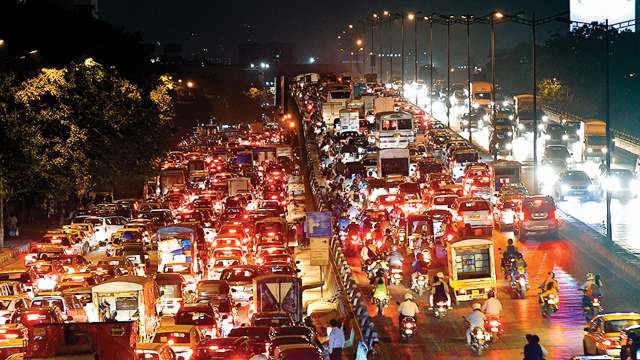
Despite the optimism, Mumbai remains infamous for traffic jams. Residents often spend hours travelling short distances, especially during rush hours. Narrow roads, constant construction and high vehicle density add to the problem.
Fadnavis did not deny these issues but argued that compared to Delhi, Mumbai’s traffic functions better because of behavioural discipline and ongoing infrastructure upgrades.
People and Policy Working Together
According to the Chief Minister, real change happens when government projects and public cooperation go hand in hand. He said Mumbai is an example where both factors are aligning, even if progress feels slow to commuters.
Mumbai vs Delhi: A Debate That Won’t End Soon
Different Cities, Different Challenges
Delhi and Mumbai have different urban layouts, population patterns and transport systems, making direct comparisons difficult. Delhi has wider roads and more open spaces, while Mumbai is constrained by geography.
Still, Fadnavis believes Mumbai’s disciplined driving culture gives it an edge, even with limited space.
Public Reaction Likely to Be Mixed
Statements comparing two major cities often spark strong reactions. While many Mumbaikars may agree with Fadnavis, Delhi residents may argue that their city faces unique challenges of its own.
The debate, however, has once again brought attention to how civic behaviour plays a crucial role in managing urban traffic.
Devendra Fadnavis’s remarks at Mumbai Manthan have reignited the Mumbai versus Delhi traffic debate, placing the spotlight on discipline rather than just infrastructure. According to him, Mumbaikars follow rules better, avoid lane-jumping and respect signals, making the city’s traffic more manageable despite its density.
With major metro expansions, integrated transport plans, coastal roads and upgrades to local trains underway, the government hopes to further ease congestion in the coming years. Whether Mumbai truly outperforms Delhi on traffic may remain subjective, but one thing is clear: discipline and long-term planning are key to moving India’s cities forward.