Major Political Shift Ahead of Mumbai Civic Elections
Just days before the Brihanmumbai Municipal Corporation elections, Maharashtra Navnirman Sena faced a significant setback in Mumbai. Santosh Dhuri, the party’s Worli division chief and a long-time associate of Raj Thackeray, resigned from the MNS and formally joined the Bharatiya Janata Party. His exit has triggered fresh debate around seat-sharing tensions, alliance politics, and internal dissatisfaction within the MNS.
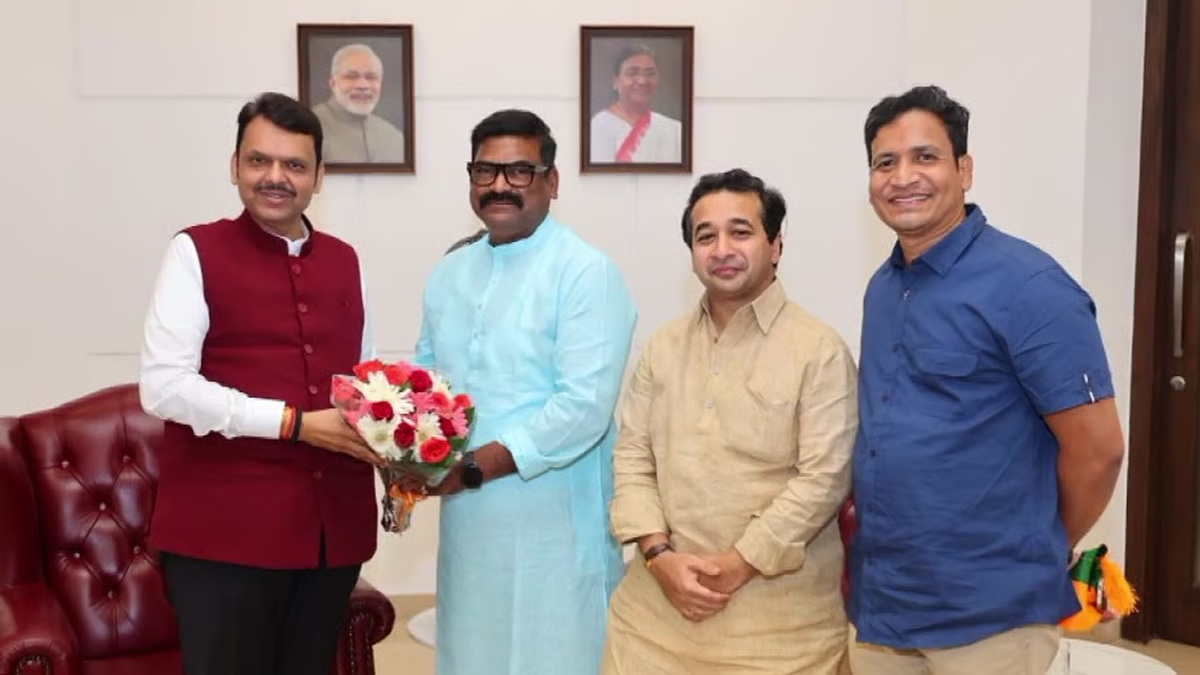
Dhuri was inducted into the BJP in the presence of Mumbai BJP president and MLA Ameet Satam. Soon after joining, he made sharp allegations against the MNS leadership, claiming that the party had compromised its identity during alliance negotiations.
Who Is Santosh Dhuri?
A Long Political Journey With Raj Thackeray
Santosh Dhuri is not a new face in Maharashtra politics. He began his political career alongside Raj Thackeray during their days in the undivided Shiv Sena, working with the party’s student wing, the Bharatiya Vidyarthi Sena. When Raj Thackeray split from the Shiv Sena in 2006 to form the Maharashtra Navnirman Sena, Dhuri followed him and became one of the early leaders of the new party.
Over the years, Dhuri built a strong base in Worli and served as a corporator. However, he lost the 2017 BMC elections, a setback that did not diminish his influence within the local party structure.
Ticket Denial and Ward-Level Politics
The Dispute Over Worli Ward No 194
According to Dhuri, the immediate trigger for his resignation was the allocation of seats during the MNS-Shiv Sena (UBT) alliance talks. He had been seeking a ticket from Ward No 194 in Worli, an area he considers his political stronghold.
However, the seat eventually went to Nishikant Shinde, brother of Shiv Sena (UBT) leader and MLA Sunil Shinde. This decision reportedly caused resentment among several MNS leaders, especially those who felt sidelined despite years of groundwork.
Dhuri alleged that the party failed to secure key wards like Mahim, Dadar, Worli, Sewri, and Bhandup, areas where MNS traditionally enjoys support.
Allegations Against MNS Leadership
“The Party Has Been Surrendered,” Says Dhuri
Speaking to the media after joining the BJP, Dhuri accused Raj Thackeray of surrendering the MNS to its ally, Shiv Sena (UBT), during seat-sharing negotiations.
He said the MNS was allotted only 52 seats and expressed doubts about the party’s chances of winning even a handful of them. According to him, important leaders were kept out of discussions, weakening the party’s negotiating position.
Dhuri also claimed that the Mumbai MNS chief, Sandeep Deshpande, was excluded from alliance talks and that there was an understanding within the alliance that neither Deshpande nor Dhuri should be given tickets.
Was Ticket Denial the Only Reason?
Dhuri Denies Quitting Over Personal Ambition
Despite the timing of his exit, Dhuri insisted that his resignation was not solely due to being denied a ticket. He said discussions around ward allocation were confusing and contradictory, with leaders being told different wards were more important at different times.
He further stated that senior BJP leader and minister Nitesh Rane personally contacted him and invited him to join the BJP. Following this, Dhuri met Chief Minister Devendra Fadnavis, after which he decided to switch parties.
Reactions From MNS and Allies
Shalini Thackeray Blames BJP Strategy
Reacting to Dhuri’s departure, MNS general secretary Shalini Thackeray said dissatisfaction among ticket aspirants was expected during elections. She alleged that the BJP and Shiv Sena were unhappy with the alliance between Raj Thackeray and Uddhav Thackeray and were actively attempting to weaken it.
According to her, the BJP has a history of identifying and attracting disgruntled leaders from rival parties during election season.
Shiv Sena (UBT) Responds to Allegations
Shiv Sena (UBT) leader Anil Parab dismissed Dhuri’s claims, saying political reputation comes from a party’s brand and ideology. He said leaders should not defame parties simply because they did not receive tickets.
Parab added that alliances inevitably leave some aspirants disappointed and that similar situations had occurred within Shiv Sena (UBT) as well.
Speculation Grows Within MNS
Will More Leaders Follow Dhuri?
Dhuri’s exit has sparked speculation within the MNS about further defections. Party insiders suggest that senior leaders like Mumbai MNS chief Sandeep Deshpande could also be considering their options.
When approached for comment, Deshpande declined to respond, adding to the uncertainty surrounding the party’s future in Mumbai.
Parallel Political Movements Across Maharashtra
Leaders Switch Sides Ahead of Polls
Dhuri’s move is part of a broader churn in Maharashtra’s political landscape ahead of civic elections. In a separate development, former Nashik Municipal Corporation mayors Dashrath Patil and Ashok Murtadak joined the Shiv Sena in the presence of Deputy Chief Minister Eknath Shinde.
Additionally, several other MNS leaders from different wings of the party have joined the Shiv Sena, including members from the student wing, film wing, and public interest cell. These exits point to growing unease within the MNS ranks.
What This Means for Mumbai’s Civic Politics
A Tough Road Ahead for MNS
With prominent leaders leaving and seat-sharing tensions surfacing publicly, the MNS faces a challenging battle in the upcoming BMC elections. The alliance with Shiv Sena (UBT), while politically significant, appears to have cost the party some of its internal cohesion.
For the BJP, Dhuri’s induction strengthens its presence in Worli and sends a message about its ability to attract leaders dissatisfied with opposition alliances.
Alliances, Ambitions, and Uncertainty
Santosh Dhuri’s exit from the MNS and entry into the BJP highlights the fragile nature of pre-election alliances and the personal ambitions intertwined with party politics. As civic polls draw closer, such shifts are likely to continue shaping the political narrative in Mumbai.
Whether this move proves decisive at the ballot box remains to be seen, but it has undoubtedly intensified the spotlight on internal dynamics within Maharashtra’s political parties.