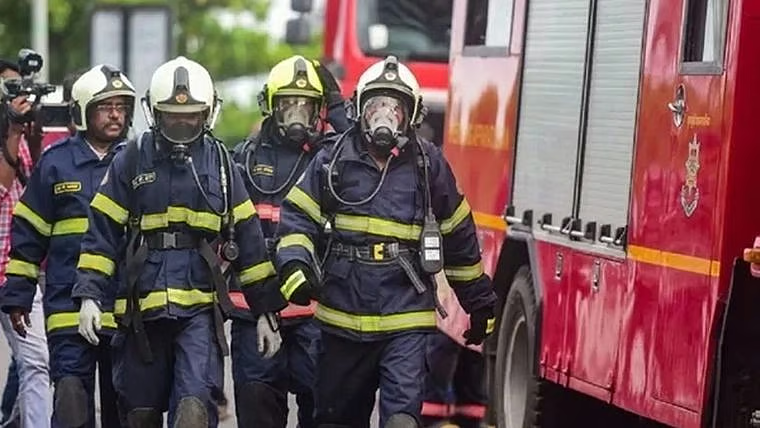
In an proactive bid to improve safety in cities, the Mumbai Fire Brigade has launched an ambitious fire safety audit of old residential structures in the city. The move has come at a time when there are growing worrying trends about the prevalence of fire hazards in old buildings that are decades old and do not conform to modern safety norms.
The audit drive is majorly targeting buildings that are more than 30 years old, especially in densely populated areas like South Mumbai, central suburbs, and older residential areas in the western suburbs. According to officials, this is because such buildings may often have outdated electrical connections, narrow access roads, a lack of fire exits, and insufficient firefighting equipment, among others, that raise major risks during a disaster.
Fire department officials are also conducting field inspections to check if basic fire safety standards are being followed. This will include the condition of stairways, accessibility of fire extinguishers, fire alarms, firefighting storage of water, and exit points. Special care has also been taken where senior citizens reside, where children reside, and where there is a huge number of tenants. It becomes a problematic task to evacuate everyone.
It is reported that most of the old buildings were erected when the norms regarding fire safety were either negligible or not strictly enforced. Over the years, unauthorized alterations in the form of closed balconies, obstructed stairs, unauthorized mezzanines, and overloaded electrical wiring have also contributed to this situation. In some instances, the fire services also find it difficult to access the buildings because of encroachments as well as narrow roads.
As a follow-up activity for the conduct of the audit, residents’ associations and housing societies are being encouraged to implement immediate corrective actions wherever shortcomings have been pointed out. Notices have also been sent out by the fire department to buildings that are not having the necessary facilities for fire safety, asking such buildings to incorporate elementary equipment like fire extinguishers, smoke alarms, and lighting systems within the stipulated time frame. Tough measures have also been threatened against such buildings for severe defaults.
However, fire department officials made it clear that the audit is not meant to penalize the residents but rather to create fire safety awareness to avoid loss of life and assets. “Many major fire outbreaks in the city happen in old buildings that have not been updated to meet modern fire safety challenges,” explained a fire department senior official. “We want to help the residents address fire threats even before the disaster happens.”
The scheme has garnered mixed responses from the residents. While many have taken the inspections in their stride as a necessary action, certain housing societies have voiced apprehensions about the budget implications of this exercise. However, officials from the fire department have clarified that certain measures can be adopted without any expenditure because these are low-cost measures that do not need any structural work. Such measures include ensuring that staircases are clear, performing periodic checks on electricity, and ensuring that entrances are accessible.
Along with the inspection drives, the FIRE Department is also conducting awareness programs among residents and caretakers. The awareness program includes training on basic fire safety procedures. According to the authorities, the residents play a pivotal role in dealing with the consequences of such incidents in urban areas. Early intervention on the part of residents can make all the difference in dealing with emergencies.
The process of the safety audit drive is expected to continue in various phases over the coming months. The drive aims to cover thousands of residential buildings in the city of Mumbai. It has also been suggested that the audit drive may be extended in the coming months to commercial buildings. Given the aged infrastructure in Mumbai and the rise in population density, fire department officials have made it clear that safety audits have become not only essential in such areas but optional as well. These safety audits will ensure a safer lifestyle for residents in such areas, closing the gap between older infrastructure and newer safety standards.