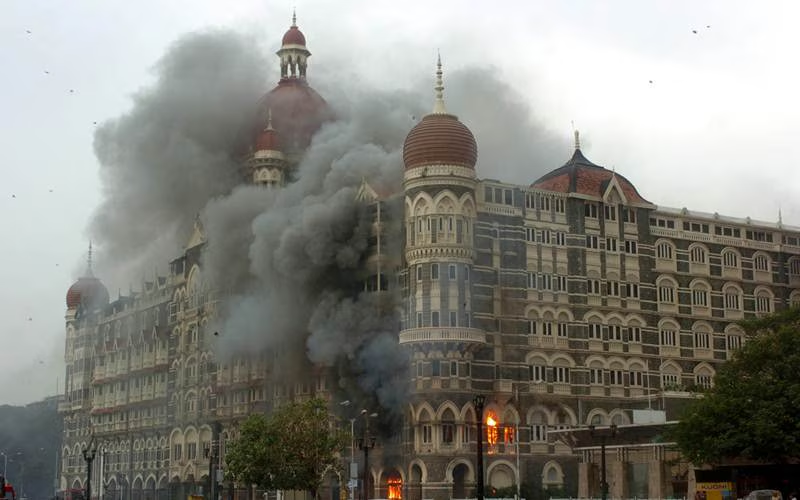
Almost seventeen years since the terrible attacks by terrorists in Mumbai on 26/11, one of the darkest phases of modern India continues to reverberate with continuing investigations, legal debates, and fresh intelligence findings. The coordinated attack by ten Lashkar-e-Taiba terrorists on November 26, 2008, killed 166 people and injured more than 300 others. While one terrorist, Ajmal Kasab, was captured alive and executed in 2012, the network behind the attack remains a subject of persistent scrutiny at home and abroad.
In 2025, the case has resurfaced into public discourse because of renewed judicial developments and investigative interest into the larger conspiracy involving Pakistani handlers, funding lines, and sleeper networks. Recent intelligence agency reports and legal petitions in the Bombay High Court have again highlighted people linked to the attack who were acquitted in earlier trials but are still under surveillance on the basis of international linkages.
New Inputs from Intelligence Push Investigation Forward
Indian agencies have revisited a number of cold leads, especially the handlers who masterminded the attack from Karachi using satellite phones and Voice over Internet Protocol, or VoIP. India has been demanding action against key masterminds like Zaki-ur-Rehman Lakhvi and Hafiz Saeed for long, but increased pressure on Pakistan to act against them has come amid new evidence shared by Indian agencies.
Officials said that a number of digital trails and financial networks, routed through the Gulf and South East Asia, were now being investigated. These include remittances, encrypted communication logs, and travel histories of suspected personnel who might have played logistical roles before or during the attack. Investigators said the new enhancements in digital forensic capabilities along with cooperation by foreign cybercrime units helped reach previously unreachable information.
Legal Debate Rekindled: Acquitted Individuals Under Scrutiny
The most serious development came toward the end of 2025, when Bombay High Court had been told that an accused acquitted in the case is “legally free to take any job without requiring police clearance,” as per his clean record. This has revived talk of terror investigations and their intricacies, particularly when people are acquitted due to lack of direct evidence.
The observation by the Court brings out the very fundamental dilemma: what should the legal system do with people who were once prime terror accused but were acquitted later? Human rights activists argue that acquitted persons must be allowed a dignified life, while security experts caution that such individuals may still hold valuable intelligence or connections that warrant monitoring. The debate reflects the broader tension between civil liberties and national security in post-terror India.
International Pressures and the Diplomatic Dimensions
There has always been a strong global dimension to the 26/11 attacks. Nationals from more than 20 countries fell victim, and the assault on Mumbai’s iconic Taj Mahal Palace Hotel turned into a worldwide symbol of urban terrorism. In recent months, governments of several foreign countries have reiterated support for India’s efforts in bringing the masterminds to justice.
India has continued to press for tough action against terror financing networks in forums like the FATF. Certain member countries have shared the Indian concerns, especially in the wake of new intelligence related to the resurgence of some LeT operatives in Afghanistan and parts of Pakistan.
Survivors, Families Still Seek Closure
It has elicited a mixed response from the survivors and kin of victims: hoped-for justice, but also painful memories resurfacing. Several survivor groups have demanded a comprehensive white paper detailing the full conspiracy, systemic failures, and accountability measures taken since 2008.
While several committees and inquiry panels in these years have recommended reforms in coastal security, intelligence coordination, and urban counter-terror readiness, some experts argue that full transparency about the lapses of 2008 has yet to be achieved.
The Road Ahead: Justice, Memory & National Security As India revisits the investigation of 26/11 in 2025, one finds that this case is not a closed chapter of history but a constant struggle for justice, a cautionary tale for national security planning, and a reminder of how global terror networks change over time. With new leads, digital evidence, and international cooperation, authorities hope to trace remaining links and finally dismantle all entities connected with the attack. As the legal system continues to grapple with the complex issues of acquitted individuals and rights of the accused, the nation remains united in its resolve to make sure that the entirety of the truth of 26/11 is neither forgotten nor ever repeated.