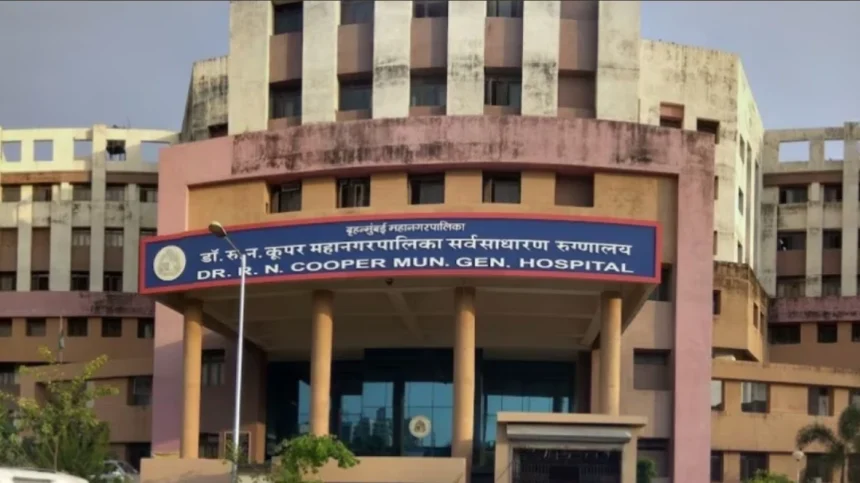
In a disturbing trend that has brought up very serious questions over the safety of medical professionals in Mumbai, Cooper Hospital in Juhu is facing increasing security concerns after a violent incident involving three doctors. The incident, which happened recently on the premises of the hospital, highlighted the serious flaws in security arrangements and created panic among the staff. As one of the major public healthcare facilities in the city, Cooper Hospital sees thousands of patients coming in every day, making the need for robust security infrastructure even more urgent.
According to hospital officials and staff, tension mounted after the civic body BMC stopped the services of 150 private security guards deployed throughout the hospital. These guards, outsourced to an agency, were supposed to be the backbone of security for different departments like the casualty or emergency ward, trauma care, outpatient departments, and night-time operations. Their sudden removal left the hospital dependent on a much smaller security team-just 90 personnel divided across three shifts, which staff members argue is far from adequate for a hospital the size and complexity of Cooper.
The attack on the three doctors was a grim reminder of the vulnerabilities in public hospitals, where emotional stress, overcrowding, and long waiting hours easily escalate into conflict. Details of the attack are still under investigation, but according to sources, the doctors were accosted by a group accompanying a patient. The number of guards around to intervene was less, and the situation quickly got out of hand, leaving injuries and a wave of fear among the resident doctors and medical staff.
Their withdrawal has sparked off a wave of concern among a section of the staff. Several employees say sensitive areas of the hospital, particularly departments where sensitive cases like emergency medicine and obstetrics are treated, are being left open to dangers. “Security was already stretched thin,” a senior resident doctor, speaking on condition of anonymity, said. “After the attack, many of us are feeling unsafe during day shifts as well. We want immediate reinforcement, not long-term promises.”
The BMC has said that it intends to deploy personnel from the Maharashtra Security Force, MSF, to replace the private guards. However, the process of approving and onboarding MSF guards could take several months owing to administrative procedures and coordination between departments. Until then, the hospital is relying on temporary measures, including redeployment of existing guards in high-risk zones and requesting support from local police when necessary.
Medical associations and doctor unions in Mumbai have, too, stepped in, demanding quick action. The Maharashtra Association of Resident Doctors demanded that the authorities take immediate steps to prevent further incidents. “Doctors are frontline workers and should not have to work under constant fear,” the association said in a statement. “If hospitals are not safe, it directly affects patient care and the morale of healthcare professionals.”
This is not the first time security concerns at state-run hospitals have come under scrutiny. Over the years, several incidents of violence against medical staff have been reported across Mumbai, often linked to overcrowding, public frustration, and understaffing. Experts argue such systemic issues require long-term solutions, including better communication protocols, larger security teams, and improved patient grievance systems.
For now, Cooper Hospital is focusing on stability and precaution. Additional CCTV cameras are being inspected, entry and exit points are being much more strictly monitored, and the hospital authorities are considering restricting the number of attendants that come with each patient. Other suggestions by some staff members include panic buttons and a rapid-response team within the premises. The incident has triggered afresh the debate on safety in healthcare institutions and the need for government bodies to prioritize protective measures with a great sense of urgency.
Doctors serve at the front line of public health; ensuring their security is not an administrative duty but essential to uphold people’s trust in the healthcare system. While the city now awaits the deployment of MSF personnel, the staff at Cooper Hospital continues to work amid high anxiety levels. Whether the authorities will spring into sufficient action before another incident takes place is a matter to be seen; yet the recent attack has surely woken up Mumbai’s healthcare infrastructure.