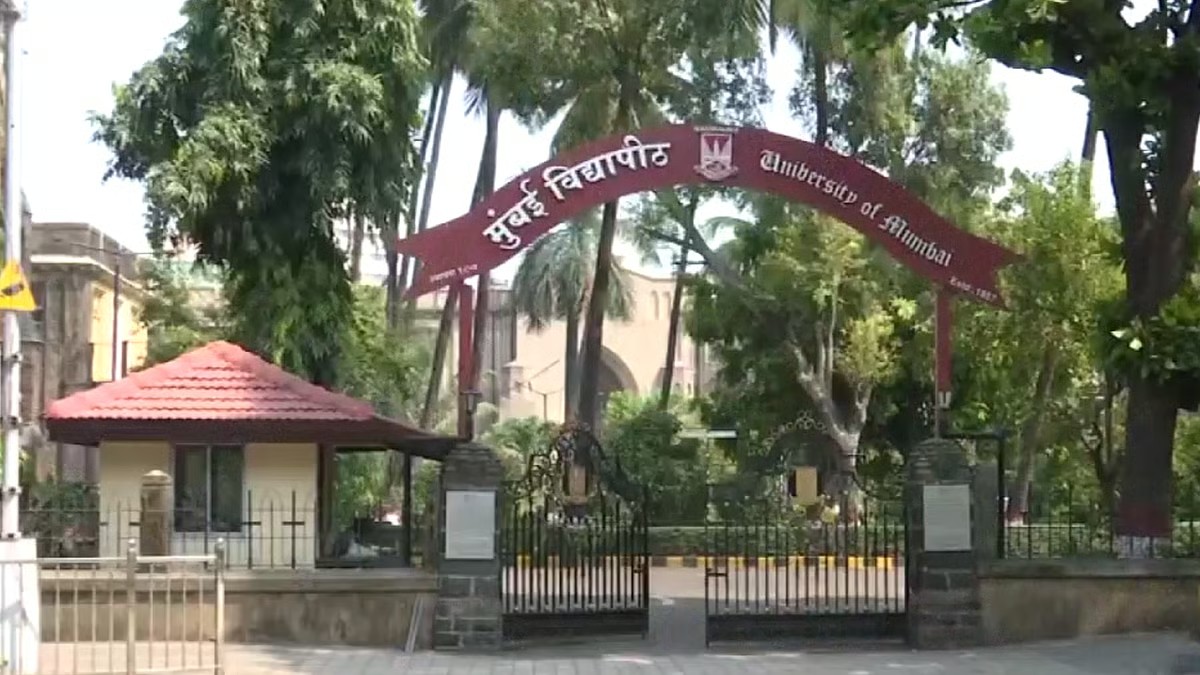
Mumbai: The teaching faculty of the University of Mumbai will launch a phase-by-phase agitation from 17 November, drawing attention to persisting grievances such as delays in promotion, vacant positions, and bottlenecks created by the university administration. The University of Mumbai Academic Staff Association called the symbolic and potentially escalating agitation, citing the complete disregarding of their demands by the university and state government.
Key Grievances
UMASA’s list of grievances centers on several critical areas. First, there is the Career Advancement Scheme, CAS, which regulates the promotion of university staff. Most professors have waited for over five years to have their promotion applications approved. Prolonged delays hinder not only individual career development but also the number of active supervisors to PhD candidates within the university, hence impacting research output and academic mentorship in general.
The other key issue is the delay in the issuance of the NOCs required for the faculty to attend international conferences or participate in academic collaborations abroad. Professors say timely approvals are important for exposure, collaborative research, and improving the university’s reputation worldwide.
UMASA also refers to the absence of full-time deans in several faculties, with administrators operating in “in-charge” capacities rather than permanent appointments. This, they maintain, compromises transparency and efficiency in academic and administrative decision-making. These apart, the association has raised pension-related issues and staff shortage affecting departmental functioning and student services.
The Protest Plan
Faculty members will wear black ribbons for three days across university campuses starting 17 November to show their discontent and highlight the unresolved issues as part of the first phase of the protest announced by UMASA. The protest might escalate in three phases, with sit-ins and collective demonstrations in the coming weeks if the administration does not pay adequate heed, UMASA warned.
Faculty members have submitted a formal seven-point demand letter to the Vice-Chancellor, Ravindra Kulkarni. The key points expressed in this regard are promotions on CAS in due time, NOC for foreign tours to be expedited, permanent appointment of deans, sorting out the staff crunch, expedient disbursal of pensions, better coordination between various wings of the administration, and a full-time Deputy Registrar for Quality Assurance and Academic Appointments. UMASA has emphasized these measures as crucial for smooth functioning, transparency, and quality in academic affairs.
Potential Impact
While symbolic to begin with, the protest could have far-reaching implications. Disruptions in faculty availability may affect lectures, research guidance, and examination schedules. Delays in promotion can demotivate faculty and, by consequence, affect their engagement in academic activities and mentorship. The association argues that continued inaction by the administration puts at risk not only faculty dissatisfaction but also the university’s reputation and quality of student education.
Indirectly, there could be impacts on schooling, postgraduate programs, and research activities if the agitation intensifies. According to UMASA, this protest is not meant to affect students but aimed at pushing for reforms in administration and recognition of faculty rights pending for several years.
University Response
Thus far, the university’s administration has acknowledged receipt of UMASA’s demands but has not committed to immediate resolutions. Though dialogue is reportedly ongoing, representatives of the faculty feel that progress has come too slowly to preclude initiating the phased protest. The administration is thus confronted with long-term structural issues, which it must address in a manner consistent with academic and student service continuity.
Wider Implications
This protest underlines deep-seated problems in Indian public universities, where the delays in administration, shortage of staff, and inefficiency in procedures lead to protracted dissatisfaction among the faculty. Delays in promotions, NOCs, and key appointments will eventually impact teaching quality, research output, and international collaborations, which in turn affect the overall standing of institutions.
Experts indicated that timely resolution of these issues would prevent a wider erosion of faculty morale and preserve institutional credibility. A serious dialogue now between UMASA and the university administration is called for to avoid escalation and ensure that the university’s academic and research missions remain uninterrupted.
The University of Mumbai’s graded agitation is a message from the teaching fraternity that the administrative and structural grievances accumulated over time can no longer be overlooked. As black ribbons start showing on campuses starting 17 November, the response from the administration will be closely watched with interest by the academic fraternity and students alike. For UMASA, the goal is clear: ensure timely promotions, appointments, and functional reforms to safeguard faculty rights and ensure the university retains its academic excellence. The coming weeks will disclose whether the issues could be resolved with dialogue or if the protest will be escalated, entirely affecting university operations as well as its wider academic ecosystem.