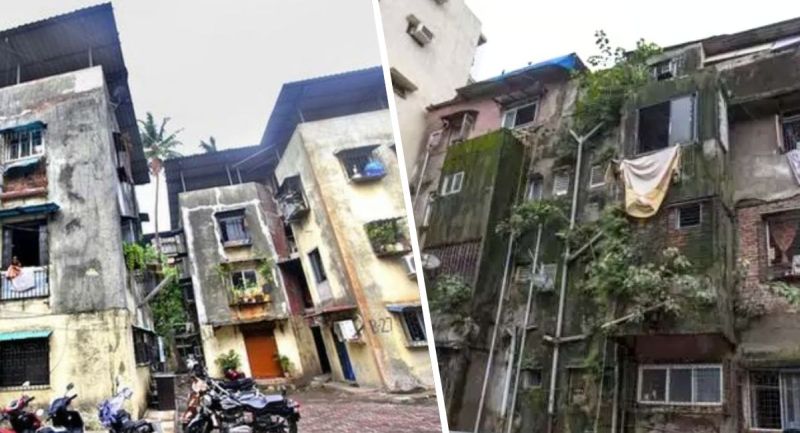
In a major safety alert, the Navi Mumbai Municipal Corporation declared 513 buildings across its jurisdiction as dangerous, amid growing concern over structural safety in one of India’s fastest-developing satellite cities. This move comes after a detailed survey of the aging structures and is part of the civic body’s effort aimed at averting potential accidents due to building collapse.
Why the Alert Was Issued
Under Section 265(A) of the Maharashtra Municipal Corporation Act, all buildings that are more than 30 years old have to undergo a structural audit by a qualified civil or structural engineer. The rule applies to all such buildings with either partial or full occupancy certificates that have crossed this critical age threshold. The recent survey by NMMC revealed that 513 structures either have pending audits or exhibit conditions that pose a high risk to residents.
This has been emphasized time and again by authorities as structural degradation, which starts from weakened foundations, corroded beams, water leakage, and monsoon damage, increases the risk of accidents. With fast urbanization and a high population density at Navi Mumbai, the safety of buildings is becoming a major civic concern.
Building Owner Requirements
Owners and residents of buildings that are over 30 years old are now required to:
Employ a registered structural or civil engineer from the NMMC-approved list.
Perform a detailed structural audit on the critical areas like foundation, columns, beams, water damage, and overall stability.
Complete recommended repairs without delay and remedy identified structural weaknesses.
Submit a completion certificate to the NMMC by 31st March 2026, stating that the building is safe to occupy.
Failure to do so will attract heavy penalties. For instance, Section 398(A) of the Act imposes a fine of ₹25,000 or an amount equivalent to annual property tax, whichever is higher, in cases of non-compliance. In extreme cases, buildings classified as dangerous may face disconnection of services such as water and electricity, in addition to a mandatory injunction to vacate the property immediately.
Implications for Residents and Businesses
This is more than a procedural warning; it is a real warning. Older buildings, especially those built during the initial phases of Navi Mumbai, may not have been constructed in accordance with modern standards of safety. Over time, these structures are prone to wear and tear that compromise safety. Ignoring this warning may lead to serious accidents, including collapse, which endangers lives and property.
Compliance is important for residents in ensuring safety and a lack of legal complications, while for property owners and businesses, it acts as a reminder to ensure regular maintenance and adherence to safety regulations. Insurance claims and property resale values also get affected if buildings are found non-compliant with NMMC directives.
Why Structural Audits are Important
The structural audit acts as an early warning system. Engineers survey the condition of the building’s critical structural components: beams, columns, load-bearing walls, and foundations. They also check environmental stresses such as monsoons, seepage of groundwater, and seismic activity. Based on these, they recommend repairs and reinforcements necessary for safety.
With proactive audits and repairs, the building owner safeguards the residents’ lives and plays a part in the safety and resilience of the city’s infrastructure.
The Bigger Picture
The rapid growth in urban areas poses a very serious problem of infrastructure, maintenance, and town planning in Navi Mumbai. Most of the older buildings were constructed before the new safety codes were imposed; thus, structural collapse is common in old buildings. Identification of dangerous buildings by NMMC was a positive step toward saving the citizens of this city, but much depends on how building owners take timely action.
Urban planners and policymakers look at long-term solutions such as retrofitting old structures, redevelopment of unsafe buildings, and making information related to building safety accessible to the public. As the city continues to grow, alongside connectivity, smart city projects, and civic amenities, structural safety will have to remain a priority. Conclusion The warning from NMMC is unambiguous: “Don’t wait until the walls crack.” And with 513 buildings marked as dangerous, there is little the residents and owners can afford to be dismissive about. The structural audits, timely repairs, and adherence to the civic directives are no longer options. By acting now, Navi Mumbai can prevent tragedies, protect lives, and ensure that growth in the city remains safe and sustainable.