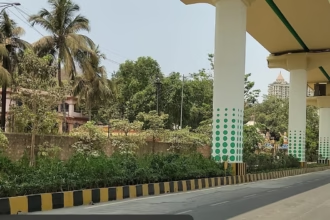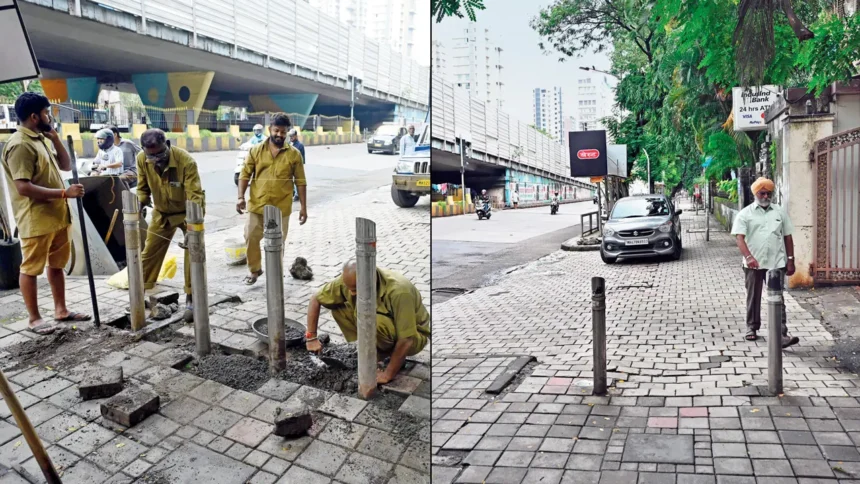
In a city where millions depend on walking as their primary mode of travel, whether to reach bus stops, railway stations, markets, or workplaces, the condition of Mumbai’s footpaths has been long regarded as a point of concern. Broken pavements, uneven surfaces, encroachments, and lack of signage or safe crossings have made walking both uncomfortable and unsafe for many. The BMC has now recognised this long-standing civic gap by launching an ambitious ₹100-crore Footpath Revamp Project aimed at transforming key pedestrian corridors across the city. This initiative therefore ushers in a major urban shift toward improved walkability, safety, and universal accessibility.
Overview of the Project
The project will cover 14 major roads and a total stretch of 16.55 kilometres, from the island city to the suburbs. Juhu Tara Road, SV Road, DN Road, among others, and various key residential and commercial belts form part of this renovation. These are high-footfall zones with regular commuters, students, senior citizens, and tourists. In identifying these roads, the BMC hopes to build model stretches that show how good footpaths can decongest and facilitate mobility.
Key Upgrades and Features
The revamping of footpaths does not merely contain a cosmetic makeover but includes a structural upgrade of pedestrian infrastructure. Major components of this upgrade include:
Repaving and leveling of footpaths to remove uneven or broken surfaces that are the cause of accidents, especially during monsoon.
Redefined kerbstones and dividers assist in streamlining both pedestrian and vehicular movement.
Introduction of tactile paving with the purpose to improve accessibility for visually impaired citizens is one of the most significant inclusions from the perspective of universal design.
Better traffic signs and information boards contribute to easy navigation and improved road discipline.
Thermoplastic road markings at key junctions, making crossing points more visible and safer for pedestrians.
Removing all unnecessary encroachments, extended ramps, and informal stalls that shrink walkable space.
The addition of ramps and slope controls has been particularly useful to wheelchair users, people with strollers, and older persons.
Together, these upgrades reflect the trend toward modern pedestrian standards in more developed urban settings.
Why this revamp matters for Mumbai
Mumbai is one of the most densely populated cities in the world. The narrow road space and ever-increasing vehicular population make the improvement of pedestrian facilities a practical option to enhance urban mobility. Superior kinds of footpaths encourage people to walk over shorter distances, reduce dependence on autos or private vehicles, and promote healthier and more environment-friendly habits.
Good footpaths mean less travel stress and time wasted by office-goers and students skirting around obstacles. For tourists and casual visitors, the city looks and feels much better due to a cleaner and safer walkway.
The redesign also continues broader global trends where cities like Singapore, Tokyo, and London are putting pedestrians first in their planning process. For Mumbai, this project represents a long-overdue investment in public safety and civic experience.
Challenges Ahead
While promising, the project is fraught with the following challenges:
Encroachment control is a major concern. Earlier attempts at keeping footpaths clear have tended to be temporary.
Construction-phase inconvenience may cause temporary disruptions for pedestrians and shop owners.
Maintenance will determine the success of the project. Without regular checks, repairs, and encroachment monitoring, over time, the new footpaths may deteriorate.
Experts point out that the real test will lie in how the BMC manages post-revamp upkeep.
Citizens’ Response and Expectations
Early responses among citizens in the pilot areas have been very positive. Most appreciate smoother walking surfaces and the elimination of hazardous ramps. The addition of tactile paths and proper slope management were particularly praised by senior citizens.
It is expected that this BMC initiative would go beyond these initial 14 roads and bring systemic change to hitherto neglected neighbourhoods. Sustained investment in pedestrian infrastructure is a must for a city where so many people walk.
A Step Toward a More Walkable Mumbai The ₹100-crore makeover of footpaths is a step in the right direction, preparing the ground for a safer and more inclusive Mumbai. As the city gears up for more modernization, catering to pedestrians’ needs reflects a shift in urban thinking to acknowledge that walkable cities are indeed healthier, resilient, and livable. If implemented correctly and maintained well in the long run, this could redefine the everyday walking experience of Mumbai and act as a blueprint for future civic makeovers.