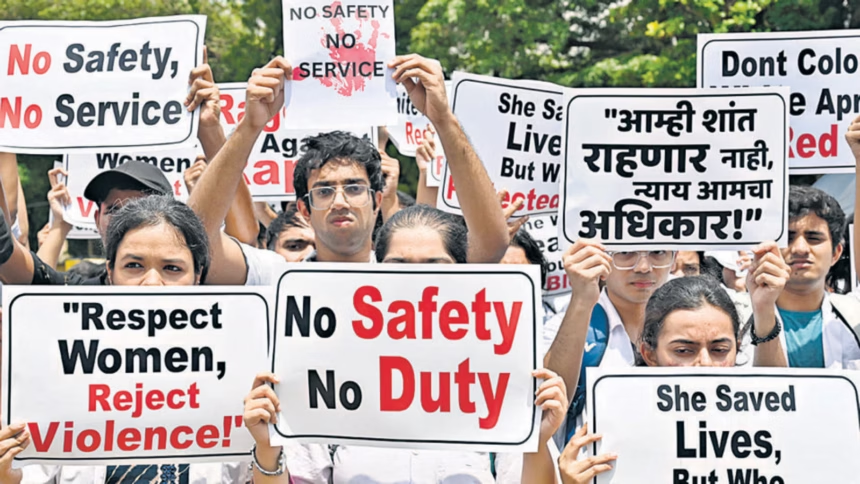
state-wide doctors’ strike that began on November 3 has brought non-emergency services across government hospitals in Maharashtra, including Mumbai, to a near standstill. The Maharashtra Association of Resident Doctors (MARD) called for the protest following the tragic suicide of Dr. Sampada Mundhe, a resident doctor at Government Medical College, Nagpur. The incident has sparked outrage across the medical fraternity, reigniting long-standing concerns over workplace stress, harassment, and lack of systemic support for young doctors.
Resident doctors across major hospitals such as JJ Hospital, Sion Hospital, KEM, and Nair in Mumbai have joined the strike, halting outpatient department (OPD) services and elective surgeries. Only emergency and critical care units continue to function. MARD has demanded a transparent investigation into Dr. Mundhe’s death, immediate suspension of those accused of harassment, stronger safety protocols for medical professionals, and financial compensation of ₹5 crore for the deceased doctor’s family.
“Doctors are not just demanding justice for Dr. Mundhe—they are demanding dignity for the entire medical community,” said a MARD spokesperson during a press briefing in Mumbai. The association alleges that institutional harassment, coupled with excessive workload and inadequate support, has created a toxic environment for resident doctors across several hospitals.
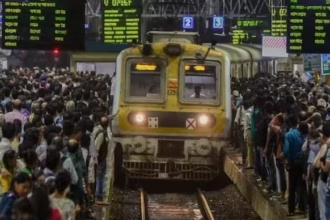
The strike has sent ripples across the state. Hundreds of patients waiting outside public hospitals in Mumbai, Pune and Nagpur on Monday morning found OPDs closed and appointments postponed. “We came from Thane for a check-up that’s been due for months, but were told doctors aren’t available,” said a patient’s relative outside JJ Hospital. Hospitals have started referring non-emergency cases to private facilities, putting an extra financial load on patients.
The state health department has appealed to the doctors to resume duties, assuring them of a fair probe. Health Minister Tanaji Sawant said, “We are deeply saddened by Dr. Mundhe’s death. The government has already formed a three-member committee to investigate the incident. We urge resident doctors to return to work while the process continues.” However, MARD insists verbal assurances are no longer enough, seeking written commitments and a concrete timeline for reforms.
This is not the first time Maharashtra’s medical fraternity has gone on a collective protest. Over the last five years, doctors have been raising issues of physical attacks by patients’ relatives, long working hours, poor hostels, and mental health problems, among others. The current strike has revived public debate about whether India’s public healthcare system provides enough protection and resources for its most essential workers.
Senior doctors and faculty members have expressed solidarity with the residents while also appealing for a resolution. “The burnout levels among resident doctors are alarming. They work 18-hour shifts, face abuse, and are still expected to remain calm and compassionate. The system is failing them,” said Dr. Meena Deshmukh, a senior medical educator at KEM Hospital.
Experts say the shortage of staff and increasing patients in government hospitals make the resident doctors the backbone of Maharashtra’s public healthcare system. If they are absent even for a few days, it may paralyze the functioning of the hospital. If the strike remains, then invoking MESMA (Maharashtra Essential Services Maintenance Act) may be a possible consideration, whereby disciplinary action against the striking personnel in essential services can be considered.
Patient rights groups have called for a balanced approach. “We sympathize with doctors, but the strike also hurts thousands of poor patients who depend solely on public hospitals,” said activist Shashikant Patil. “The government and MARD must find middle ground through dialogue, not confrontation.”
Meanwhile, MARD has made it clear that the protest is not only for compensation but for lasting institutional change. The association has asked for mental health counselling cells in all medical colleges, grievance redressal committees with external oversight, and strict anti-harassment measures. With nightfall in the hospitals of Mumbai, duty and despair stare at each other. Resident doctors continue to hold placards with demands for justice, while patients stand outside locked OPDs, caught between two broken systems. Unless a resolution is urgently reached, the ongoing strike may further advance the cracks in Maharashtra’s healthcare structure-one which juggles overworked doctors, limited resources, and a growing demand by the public.