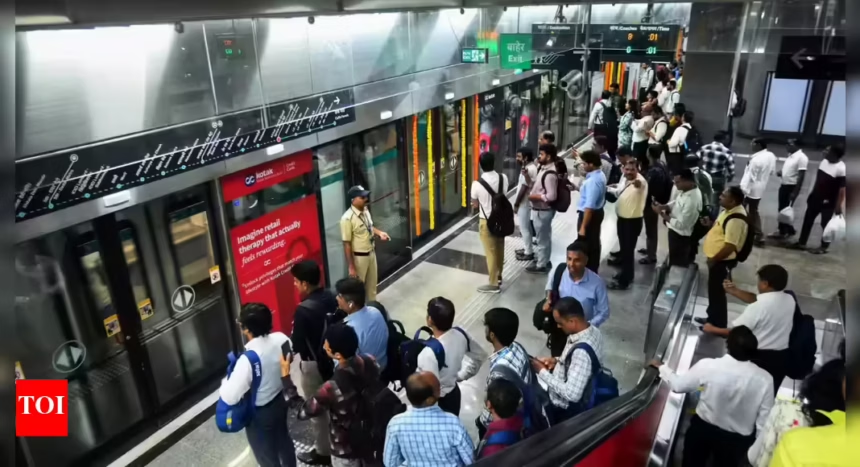
Mumbai Metro 3 line has seen a significant increase in passengers, with 159,105 people availing the service on Friday, October 11, 2025. The ridership increase reflects the increased dependence on metro services within the city and is making its presence felt among other public transport systems in South Mumbai.
Ridership Growth
The recent figures are a significant jump from earlier months, showing increasing residents and office workers opting for Metro 3 as their daily travel mode. The increase, according to officials, is due to the convenience, reliability, and compression of travel time in major areas of the city afforded by the metro.
Metro 3 links key business centers, housing societies, and transportation terminals, providing a comfortable, air-conditioned means of travel as opposed to regular public transport. This has turned it into a popular daily commute option, particularly peak hours when buses and taxis are packed.
Impact on Other Transport Modes
The growth in metro passenger usage has been accompanied by a perceptible fall in the number of passengers on buses and share taxis in South Mumbai. Passengers are increasingly turning to Metro 3 because it is punctual, safe, and allows faster movement than the frequently congested road routes.
Bus operators and share taxi companies have reported lower numbers of passengers on routes that are on a parallel to Metro 3. While public transport authorities see this as a good indication of urban mobility development, it has also put road-based transportation operators in worry of losses in revenues.
Advantages to Commuters
Passengers have appreciated Metro 3 for its better-predicted travel timeline, without traffic congestion, and a cleaner and more comfortable riding experience. Its integration with other lines and principal transit hubs has also increased its value by making multi-modal travel within the city smoother and more convenient.
Future Prospects
Transport planners believe that Metro 3’s growing popularity signals a broader shift in Mumbai’s commuting patterns. Authorities are exploring options to expand metro services, increase frequency, and further integrate metro routes with buses and suburban trains to manage the city’s transport demands effectively.
Increased usage of metro services is likely to ease road congestion, shorten travel duration, and lessen pollution in the city’s most congested places. Public awareness campaigns promoting the utilization of mass transit are also helping the growing ridership.
Conclusion
Mumbai Metro 3’s ridership of 159,105 people on Friday represents a welcome shift towards efficient, modern, and sustainable urban transport. While passengers on buses and share taxis in South Mumbai are decreasing, the convenience and punctuality of the metro see it as an ever-more popular mode for daily commuters. Trends are being watched by authorities as they continue to map out further plans to improve the overall public transport infrastructure in Mumbai.