Mumbai, Oct 9, 2025:
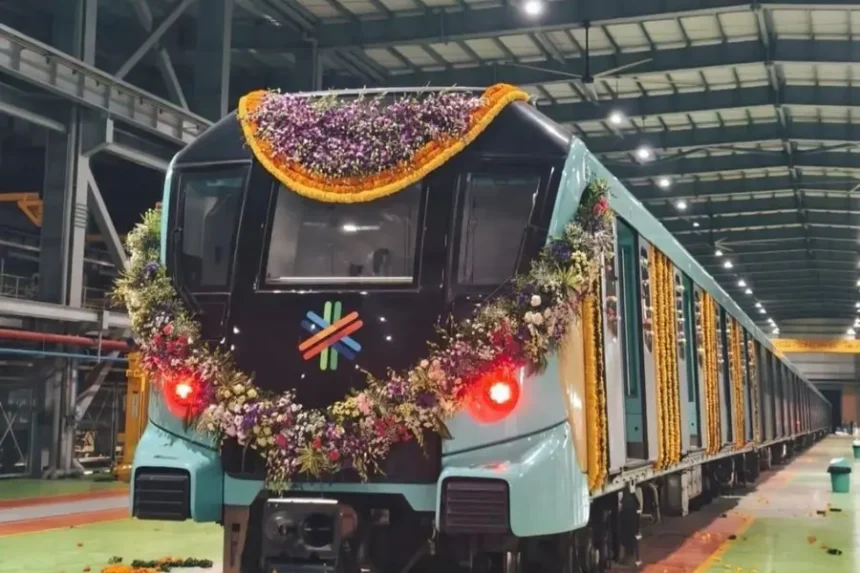
The last stretch of Mumbai Metro Line 3, which is also called the Aqua Line, has gone operational and that too marks a red-letter day in the city’s urban transportation network. The entirely underground corridor now links key residential areas and commercial districts to make it the first metro line in Mumbai to operate completely underground.
The opening of the Aqua Line is likely to tremendously ease traffic, cut travel times, and offer a contemporary, safe, and efficient means of commuting for millions of residents. The line extends around 33.5 kilometers across major stations like Cuffe Parade, Marine Lines, and Hutatma Chowk, connecting with other metro and suburban trains.
Authorities pointed out that having the Aqua Line completely underground was a technical and engineering feat, with the tunneling complex underneath densely populated districts, heritage areas, and the city’s complex underground infrastructure of utilities. “Building a metro below one of India’s most populated cities was a huge task, with soil conditions, monsoon water inflow, and keeping neighboring buildings structurally sound being some of the challenges.”. The milestone is an achievement of the hard work of engineers and labourers,” stated a top official of Mumbai Metro Rail Corporation Ltd (MMRCL).
The Aqua Line has been equipped with state-of-the-art, advanced facilities to optimize commuter experience:
Advanced ticketing systems with smart cards and mobile apps.
Real-time train tracking and digital display of information at all stations.
Energy-efficient trains to minimize power consumption and environmental footprint.
Enhanced safety features, including CCTV surveillance, fire safety systems, and emergency evacuation protocols.
Commuters are expected to experience a reduction of travel times by up to 40% compared to road transport along the same routes. The metro also provides seamless connectivity with existing suburban train stations and other metro lines, facilitating easier movement across Mumbai’s business districts, residential areas, and major transport hubs.
The locals are also hopeful about the new line. Ramesh Patil, who commutes on a daily basis from Bandra to Churchgate, stated, “Previously, it took more than an hour to commute by road during rush hours. Now, with the Aqua Line finally operational, it takes less than 30 minutes to my office. It’s a change for good for people like me who commute daily.”
The metro project has been implemented in phases, with previous stretches being inaugurated in the last two years. The last section, from Cuffe Parade to SEEPZ, was finished after stringently testing safety, trial runs, and technical checks. All the stations and trains have cleared the safety and operating certification before they were opened to the public, MMRCL assured.
Officials also highlighted the green advantages of the metro line. By offering a dependable substitute to personal cars and buses, the Aqua Line will help lower carbon emissions, fuel usage, and overall traffic in one of India’s most congested cities.
The launch has attracted the interest of urban planners, transport specialists, and city administrators across the country, as it shows the possibility of big-ticket underground metro lines in densely populated cities. It is considered by many to be a template for other Indian metropolitan cities like Bengaluru, Chennai, and Pune, which are considering similar underground corridors.
With the Aqua Line in full operation, Mumbai is set to begin a new age of contemporary urban transport, uniting convenience, efficiency, and safety. Authorities appeal to citizens to follow safety protocols, keep the area clean, and utilize the metro for commuting to reap the advantages of the line to the fullest.