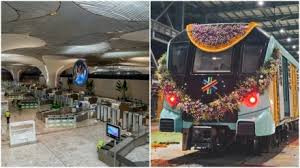
Prime Minister Narendra Modi on Wednesday commissioned the Mumbai Metro Line 3, a mega-project that is anticipated to bring about drastic transformation in the urban mobility in the city and ease perennial traffic jams. The new metro line, which is part of the overall Mumbai Metro system, is around 33.5 kilometers long and links major locations in the city, providing commuters a speedy, secure, and eco-friendly option to road transport.
The project, developed by the Mumbai Metropolitan Region Development Authority (MMRDA), comprises 26 underground stations, and thus it is one of India’s biggest entirely underground metro lines. Line 3 connects Colaba in South Mumbai with SEEPZ in the northern suburbs, connecting key business, residential, and industrial complexes, and seamlessly integrating with the existing metro lines as well as suburban railway stations.
At the inauguration event, Prime Minister Modi touched upon the significance of the project in providing relief to daily commuters of millions of Mumbaikars. He pointed out that Metro Line 3 signifies India’s intent towards modern urban infrastructure, eco-friendly public transport, and lowering the carbon footprint of the city. “Metro Line 3 will revolutionize the public transport system in Mumbai, saving time, decongesting roads, and enhancing the quality of life for citizens,” he added.
The metro line has state-of-the-art trains, sophisticated signaling systems, and green technologies to provide high-frequency services with low environmental footprints. The underground route reduces surface disruptions to the cityscape and maintains the historic buildings along its route, incorporating safety measures like fire detection systems, CCTV monitoring, and emergency evacuation systems.
Commuters will see travel times cut by as much as 60% on some routes, especially the heavily trafficked South Mumbai–SEEPZ corridor. Officials point out that Line 3 will carry more than 1.5 million passengers a day, taking pressure off the over-stressed road network and suburban rail system in Mumbai. The project is also expected to create jobs and drive economic growth along the metro corridor.
The ceremony is culmination of years of planning, construction, and coordination between several agencies such as the Brihanmumbai Municipal Corporation (BMC), Mumbai Police, and environmental authorities. In spite of complications arising from underground tunneling in high-density populated areas and heritage issues, the project was successfully completed on time, a reflection of efficient project management and technological skills.
Transportation experts are of the opinion that Metro Line 3 will be a catalyst for city growth, promoting the use of public transport and decreasing reliance on private cars. The MMRDA has also said that it will introduce last-mile connectivity solutions like feeder buses, electric shuttles, and bicycle-sharing services to make the commute more convenient.
With its inauguration today, the Mumbai Metro Line 3 becomes the latest addition to the city’s expanding web of metro services, complementing the current lines and upcoming developments. Authorities hope that the metro will significantly contribute to making Mumbai a more efficient, environmentally friendly, and commuter-friendly city, while also advancing Maharashtra’s overall vision of modern urban infrastructure growth.