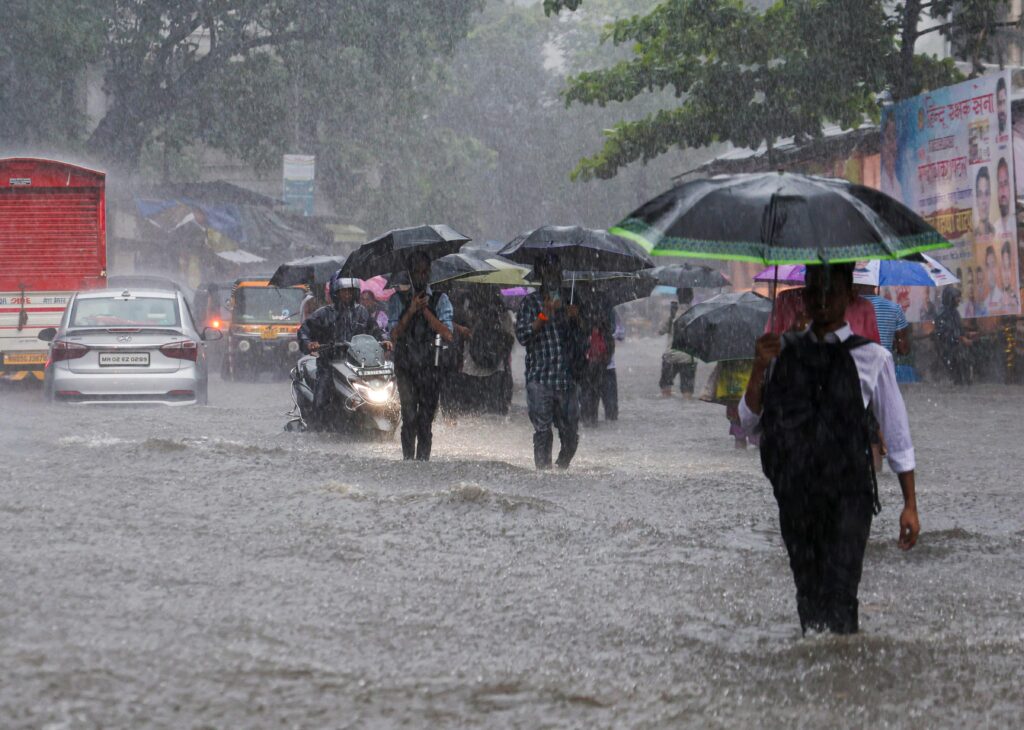
Mumbai experienced one of its most intense monsoon spells of the year after recording approximately 334 millimeters of rainfall within a 24-hour period, triggering widespread waterlogging, traffic congestion, and disruptions to public transportation. The relentless downpour affected several parts of the city, leaving authorities scrambling to manage the impact of the heavy rains and ensure public safety.
According to weather officials, the rainfall was among the highest recorded in Mumbai this monsoon season. The India Meteorological Department (IMD) had earlier issued weather alerts warning of intense rainfall, thunderstorms, and gusty winds across Mumbai and neighboring districts. As the rain intensified, several low-lying areas quickly became submerged, leading to significant challenges for commuters and residents.
Roads in areas such as Andheri, Saki Naka, Kurla, Dadar, and parts of the eastern suburbs witnessed severe waterlogging. Vehicles moved slowly through flooded streets, while some motorists were forced to abandon their journeys due to rising water levels. Emergency response teams were deployed to clear drainage channels, remove fallen tree branches, and assist stranded commuters.
Mumbai’s suburban railway network, often described as the city’s lifeline, also felt the impact of the heavy rainfall. While most train services continued operating, delays were reported on several routes due to water accumulation near tracks and reduced visibility. Railway authorities monitored conditions closely and implemented precautionary measures to ensure passenger safety.
The city’s public transport system faced additional pressure as thousands of commuters sought alternative travel options. Bus services experienced delays on several routes, while ride-hailing services reported increased demand and longer waiting times. Many office workers opted to work remotely as weather conditions deteriorated throughout the day.
Municipal authorities activated emergency control rooms and coordinated with disaster management teams to respond to incidents across the city. Pumps were deployed in flood-prone locations to remove excess water, while civic workers remained on standby to address emergencies. Officials urged residents to avoid unnecessary travel and remain alert to weather advisories.
Despite the heavy rainfall, water reservoir levels supplying Mumbai continue to be closely monitored. Earlier concerns regarding below-average rainfall had raised questions about water availability during the year. The latest downpour has contributed significantly to reservoir inflows, offering some relief to water management authorities. However, experts caution that sustained rainfall patterns will ultimately determine long-term water security for the metropolitan region.
Meteorologists explained that the intense rainfall was driven by favorable monsoon conditions over the Arabian Sea combined with moisture-laden winds moving toward the western coast. Such weather systems can produce short-duration but extremely heavy rainfall events, particularly in coastal cities like Mumbai.
Residents shared images and videos of flooded roads, overflowing drains, and rain-soaked neighborhoods across social media platforms. While many praised emergency workers for their efforts, others highlighted recurring concerns about drainage infrastructure and urban flooding. Civic groups have renewed calls for long-term solutions to improve stormwater management and strengthen resilience against extreme weather events.
Weather officials have warned that intermittent heavy rainfall may continue over the coming days as monsoon activity remains active across Maharashtra. Authorities are advising citizens to stay updated through official weather bulletins and follow safety guidelines during periods of intense rain.
As Mumbai recovers from yet another monsoon challenge, the city’s resilience once again comes into focus. While heavy rains are an annual reality for the financial capital, the latest 334 mm deluge serves as a reminder of both the power of nature and the ongoing need for robust urban infrastructure capable of handling extreme weather conditions.