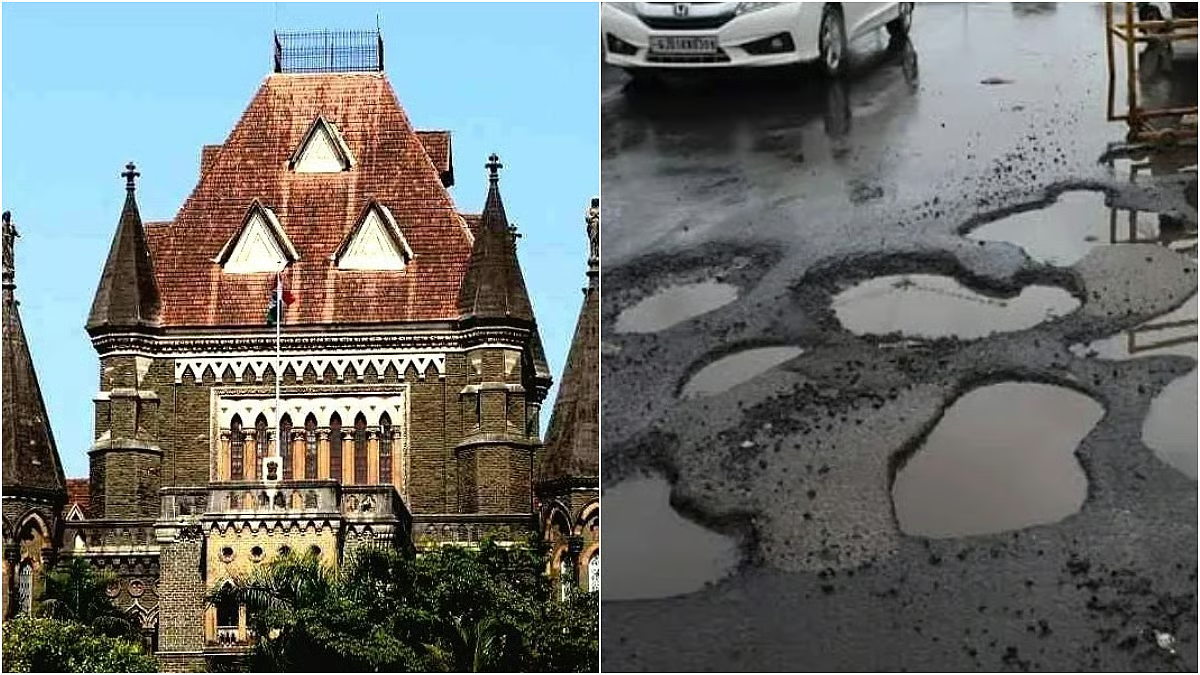
In a rebuke to law enforcement practices the Bombay High Court has termed the act of handcuffing two individuals by police as a form of humiliation. The court directed the Government of Maharashtra to pay compensation to the victims.
The ruling shows the judiciary’s emphasis on protecting dignity and safeguarding fundamental rights even in cases involving criminal allegations.
Case Background
The case is about an incident where two accused persons were allegedly handcuffed by police personnel during transit and public handling. There was no threat of violence or escape. The petitioners approached the High Court arguing that the action violated their human rights and was against established legal norms governing arrest procedures in India.
The court checked if the police had justified grounds to use restraints like handcuffs. According to existing guidelines handcuffing is a measure and can only be used under exceptional circumstances. Such as when an accused is violent poses a flight risk or has a history of serious crimes.
Court’s Observations
The bench of the Bombay High Court observed that in this case there was no compelling reason for the police to handcuff the individuals. The act amounted to humiliation and a violation of their dignity, which is protected under Article 21 of the Constitution of India.
The judges remarked that law enforcement authorities must act within the law and respect rights regardless of the allegations. “Handcuffing cannot be routine. It should be an exception backed by justification ” the court noted.
Compensation Ordered
The court directed the Government of Maharashtra to pay compensation to both individuals. The order sends a message that misuse of police powers will attract accountability and financial liability.
The court also asked the authorities to conduct a review of the incident and ensure such practices are not repeated. It emphasized the need for training and sensitization of police personnel regarding human rights and lawful arrest procedures.
🚨 Legal & Social Implications
This ruling reinforces principles that prioritize human dignity over procedural excess. The Supreme Court and various High Courts have held that handcuffing without cause is unconstitutional.
Legal experts believe this judgment will encourage scrutiny of police conduct and strengthen safeguards against custodial abuse. It highlights the importance of balancing law enforcement duties with liberties.
A Broader Message
The case reminds us that justice is not about punishing wrongdoing but also about ensuring fairness and respect for all individuals within the legal system. As India modernizes its policing framework such judicial interventions play a role in aligning enforcement practices with constitutional values.
For citizens the ruling reinforces trust in the judiciary as a guardian of rights. For law enforcement agencies it is a directive: authority must always be exercised with responsibility and respect, for human dignity.