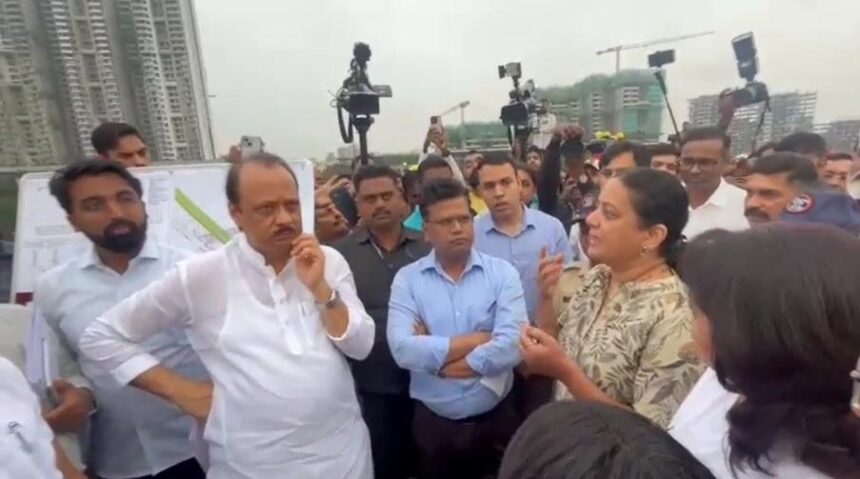
Mumbai witnessed a dramatic scene in Worli after severe traffic congestion triggered public anger, culminating in a woman directly confronting a government minister during an on-ground protest. The incident, which quickly gained attention both offline and on social media, has once again highlighted the city’s ongoing struggle with traffic mismanagement and urban congestion.
The chaos unfolded during peak hours when commuters found themselves stuck in unusually long traffic snarls across key roads in Worli, one of Mumbai’s busiest and most critical junctions. According to eyewitness accounts, vehicles were stranded for hours, with little to no movement. Frustrated residents and daily commuters began stepping out of their vehicles, demanding immediate intervention from authorities.
Amid this growing unrest, a visibly agitated woman approached a minister who was present in the area, reportedly for an inspection or related visit. In a bold and emotional confrontation, she questioned the administration’s failure to manage traffic effectively, especially in a city known for its dense population and constant vehicular movement. Her remarks reflected the collective frustration of thousands who face similar situations almost daily.
Videos of the confrontation soon went viral, with many praising the woman for voicing public concerns so directly. She was heard criticizing poor planning, lack of real-time traffic control, and inadequate coordination between departments responsible for road management. Her statements resonated widely, turning the incident into a symbol of citizen pushback against administrative inefficiency.
Authorities later clarified that the traffic disruption was caused due to a combination of factors, including ongoing infrastructure work, lane closures, and an unexpected surge in vehicle volume. Officials also pointed to poor coordination between civic agencies and traffic police as a contributing factor.
In response to the backlash, the minister assured immediate corrective measures. These include deploying additional traffic personnel, improving signal synchronization, and implementing diversion plans during peak congestion hours. Authorities have also promised a review of ongoing construction projects to minimize disruption to daily commuters.
Urban planners and transport experts argue that Mumbai’s traffic issues are deeply structural and cannot be resolved through temporary fixes alone. They emphasize the need for long-term solutions such as improved public transport integration, smarter traffic management systems, and stricter regulation of construction activities during peak hours.
The incident has reignited debates around accountability and citizen engagement in governance. Many believe that such direct confrontations, while rare, are becoming increasingly necessary to draw attention to everyday civic issues that often go unaddressed.
For Mumbaikars, traffic congestion is more than just an inconvenience—it directly impacts productivity, mental well-being, and overall quality of life. As the city continues to expand and infrastructure projects multiply, ensuring smoother traffic flow remains one of the biggest challenges for authorities.
This episode in Worli serves as a powerful reminder that public patience is wearing thin, and citizens are now more willing than ever to demand accountability and immediate action from those in power.