Mumbai turns focus to waste solutions ahead of Climate Week
Mumbai’s growing waste problem is once again in the spotlight, but this time the focus is on solutions rather than just the crisis. Ahead of the upcoming Mumbai Climate Week, a special half-day convention dedicated to urban waste management will bring together experts, civic authorities, NGOs, think tanks and community groups.
The event, titled Solutions that Work, aims to highlight practical ways to manage waste better, reduce landfill pressure, and address climate challenges linked to urban garbage. With Mumbai generating thousands of tonnes of waste daily, the discussion comes at a critical time.
A zero-waste housing society leading by example
Community effort making a difference
One inspiring example comes from the BARC Cooperative Housing Society in Anushakti Nagar. Around 10,000 residents there have managed to transform their neighbourhood into what they proudly call a zero-waste society.
Every day, the society generates about 300 kilograms of waste. Instead of sending it all to landfills, a team of 40 trained women manages the waste locally through composting and energy generation systems. This approach significantly reduces the environmental burden on Mumbai’s already stretched garbage disposal infrastructure.
Composting and biogas initiatives
The society uses composting pits to process organic waste and operates several biogas plants that convert biodegradable waste into energy. The biogas produced is sufficient to power a local canteen within the housing complex.
This model shows how localised waste management can not only reduce landfill dependency but also generate useful resources. It also highlights the role of community participation and organised waste collection systems in making such initiatives successful.
Coordination in waste collection
The system works efficiently because waste collection is carefully organised. Separate contractors handle door-to-door collection and coordinate closely with the team running composting and biogas units.
Simple changes at the collection stage, such as proper segregation and scheduling, have made a significant difference. The example demonstrates that small operational tweaks can lead to large environmental benefits.
Why Mumbai needs urgent waste solutions
Massive daily waste generation
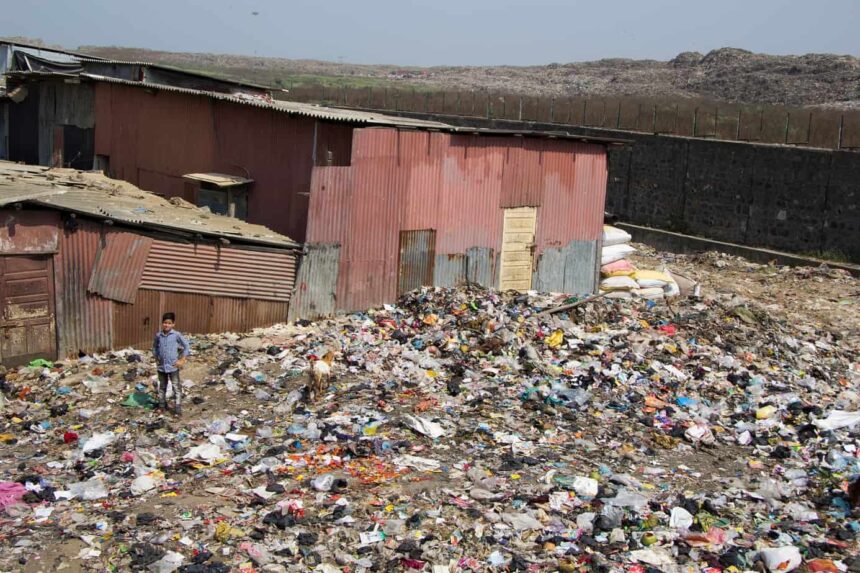
Mumbai produces roughly 7,000 metric tonnes of waste every day. Managing such a huge volume remains a major challenge for civic authorities. Landfills are under pressure, and environmental risks such as fires, methane emissions and groundwater contamination continue to raise concerns.
Rapid urbanisation, population growth and changing consumption patterns have all contributed to increasing waste levels in the city.
Environmental and climate impact
Waste management is not just a civic issue but also a climate concern. Organic waste decomposing in landfills releases methane, a greenhouse gas significantly more potent than carbon dioxide.
Experts say addressing wet waste effectively can play a key role in reducing urban greenhouse gas emissions.
Climate Week event aims to highlight solutions
Convention focused on practical approaches
The upcoming convention at the Museum of Solutions in Lower Parel will focus specifically on practical, scalable waste management models. Participants will include municipal officials, environmental experts, NGOs and grassroots organisations.
The goal is to exchange ideas, showcase success stories, and encourage collaboration across sectors to tackle the city’s waste challenge more effectively.
Role of civic authorities
Officials from Mumbai’s municipal corporation will discuss future plans for waste management, including strategies for reducing landfill dependence, improving segregation, and strengthening infrastructure.
Policy discussions are expected to explore both technological innovations and behavioural change initiatives.
Behaviour change remains a key challenge
Segregation still inconsistent
Despite growing awareness, consistent waste segregation at the household level remains a challenge in many parts of Mumbai. Experts say people often understand the importance but fail to maintain the habit over time.
Behavioural change campaigns are being used to encourage residents to separate wet and dry waste more consistently.
Cultural connection with waste
Environmental specialists point out that modern urban lifestyles often create a disconnect between people and the waste they generate. As incomes rise, consumption increases, but awareness of disposal processes may decline.
This disconnect can lead to poor segregation practices and increased pressure on municipal waste systems.
Importance of waste workers and community participation
Often overlooked contributors
Waste pickers, sanitation workers and recycling staff play a crucial role in managing urban waste. However, their contributions are often underrecognised.
Many experts believe integrating these workers into formal waste management systems can improve efficiency and social equity while enhancing environmental outcomes.
Community-led initiatives gaining traction
Local community efforts like the Anushakti Nagar model show how collective responsibility can drive meaningful change. When residents actively participate, waste reduction becomes more effective and sustainable.
Such models can inspire other neighbourhoods to adopt decentralised waste management practices.
Technology and innovation in waste management
Traceability systems emerging
Technology-driven waste tracking systems are becoming increasingly important. These tools help cities monitor waste generation, collection, and disposal more accurately.
Better data can lead to improved planning, reduced inefficiencies, and measurable environmental benefits.
Supporting climate goals
Innovative waste management solutions can directly support climate action by reducing methane emissions, promoting recycling, and encouraging resource recovery.
Urban climate strategies increasingly recognise waste management as a critical component of sustainability planning.
Looking ahead: building a cleaner urban future
Focus on domestic waste
The upcoming discussions will largely centre on domestic waste management, including ward-level initiatives and decentralised processing methods.
Experts believe focusing on household waste can yield significant improvements because it forms a large portion of the overall waste stream.
Scaling successful models
Replicating successful community projects across the city could reduce pressure on landfills and lower environmental risks. However, scaling requires strong coordination between civic bodies, private stakeholders and local communities.
Mumbai’s waste challenge is complex, but examples like the zero-waste housing society in Anushakti Nagar show that practical solutions already exist. Community participation, technological innovation, policy support and behavioural change can together create meaningful progress.
As Mumbai Climate Week approaches, the focus on waste solutions signals a shift toward action and collaboration. If these discussions translate into concrete policies and community initiatives, the city could move closer to a more sustainable and resilient future.