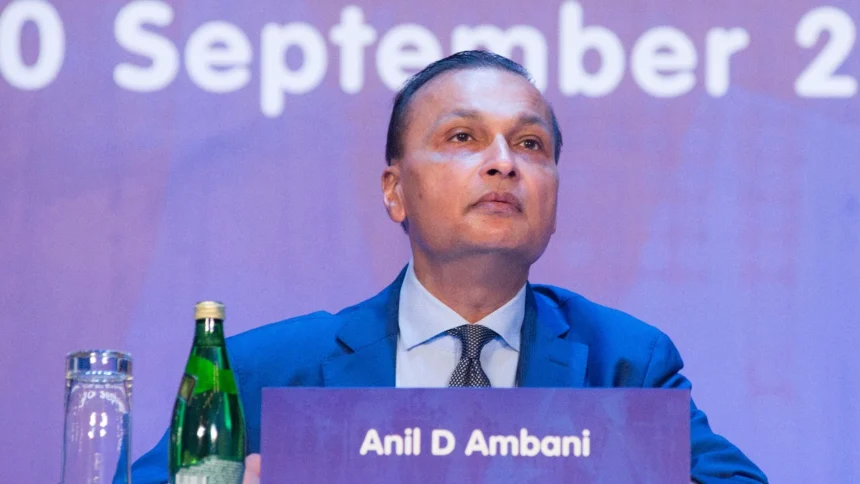
IDBI Bank Appeals HC Order Favoring Anil Ambani
IDBI Bank has challenged a Bombay High Court order that had granted interim relief to industrialist Anil Ambani. The original ruling had temporarily stopped coercive action by three banks—IDBI Bank, Indian Overseas Bank, and Bank of Baroda—against Ambani, who was facing allegations of fraud related to his companies’ loan accounts.
The banks had sought to classify loans of Reliance Communications Ltd (RCom), Reliance Telecom Limited (RTL), and Reliance Infratel Limited (RITL) as fraudulent based on a forensic audit conducted in 2020.
Background: Forensic Audit and Show-Cause Notices
Between January and December 2024, the three banks issued show-cause notices to Ambani citing a forensic audit report (FAR) from BDO India LLP. The notices proposed labeling the accounts of his companies as fraudulent, which could have severe legal and financial consequences.
Ambani, who was formerly a non-executive director at RCom, contested the notices in court. He argued that the forensic audit report could not be relied upon because it was not signed by a qualified chartered accountant, as mandated under the Reserve Bank of India’s (RBI) Master Directions.
On December 24, 2025, Justice Milind Jadhav of a single-judge bench granted interim relief, agreeing that forensic audits under RBI directions must meet statutory audit standards.
IDBI Bank’s Appeal
IDBI Bank has now approached a division bench of the Bombay High Court to challenge this interim relief. In its appeal, filed on December 31, the bank argued:
- The case raises a limited question of law regarding the interpretation of RBI’s 2016 and 2024 Master Directions on fraud.
- The single-judge bench overstepped by making findings on issues not argued in court.
- The stay on the show-cause notice was based on the identity of the signatory of the audit report, which the bank says is legally irrelevant.
According to IDBI, the forensic audit report is meant to identify suspicious or fraudulent transactions and submit them to the banks. It is the banks’ responsibility to independently determine fraud. “A report’s disclaimers or qualifications do not discredit its findings,” the plea stated.
Bank’s Legal Argument
IDBI’s counsel highlighted that forensic audits are team efforts, and the report is signed by a team leader, not a single individual. Questioning the authority or capability of the signatory, the bank argued, is not legally tenable.
The bank also objected to remarks in the original order suggesting it did not follow RBI rules or timelines. The appeal claims these observations were contrary to the records and violated principles of natural justice.
Next Steps
The division bench, headed by Chief Justice Shree Chandrashekhar and Justice Gautam Ankhad, has scheduled further hearing for January 14, 2026. The court will decide whether the interim relief granted to Ambani will continue or be set aside, potentially allowing the banks to resume action on the alleged fraudulent loans.
Why This Case Matters
This dispute is a high-profile clash between a major industrialist and public sector banks, highlighting the importance of proper forensic audits and the interpretation of RBI guidelines. The outcome could have wider implications for how banks pursue fraud investigations and the legal weight of forensic audit reports in India.