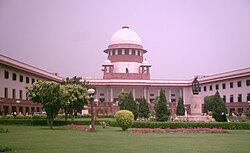
In a serious blow to an accused facing trial in a serious criminal case, the Supreme Court of India has upheld an order cancelling bail passed by the Bombay High Court. The judgment underscores that though bail is a fundamental feature of personal liberty, it is not an absolute right to be exercised and can be cancelled on reasons getting established that while granting bail, proper consideration of the legal and factual aspects was not made.
The apex court said that courts should exercise extreme caution in granting bail in grave and heinous offenses, particularly those involving violence, sexual assault, or crimes that deeply affect society at large. It said that discretion exercised by a judicial officer should be guided by the nature and seriousness of the offence, the strength of the evidence, conduct of the accused, and likelihood of his influencing the witnesses and obstructing the course of justice.
The case reached the Supreme Court after the accused appealed against the Bombay High Court’s decision to cancel bail that was earlier granted by a lower court. The High Court had found the bail order to have failed in adequately considering critical factors such as the seriousness of the allegations and the vulnerability of the victim. Upon review, the Supreme Court agreed with this assessment, holding that the High Court was justified in intervening to prevent a miscarriage of justice.
The Supreme Court, while holding thus, reiterated that the issue of bail is a judicial function and requires adequate reasoning and application of the mind. Such orders are expected to bring a balance between the right to liberty of an accused and the need to ensure a fair and uninfluenced trial. It warned that casual or mechanical orders granting bail, especially in sensitive cases, tend to erode the confidence of the public in the justice delivery system.
The bench also outlined that cancellation of bail is not a punishment but a remedial measure. If it is found that bail was granted on irrelevant considerations or subsequent developments indicate misuse of liberty, the higher courts are well within their powers to revoke such relief. In the instant case, the Supreme Court said the circumstances warranted cancellation to protect the integrity of the trial process.
A major factor for the judgment was its emphasis on victims’ rights as well as those of society. The court said that while the system must ensure that accused persons’ rights are protected, it also needs to ensure that the rights of victims are not jeopardized-they ought to feel safe and confident in their efforts to seek justice. In serious offence cases, apprehension outside custody might traumatize victims and witnesses through fear, intimidation, or some other means of psychological pressure in giving their testimony.
According to legal experts, the judgment would send a strong message to the lower courts that matters relating to bail need to be decided with much more caution and reasoning. It reinforces the well-settled legal principle that any order relating to bail has to be supported by clear reasoning; it cannot remain silent or ignore the question of the seriousness of the offence and its larger impact on society. This judgment is also going to play an important role in similar cases where the higher courts have to review questionable orders granted by the lower judiciary.
The Supreme Court directed the accused to surrender before the appropriate authorities within the stipulated time, failing which coercive steps could be taken. This adds to the seriousness with which the court regarded the matter and its commitment to uphold the rule of law. The ruling reflects, in a larger perspective, the endeavour of the judiciary to draw a fine balance between individual liberty and public interest. If the courts are, and continue to carry on repeating, “bail is the rule and jail is the exception,” this case explains that exceptions come when liberty endangers justice itself. Overall, the Supreme Court’s affirming the cancelation of bail is a further guarantee that judicial accountability deepens, that the confidence of the victims in the legal system is strengthened, and further reenforces that justice must not only be done but must also be seen to be done.