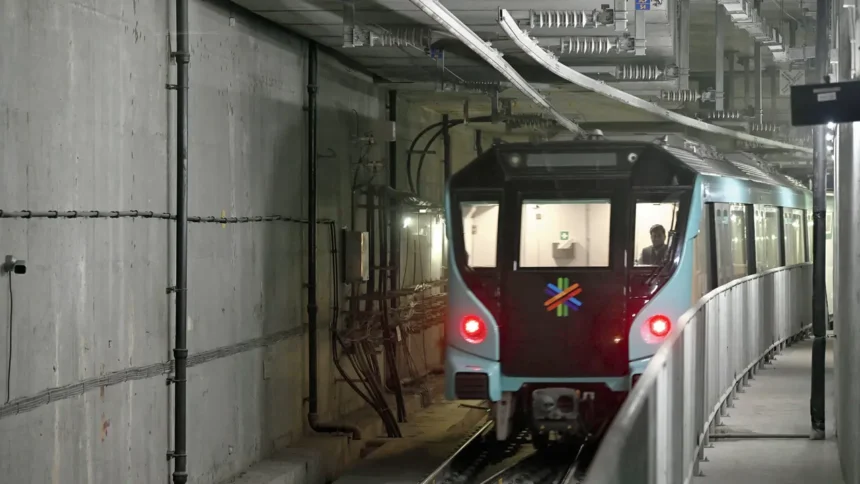
In a major infrastructure development for India’s financial capital, the Maharashtra government has given its final approval to Mumbai Metro Line-11, an important corridor projected to run from Wadala to the Gateway of India. This will be a big addition to Mumbai’s fast-growing metro network and promises to greatly enhance public transportation to some of the city’s most bustling commercial and cultural districts.
The newly approved line is likely to emerge as one of the most strategically important metro routes in Mumbai, bridging central and south Mumbai and connecting high-density residential zones with key business hubs, historical landmarks, and tourist destinations. Once ready, Metro Line-11 is expected to decongest traffic across important arterial roads and reduce dependence on road transportation in one of the most congested urban zones in India.
A Critical Link Between Central and South Mumbai
Metro Line-11 will, in effect, extend the already existing Mumbai Metro Line-4/4A alignment from Wadala to Thane to Kasardi, thus providing seamless connectivity along the city’s eastern corridor. The upgraded alignment going down to the southern tip of Mumbai is particularly important because South Mumbai has always been under-served by metro infrastructure compared to suburban regions.
The Gateway of India, Chhatrapati Shivaji Maharaj Museum precinct, Colaba, Fort, and Churchgate attract millions of tourists annually, besides housing major corporate headquarters, the Bombay High Court, and several state administrative buildings. The approval for Line-11 marks the first time that mass rapid transit will reach this historic pocket of the city.
Reduced Travel Time and Lower Road Congestion
According to transport planners, the new corridor will drastically cut travel time between Wadala and South Mumbai. What currently takes anywhere between 45 minutes to over an hour during peak traffic is expected to reduce to under 25 minutes via metro. The corridor’s utility extends far beyond speed—it is expected to reduce the load on critical arterial roads such as P D’Mello Road, Mohammed Ali Road, and the Eastern Freeway, which frequently witness intense congestion during peak hours.
With steadily growing road traffic in Mumbai and a population density that is among the highest in the world, it is widely acknowledged that metro expansion is the most viable long-term solution for improving mobility.
Boost to Real Estate, Tourism, and Local Economy
Urban planners and market analysts predict that Metro Line-11 will raise real-estate values in the Wadala, Sewri, Parel, Byculla, and other central-Mumbai neighbourhoods that the line cuts across. These areas have already witnessed infrastructural uplift-from the ongoing coastal road project to the development around the Sewri–Nhava Sheva Trans-Harbour Link.
The benefit of tourism in South Mumbai is also expected to increase considerably. When the metro stops closer to iconic locations such as Gateway of India, Taj Mahal Palace, and heritage complexes, it will definitely increase mobility for both domestic and international visitors. Tourism-dependent businesses—cafés, museums, ferries, street markets, and historical districts—stand to benefit from increased footfalls and easier commutes.
Strengthening Last-Mile Connectivity
Last-mile connectivity has been one of the recurring challenges in the transport ecosystem of Mumbai. The metro expansion into older parts of the city-characterized by narrow lanes, heritage buildings, and dense commercial markets-will need to be carefully planned. The authorities are expected to introduce shuttle services, feeder buses, electric-auto integration, pedestrian pathways, and cycling zones as part of a broader multimodal mobility plan.
Approval of Line-11 reflects the bigger aim of creating an integrated, comprehensive city-wide transit network where the metro lines, BEST buses, suburban trains, taxis, and e-mobility options work together in tandem.
Citizens Welcome the Move
Residents of the area and regular commuters welcomed the announcement, stating that the metro connectivity to South Mumbai was overdue. Many expressed relief that key heritage and commercial districts, reliant on roads and local trains, would finally get a high-capacity rapid transit alternative.
For the office commuters in eastern suburbs like Chembur, Ghatkopar, Mulund, or Thane, this Line-11 extension means a direct, continuous link to business districts in the City without the need to change multiple modes of transportation.
A Major Step in Mumbai’s Long-Term Transit Vision With Metro Line-11 now approved, Mumbai is inching closer to its dream of a 300-km integrated metro network that will place the city among the leading metropolitan transit systems in the world. In a bid to ensure equitable access to transportation and sustainable urban growth, the government has been pushing for metro connectivity to South Mumbai-the historic economic hub of the city. Over the next couple of years, Metro Line-11 is going to be a game-changer that reshapes mobility, real estate patterns, tourism dynamics, and liveability in Mumbai.