In a major policy deviation to balance infrastructure development with environmental sustainability, the Maharashtra government has announced that trees felled for big infrastructure projects in Mumbai can now be replanted anywhere within the larger Mumbai Metropolitan Region (MMR). This decision departs from the earlier rule that mandated replantation strictly within the limits of Mumbai city—a requirement that had increasingly become difficult due to severe space constraints in the densely populated urban core.
The new directive comes at a time when the city is witnessing rapid expansion of big public projects, namely Metro lines, coastal roads, flyovers, tunnels, and housing projects. While these projects are being implemented to help ease traffic congestion and improve mobility, environmental groups have consistently cried foul as the projects have been axing thousands of trees. Urban planners and officials have contended that replantation obligations within the city had virtually become impossible, with limited open land availability for compensatory plantation of trees. That bottleneck will now be overcome by allowing replantation in the larger MMR covering Thane, Navi Mumbai, Kalyan-Dombivli, Mira-Bhayandar, Vasai-Virar, and Raigad.
According to officials, the rule change is expected to fast-track stalled infrastructure works and ensure more effective compensatory plantation. The Mumbai Tree Authority, which reviews applications for tree cutting, welcomed the move and said that the new policy would “provide scientific flexibility” even as the ecological balance of the region is maintained. They said that the idea is not to reduce plantation requirements but to increase survival rates by allowing saplings to be planted where adequate space and care facilities exist.
Environmental experts are divided on the issue, though. While some agree that the survival chances of replanted trees are higher in less congested areas of the MMR, others believe that the city’s green cover will take a long-term hit. Mumbai already figures among the lowest in terms of per capita green space among major global cities. Shifting plantation outside the city limits could create an imbalance, making Mumbai even more vulnerable to rising temperatures, flooding, and pollution, critics fear. They say trees serve critical localised purposes of reducing heat islands, absorbing pollution, providing shade, and controlling water runoff, none of which relocating green cover outside the city would be able to address.
Environmentalists have instead asked for a hybrid model: while development projects should be incentivized to incorporate green spaces in their design, compensatory planting, when unavoidable, could be redistributed across MMR. There is also a need for third-party audits to ensure the survival of replanted trees beyond the mandatory monitoring period. Previous reports have shown how replantation drives had abysmal survival rates due to inadequate care, inconsistent watering, and lack of accountability among contractors.
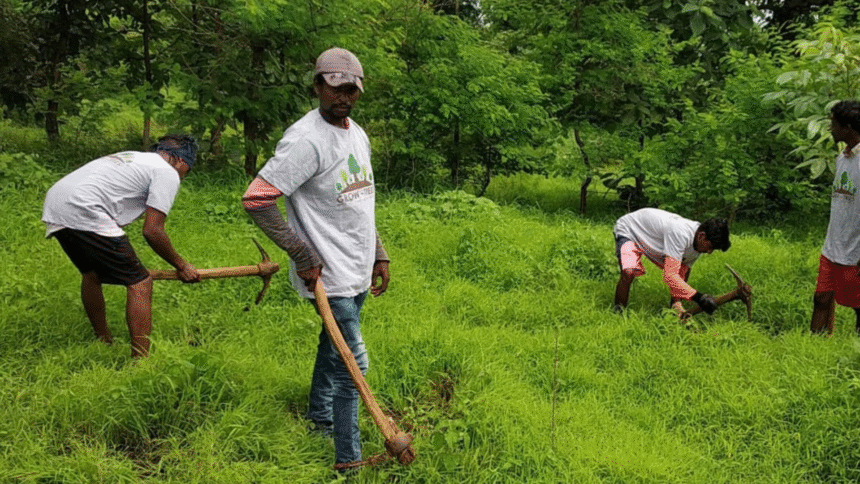
Government officials maintain that the new policy has stronger monitoring mechanisms in place. They explain that the Tree Authority will oversee the plantation process, while satellite-based mapping and periodical drone surveying may be used to check growth. The BMC is also considering partnerships with environmental NGOs that will take up the maintenance of saplings for up to three years, thereby increasing their chances of survival. The government is also exploring the creation of new urban forests in the MMR using the Miyawaki method, which allows for dense plantation over small plots. These micro-forests could help offset the impact of tree loss within Mumbai.
Infrastructure bodies have hailed the move, stating that it will facilitate timely execution of key projects, many of which have been delayed so far due to compensatory plantation issues. For Metro officials, for instance, their new lines will necessitate widespread digging and development of stations, rendering any replantation of trees in already saturated areas like Andheri, Ghatkopar, or Colaba impractical. They said replantation in satellite towns is a practical alternative for compliance while promoting regional greening.
Residents, too, remain divided. While some believe the decision is pragmatic, others feel that the city’s green lungs-already shrinking due to encroachment and urbanization-need immediate protection. Neighbourhood groups have urged the government to improve transparency, publish real-time data on compensatory plantations, and prioritize preservation of existing trees over cutting.
While infrastructural development is an ongoing process in Mumbai, the real challenge lies in attaining development without compromising environmental health. The newly framed MMR-wide replantation policy is flexible and maintains regional balance; however, its success depends on execution, monitoring, and a full commitment to protecting the fast-depleting green cover of the city.
Trees Cut for Infrastructure in Mumbai Can Now Be Replanted Across the Wider MMR Region

Leave a Comment