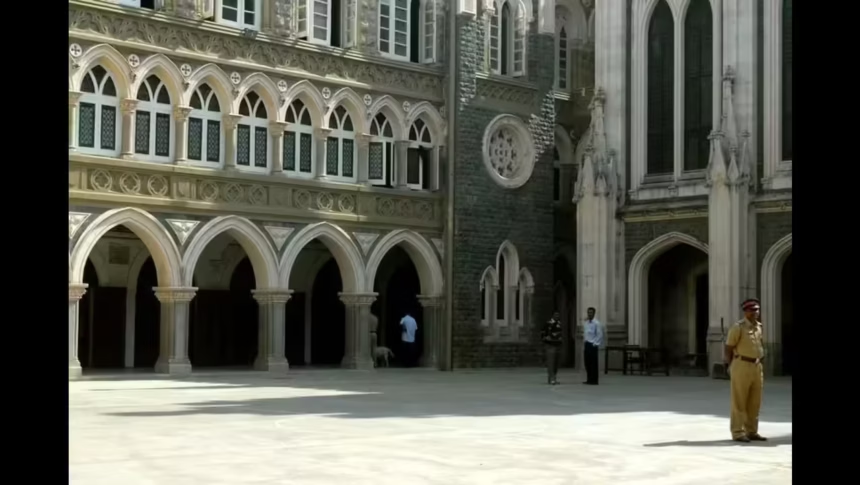
Mumbai, 14 November 2025 — The Jesuit Alumni Association of India (JAAI) has convened its West Zone Congress from 14 to 16 November 2025 in Mumbai, bringing together nearly 300 alumni from Jesuit institutions across Maharashtra, Gujarat, and Goa. Hosted at the prestigious St. Xavier’s College and St. Mary’s School, Mazagaon, the three-day event centers on the theme “Ecology for Sustainable Living”, highlighting the growing role of educational institutions and alumni in environmental stewardship.
The JAAI, a pan-India federation of Jesuit alumni associations, is renowned for imbibing social responsibility, ethical leadership, and community engagement among its members. The West Zone Congress is conceptualized to be an event aimed at networking opportunities, as well as an incubation hub for practical initiatives in the field of ecological sustainability at schools and colleges. The congress focuses on identifying key environmental challenges and then translating the deliberations into actionable tools.
Throughout the three days, panel discussions and workshops will focus on four main areas of sustainability: water conservation, waste management, energy efficiency, and afforestation-issues highly relevant to ecological concerns on campuses and in the general community. Strategies to be pursued by participants include the enhancement of water use, reduction of landfill contribution, the use of renewable energy solutions, and the enhancement of urban greenery in accord with Jesuit principles of stewardship and service.
The congress starts at St. Xavier’s College, one of the most prestigious Jesuit institutions in Mumbai. It is known not only for its excellent academics but also for its vibrant alumni network. The following sessions will be held at St. Mary’s School, Mazagaon-a location that has provided a historical setting for generations of students to become committed to ethical and social engagement. Professionals, educators, entrepreneurs, and social activists are some of the congress participants-alumni keenly looking forward to joining the Jesuit mission of forming “men and women for others.”
The keynote address by Archbishop John Rodrigues of the Bombay Diocese, highlighting the moral and ethical imperative for environmental stewardship, is the highlight of this congress. It is expected to inspire the alumni to translate awareness into concrete projects, from sustainability programs on campuses to community-led environmental initiatives. Besides keynote sessions, interactive workshops, panel discussions, and brainstorming sessions will be organised to allow alumni to plan concrete interventions themselves and share best practices from their respective professional and civic experiences.
One of the congress’s main agendas is to motivate the alumni toward actionable projects for sustainability. These range from the installation of water recycling systems in schools and colleges to waste segregation and recycling drives, the use of renewable energy, and extension of green cover by tree-planting campaigns. It looks toward educational institutions as focal points to bring about a ripple effect among the students, staff, and communities around them.
The event has also received a warm welcome among local stakeholders as it will reinforce the bond among alumni and their alma maters while advocating socially relevant and environmentally responsible behavior. For educational leaders, the congress is about infusing sustainability into curricula and campus operations to make institutional missions more responsive to the greater needs of society. Alumni participants view the congress as an avenue to reunite with old classmates, discuss ideas, and utilize their skills and network towards a common cause.
Beyond the educational context, the West Zone Congress reflects a broader trend of civic-minded alumni networks taking an active role in addressing climate change and environmental degradation. Through the combination of faith-driven values with practical initiatives, the Jesuit alumni community strives to be at the forefront of promoting sustainable development both within educational institutions and in society in general. The three-day congress is likely to end on 16 November with a commitment on long-term ecological action plans, which would include the nature of projects, responsible alumni coordinators, and timelines.
The organizers hope the outcomes of the congress would serve as a model for other alumni networks across India and how organized engagement and focus on sustainability can result in meaningful societal impact. In sum, the JAAI West Zone Congress is not just a reunion. It’s a platform for vision, collaboration, and action where past students unite through shared commitment to ecological responsibilities and ethical leadership. As alumni leave Mumbai, the expectation is that they will carry forward the lessons learned and projects initiated at this Congress, assuring that the Jesuit tradition of service will continue in ways relevant to today’s ecological challenges.