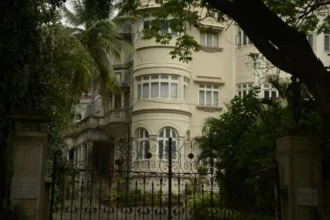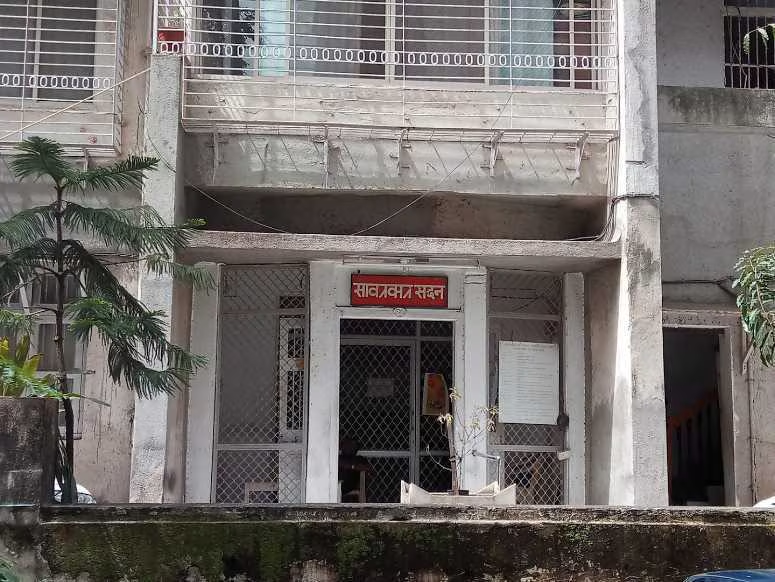
In the hustle and bustle of Shivaji Park, Dadar (West), lies Savarkar Sadan, the residence of Vinayak Damodar Savarkar, a leading figure in India’s freedom movement. An ideologue and political activist, Savarkar’s residence has today emerged as an epicenter of a highly contentious debate over heritage protection, urban redevelopment, and civic governance.
Historical Significance
Savarkar Sadan, which was built in 1938, is not simply a private residence; it is a historic and political place. The building witnessed discussions and planning during India’s freedom struggle and is closely associated with Savarkar’s life and work. Those who argue for its protection say that saving the structure is part of maintaining the physical legacy of a freedom fighter whose life and writings had a deep impact on the socio-political landscape of India.
This residence represents architectural and historical heritage. Its preservation was seen as one surefire way to maintain Mumbai’s cultural memory, reflecting the city’s rich history while offering a tangible link to its freedom struggle. The importance of the building has turned it into a symbol, not only of the past but also of ongoing debates about urban heritage versus modern development.
Legal and Administrative Timeline
The heritage dispute goes back more than a decade. In 2009, MHCC-a committee under BMC-recommended that Savarkar Sadan be given Grade II‑A heritage status, a classification that allows internal modifications provided the exterior is preserved. In spite of the recommendation, the state government did not issue a formal notification, thereby placing the building in limbo.
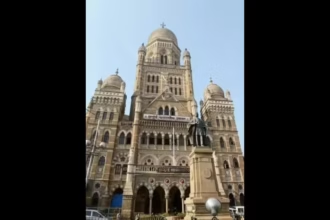
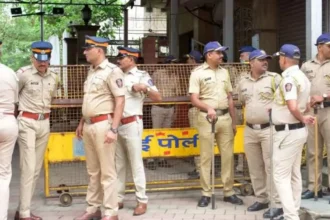
The Bombay High Court has intervened repeatedly to ensure that no redevelopment occurs until the government clarifies the heritage status. In May 2025, the court ordered a status quo, and subsequent reports indicated that some official files regarding the building’s listing were lost in a 2012 fire at the Mantralaya secretariat. In August 2025, the state requested a fresh proposal from MHCC, further delaying the formal recognition process. Most recently, MHCC informed the court it would not revisit its 2009 recommendation, effectively leaving the matter with the state government for notification.
Issues at Stake
A number of interrelated issues make Savarkar Sadan’s fate complex:
- Heritage Protection vs Redevelopment:
Without formal heritage listing, the building is vulnerable to redevelopment. Some co-owners and developers have indicated interest in modifying or redeveloping the property, highlighting the age of the structure and the challenges related to its upkeep. According to preservationists, redevelopment would erase an important historical site and set a disturbing precedent for Mumbai’s urban topography.
- Political and Ideological Symbolism:
The contested Savarkar legacy adds another layer to the debate. The decisions on this building have been primarily interpreted through ideological prisms, hence affecting public and policy discourses. Advocates point at inconsistencies in heritage recognition, citing other historical structures that have been protected despite similar challenges.
- Administrative delays:
This is an example of how long delays in notification denote inefficiency in urban governance: recommendations made, files lost, fresh proposals called for-these have frustrated heritage advocates and exposed gaps in the administrative system.
- Rights of Property Owners:
The building has various heirs and private entities as co-owners. While some support redevelopment for financial or practical reasons, others, including Savarkar’s trust, insist on preservation. Balancing these rights with public interest remains a core challenge. What Lies Ahead The Bombay High Court has continued to monitor developments. The state government should issue a formal notification for giving Grade II‑A status or give reasons for the buildings they are excluding from recognition. If listed, adaptive reuse policies and conservation regulations will be applied to how the building can be maintained or repurposed, with both heritage preservation and legal protection for owners. The result of this case has wider ramifications. It exposes the conflict between rapid urban growth and the need to preserve heritage, bringing into play the urgent need for administrative action and clarity through policies. This judgment will convey to the developer community, conservationists, and citizens alike how seriously Maharashtra takes its historical treasure as it carries on with rapid urbanization.
Conclusion Savarkar Sadan’s story is emblematic of Mumbai’s larger struggle to protect historical landmarks while accommodating modern development. Until the government issues a formal decision, the building remains in legal limbo, symbolizing the delicate balance between history and progress. Its fate will not only determine the preservation of a single structure but will also influence heritage governance policies across the city. In a metropolis where history often yields to real estate pressures, Savarkar Sadan stands as a test case for Mumbai’s commitment to remembering its past while shaping its future.