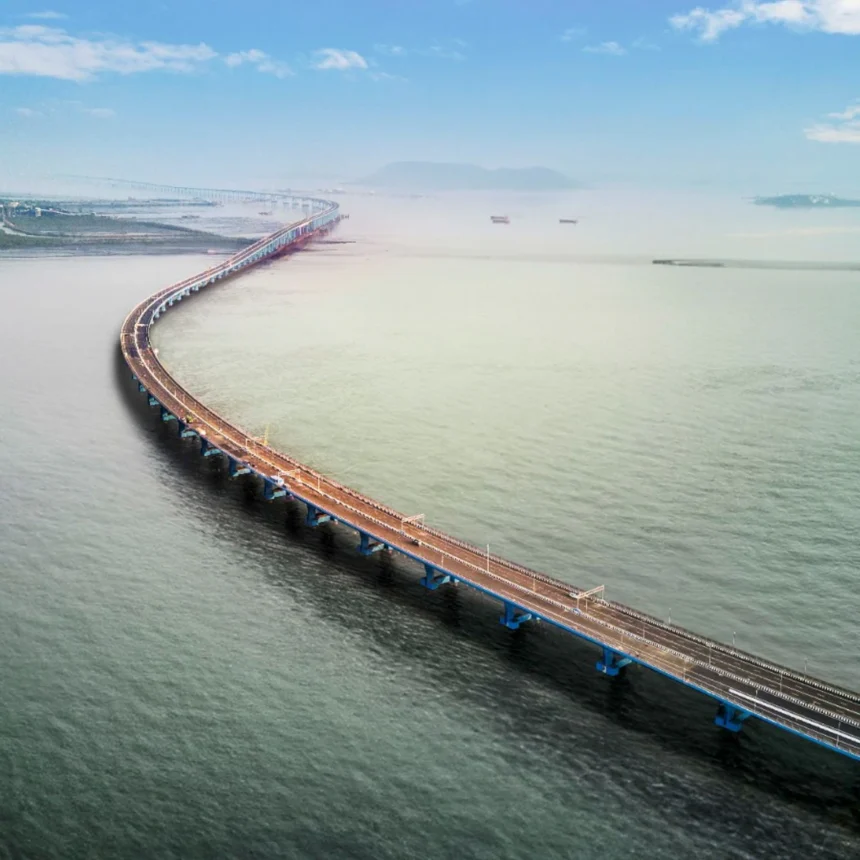
Mumbai’s flagship infrastructure project, the Atal Bihari Vajpayee Sewri–Nhava Sheva Sea-Link, popularly known as Atal Setu, has entered a critical phase of resurfacing and restoration. Spanning approximately 21.8 kilometers, this bridge is not only the longest sea-link in India but also a vital artery connecting Mumbai to Navi Mumbai, significantly reducing travel time and easing freight movement to the ports. Following reports of pavement distress, the Mumbai Metropolitan Region Development Authority (MMRDA) has launched a comprehensive resurfacing project to secure its long-term durability and ensure a safe, smooth ride for commuters.
Why the Resurfacing Became Necessary
Barely a few months into its inauguration in early 2024, portions of the carriageway bound for Navi Mumbai started developing signs of surface damage, especially between the 10.4 km and 16 km mark where lanes were used exclusively by trucks and commercial vehicles. MMRDA said that though the bridge’s structural integrity remains intact, the pavement layer was prone to such damage for a variety of reasons: heavy monsoon rains, continuous extreme weather exposure, and unending load from freight traffic accelerated wear and tear. Besides, the bridge is still in the defect liability period, which essentially means that the contractor will attend to these defects without any extra cost to the authorities.
Resurfacing is proposed to prevent minor pavement issues from growing into structural ones in order not to pose any threat to commuters and the vast investment in this iconic infrastructure. The Atal Setu, built at a cost of approximately ₹17,840 crore, is the most integral part of Mumbai’s urban mobility plan and links the city to Navi Mumbai Airport and the proposed industrial corridors.
Scope and Phasing of Work
The resurfacing work is being done in phases to minimize disruption to daily commuters. First, the outer lanes, which sustain most of the damage from heavy vehicles, will be repaired. Once these are finished, the remaining lanes are addressed. It is this principle that ensures continuous flow, even as repair work progresses.
The project employs high-quality materials, including dense bituminous macadam (DBM) and asphalt concrete (AC), to ensure longevity. Additionally, IIT Bombay has been roped in for technical supervision, ensuring that the resurfacing adheres to international standards of durability and quality. The contractor, a joint venture between Tata Projects and Daewoo E&C, is bearing the cost of this resurfacing under the defect liability clause, with a fine of ₹1 crore already imposed for initial damage, emphasizing accountability.
Repairs, including mastic asphalt patching, were done during the monsoon period, mainly to maintain traffic, but now permanent resurfacing is in progress. It is expected that this proactive maintenance approach will avoid repetitive, intensive repairs in the future and extend the operational life of the bridge.
Wider Implications
This resurfacing is a welcome step for daily commuters, logisticians, and businesses dependent on seamless connectivity. Atal Setu is an important link in freight transportation to and from Jawaharlal Nehru Port and passenger traffic between Mumbai and Navi Mumbai. Ensuring smooth, durable road surfaces cuts travel time and wear on vehicles, besides reducing the possibility of accidents, directly benefiting the economy of the city and the quality of life for its residents.
From the governance perspective, this step shows accountability and long-term planning. Early identification of pavement distress and taking immediate remedial action mark the beginning of moving away from just constructing the infrastructure to maintaining it. Politically, though opposition parties have criticized early repairs as proof of flaws in contractual and execution, the MMRDA has maintained the stand that these are regular maintenance works within the defect liability period and not indicative of structural weakness.
Challenges Ahead
Carrying out such a large-scale resurfacing while allowing the flow of traffic does have its logistical challenges: precision in phasing, coordination with traffic authorities, and effective communication with commuters. Weather conditions and the continuous passage of heavy vehicles remain factors that could influence the pace and effectiveness of the work.
Public perception also plays a role. Being one of the most prestigious projects in Mumbai, any disruption or visible damage would necessarily have an impact on public confidence in infrastructure development. The use of IIT Bombay for technical oversight and strict monitoring of contractor work aims at reinforcing trust to ensure the bridge continues to serve as a model for future projects. The resurfacing of Atal Setu underlines the fact that mega infra projects require continuous maintenance.
By addressing the distress in pavements, the MMRDA is ensuring commuter safety, preserving the lifespan of the bridge, and maintaining the high standards expected of such flagship projects. For Mumbai’s residents and business entities, the task is quite unmistakable-to facilitate a safe, smooth, and dependable linkage between the city and its neighboring areas, assuring that modern infrastructure isn’t just created, but cared for.