This year, the city of Mumbai is rejoicing in one of its most distinctive historic identities: its Art Deco heritage. Starting from November 6 to 25, a three-week festival entitled “Art Deco Alive!” celebrates the centenary of Mumbai’s Art Deco movement, shaping the skyline of Marine Drive, Oval Maidan, Churchgate, Dadar, and several suburban neighbourhoods. The city is home to close to 1,350 Art Deco buildings, which is the second largest concentration in the world after Miami. Indeed, this festival is also an effort to deepen awareness regarding the need to preserve and revitalize this global treasure.
Organized by a collective of historians, urban conservation groups, arts institutions, and community organizations, the events of “Art Deco Alive!” range from guided heritage walks to film screenings, archival exhibitions, expert-led lectures, and architectural sketching workshops. It aspires to engage citizens, tourists, students, and art lovers with the city’s built heritage in an interactive and emotionally resonant manner.
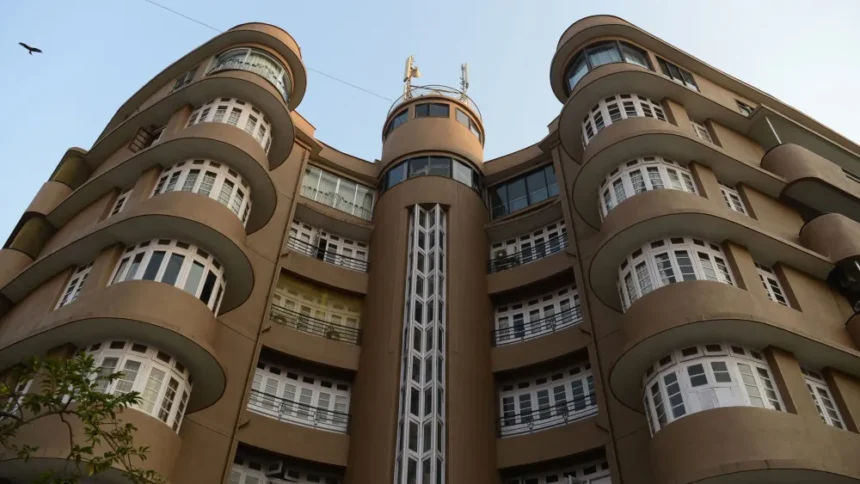
The Art Deco style reached Mumbai in the late 1920s and 1930s-a period of economic expansion and cultural modernization. New aspirations influenced architecture: clean lines, geometric patterns, elegant facades, curved balconies, porthole windows, pastel colour palettes, terrazzo floors, and stylized motifs such as sunbursts and waves. These buildings represented optimism, cosmopolitan identity, and an openness to global aesthetic trends. This Marine Drive stretch-famously called the “Queen’s Necklace”-is one of the most iconic showcases of this style, with residential buildings standing in uniform rhythm along the sweeping Arabian Sea shoreline.
During the festival, heritage walks along Marine Drive, Oval Maidan, and Shivaji Park are being held every evening. Guides explain how these buildings reflect not just architectural artistry but also Mumbai’s social history—the rise of cinema, theatre culture, public housing cooperatives, and a growing middle-class urban identity. The fact that so many structures were built by Indian architects trained in newly emerging modern architectural philosophies underlines the blend of global influence and local adaptation. This is what makes Mumbai’s Deco different from Miami’s-the Indian cultural motifs find their place among sleek international lines.
Another festival highlight is an exhibition at the Jehangir Art Gallery of archival photographs, blueprints, and real estate newspaper advertisements from the 1930s, all related to Art Deco projects. The exhibition shows how architecture became a public statement of style, modernity, and lifestyle aspirations.
There are film screenings at the historic Regal Cinema and Eros Cinema, both Art Deco landmarks, in homage to the city’s cinematic legacy. To reconnect with the cultural era that created much of the city’s artistic output, classic Hindi and Marathi films from the mid-20th century are being screened. Theatre and dance performances inspired by 1930s Bombay jazz and cabaret culture will also be held across community halls and open spaces.
But beneath the celebrations, the festival also sparks important discussions on conservation: many Art Deco buildings are facing challenges today, including those from weathering, rapid pressure for urban redevelopment, and the absence of restoration expertise. According to heritage activists, while UNESCO’s 2018 designation of the Victorian Gothic and Art Deco Ensemble of Mumbai granted international recognition, meaningful preservation cannot be achieved without sustained local policy and community stewardship. Discussions at the festival underscore the urgent need for structural maintenance, financial incentives for building owners, and stricter enforcement of heritage regulation.
What makes “Art Deco Alive!” unique, however, is that it puts the emphasis on community engagement: residential associations, college student groups, and local artists were all encouraged to create murals, digital photo mapping projects, and storytelling sessions about family histories related to those buildings. The festival demonstrates very well that heritage is not just about buildings; rather, it’s about memory, identity, and cultural continuity.
While Mumbai continues to grow as a world metropolis and has a new crop of skyscrapers coming up almost every year, the festival reminds people that Mumbai’s charm lies as much in its past. The Art Deco buildings stand silent witness to a hundred years of urban change-symbols of times when Mumbai was defining its modern persona.
Through celebration, education, and collective reflection, “Art Deco Alive!” wants to ensure that these architectural treasures continue to shape the city’s identity for the next hundred years-alive, appreciated, and preserved.
Art Deco Alive!”: Mumbai Celebrates 100 Years of Its Iconic Art Deco Legacy

Leave a Comment