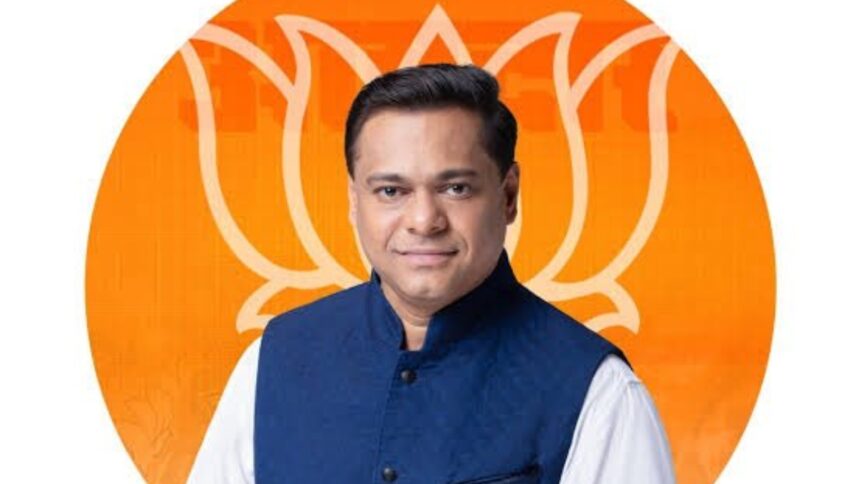
With the BMC elections drawing near, a major controversy has embroiled Mumbai after the newly appointed city president of the Bharatiya Janata Party, Ameet Satam, said, “We won’t tolerate a Khan as Mumbai mayor.” The statement has led to widespread debates and criticism across the political spectrum in the state. The statement has not only drawn sharp reactions from opposition parties but also reignited discussions on communal identity and electoral strategies in one of India’s most politically significant municipalities.
Satam’s remark comes amid speculation that opposition parties, including the Shiv Sena (Uddhav Balasaheb Thackeray) faction and the Congress, may field a Muslim candidate if they manage to capture the civic body. The BMC is in charge of Mumbai’s civic infrastructure and public services and is the richest civic body in Asia, overseeing an annual budget that is larger than the budget of many states. This means taking control of the civic body is not only about administrative power but highly relevant politically.
Political Context behind the Comment
For close to 25 years, the Shiv Sena had a tight grip on the BMC. The BJP will this time be a strong contender in trying to establish its independent hold on the civic body, with the Shiv Sena splitting and eventually going out of the NDA fold. This election will be one of the most keenly watched contests in recent times, pitting the BJP, Shiv Sena-UBT, the Shinde-led Shiv Sena faction, Congress, and the Nationalist Congress Party.
Satam’s statement is seen as an attempt to consolidate the BJP’s core voter base, especially Marathi-speaking and Hindu voters in the city. According to political analysts, this remark is part of a larger ideological positioning strategy in which the BJP wants to differentiate itself from its rivals by stressing identity politics, alongside governance-centered messaging.
Opposition Criticism and Public Reaction
The remark immediately drew criticism. Shiv Sena (UBT) leaders slammed the BJP for trying to divide Mumbai’s electorates on religious lines. They said it was administrative capability and vision that must define the Mumbai mayor, not one’s religion. “This is a deliberate attempt to divert attention of the people from genuine issues such as roads, water scarcity, pollution, and cost of living,” Congress leaders said.
Other critics pointed out that Mumbai is one of India’s most diverse metropolitan cities, home to people from multiple linguistic, religious, and socioeconomic communities. They believe that statements like Satam’s would go against the pluralistic spirit of the city.
On the other hand, several supporters of the BJP defended the remark, saying that the party is rejecting symbolic identity-based leadership, which, according to them, does not align with the developmental goals they claim to represent. They say the post of mayor must go to someone who represents BJP’s ideology and governance model.
Key Issues Likely to Shape the Election
While Satam’s comment has sparked off debate, political observers point out that the main issues that are likely to dominate the BMC polls are those related to civic development and encompass:
Improving road and drainage systems in Mumbai
Long-term flooding prevention measures
Waste management and cleanliness drives
Expansion and modernization of public transport, including metro and coastal road projects
Housing redevelopment and slum rehabilitation
control and protection of pollution in coastal areas
These issues are expected to be highlighted more by parties as election campaigns actually take up steam.
Conclusion The storm kicked up by Ameet Satam’s statement has set the tone for a politically charged BMC election season. Whether his remark shapes voter sentiment significantly remains to be seen. What is clear, however, is that identity politics and governance agendas will run parallel in the months ahead. For the citizens of Mumbai, the decision will not only determine the next mayor but also the direction in which the civic development and social landscape of the city will progress.