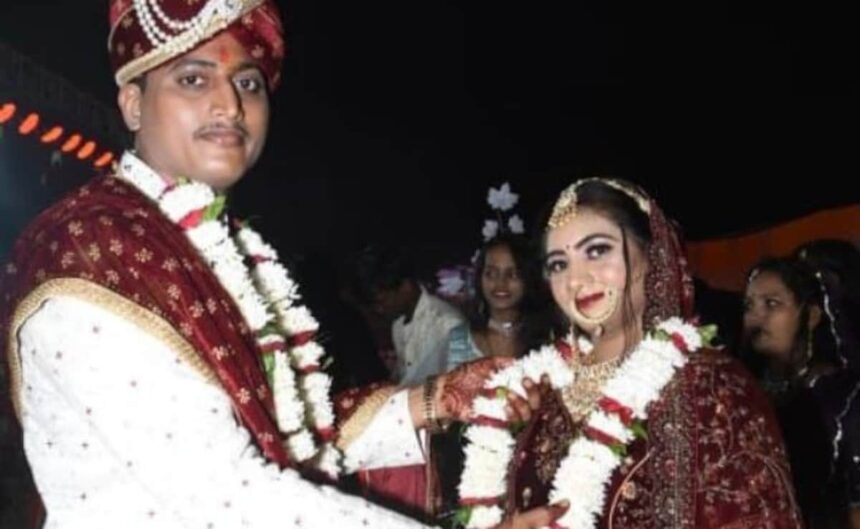
In another tragic case that brings to the fore the ongoing threat of dowry violence in India, a 24-year-old woman from Mumbai was discovered dead under mysterious conditions, leading to the police arresting her husband and in-laws on charges of dowry harassment and abetment to suicide. The case has brought to the forefront debates surrounding gender-based abuse, social pressure, and the gradual disappearance—but still ongoing existence—of dowry practices in urban India.
The girl, whose identity is being kept secret for privacy, was wed in November 2024 and resided with her husband and in-laws in Khar (West). Police reports say her father made a complaint saying she had been repeatedly harassed for more dowry soon after her wedding. Even though they gave enough dowry at the time of marriage—18 tolas of gold, 2 kilograms of silver, and money—the father alleges that the husband’s family continued to request more money and valuables.
The beginning was promising, and the couple’s relationship seemed good-natured at first, but tensions allegedly mounted just two months into marriage. The victim’s father informed police that his daughter had revealed to him the verbal and mental abuse she endured every day. “They were never satisfied,” he explained in his affidavit. “They kept demanding more and more, and she endured in silence because she wanted to save her marriage.
Unfortunately, the situation turned from bad to worse when the young lady became pregnant this year. The complaint claims that she was coerced into an abortion by her in-laws. As per the police, she was later brought to a local hospital after her condition worsened and died shortly thereafter under circumstances described as “suspicious.” The family believes foul play and claims that her death was the result of continuous dowry harassment.
The Khar Police have filed an FIR under Sections 304B (dowry death), 306 (abetment of suicide), and 498A (cruelty by husband or relatives) of the Indian Penal Code. The husband, father-in-law, mother-in-law, and sisters-in-law are all in custody and being interrogated. Forensic reports and the postmortem results are pending to ascertain the cause of death.
A senior police officer involved in the investigation commented, “We are treating this as a dowry harassment and abetment case. The family has provided evidence in the form of messages and voice recordings that suggest ongoing mental cruelty. Once the medical report is received, charges will be finalized.”
The case has touched a chord in Mumbai, a city which takes pride in being progressive but still observes cases of domestic violence based on antiquated social customs. The activists contend that the system of dowry—though illegal for more than half a century as per the Dowry Prohibition Act of 1961—remains prevalent in covert forms, particularly among some socio-economic groups.
Social activist and women’s rights activist, Kavita Krishnan, was outraged by the incident and stated, “This is not a single tragedy; it’s part of a larger culture of viewing women as economic liabilities. Even educated families continue to do this in the name of tradition. What we need is tougher enforcement and quicker trials under dowry death laws.
Figures from the National Crime Records Bureau (NCRB) tell a bleak story—more than 6,000 dowry deaths are reported in India every year, with hundreds more probably being unreported because of social and family pressures. In big cities like Mumbai, where legal awareness and access to lawyers are relatively better, the victims do not come forward to report abuse because of fear of stigmatisation or breakdown of family life.
As the case unfolds, the family of the deceased woman remains demanding justice. “My daughter craved nothing but peace and happiness,” her father wept outside the police station. “She sacrificed everything for that family, and they still ended her life. I want them to meet the harshest punishment.”
The drama highlights the dire need for ongoing education, legal literacy, and cultural shift. Laws regarding punishing dowry demands are in place, but slow judicial proceedings and the absence of public support for victims render them ineffective. That such cases can be checked through community-level interventions, couple counseling, and strict monitoring of cases is recommended by experts.
Meanwhile, the untimely death of the young woman remains a grim reminder that even in supposedly modern India, old-fashioned repressive customs like dowry continue to swallow innocent lives. Justice may provide some solace to the bereaved family—but only social transformation can ensure that such tragedies don’t recur.