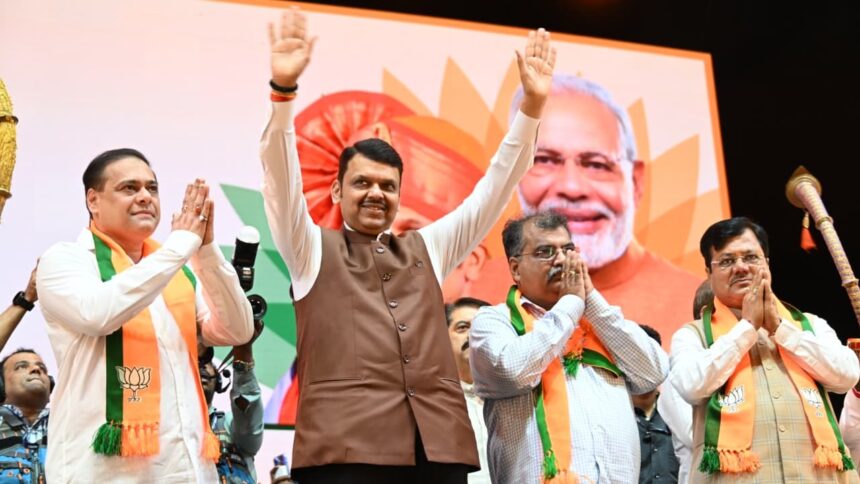
In an interesting political move before the 2025 Brihanmumbai Municipal Corporation (BMC) polls, Maharashtra Chief Minister Devendra Fadnavis declared that the Bharatiya Janata Party (BJP) would not claim the Mumbai mayor’s seat, even if it wins the maximum number of seats in the 227-strong civic body.
Strategic Decision to Foster Cooperation
Fadnavis had high hopes that the BJP would cross the 100-seat mark in the BMC polls. Even with this expected victory, he said that the party will not demand the mayor’s seat. The move is a strategic one to hold on to and secure the alliance with the Eknath Shinde faction of the Shiv Sena that already occupies the mayor’s seat.
The position of the BJP is also reflective of a larger desire to foster political stability in Mumbai. By refraining from contesting the mayoral seat, the BJP is attempting not to commit itself to potential conflicts and secure a harmonious model of governance within the city.
Historical Context and Political Dynamics
This decision is reminiscent of the 2017 BMC elections where the BJP, though it became the single largest party, did not capture the mayor’s seat. Then, Fadnavis disclosed that he had been approached by Eknath Shinde and Milind Narvekar, Shiv Sena top brass’s close confidants, appealing to the BJP to permit the Sena to continue holding the mayor’s seat in order to avoid party member discontent.
The move today reflects the BJP’s eagerness to keep its relationship cordial with its allies and to create a spirit of cooperation at the political level in Mumbai.
Consequences for Mumbai’s Political Scenario
The BJP’s move to forgo the mayor’s seat has a number of consequences for Mumbai’s political scenario:
Strengthening Alliances: The BJP, through relinquishing the mayoral seat, seeks to consolidate its alliance with the Shiv Sena Shinde faction, ushering in an era of unity for the ruling alliance.
Political Stability: The shift will help to enhance political stability in Mumbai by minimizing the chances of conflicts within the alliance over crucial posts.
Electoral Strategy: BJP’s strategy to get a substantial number of seats without challenging the mayor’s position helps it focus on influencing legislation and policy in the BMC.
The BJP’s move has received mixed reactions from political circles. Those in support see the move as a pragmatic governance strategy, with a focus on cooperation rather than competition. Critics ask if this strategy could preclude the BJP from playing an influential role in the city government.
With the date of the elections drawing near, the political equation in Mumbai will change, with parties reshuffling their strategy and alliances according to the new political environment.
Conclusion
The BJP’s decision not to contest the mayor’s post in the next BMC elections is a watershed in Mumbai politics. This choice indicates a deliberate focus on coalition politics and political stability in order to create a cooperative model of governance that seeks to prioritize the development and well-being of the city.
As the election process continues, everyone will be waiting with bated breath to see how this decision affects the politics within BMC and the political trajectory of Mumbai.