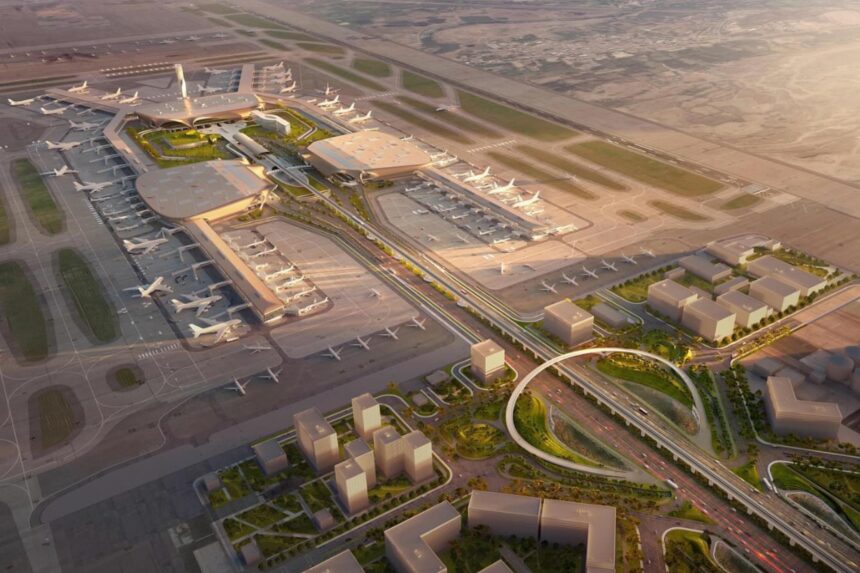
In a major breakthrough for India’s civil aviation industry, the Directorate General of Civil Aviation (DGCA) has issued an Aerodrome Licence to the Navi Mumbai International Airport (NMIA). This milestone approval follows years of planning and development, making NMIA a pillar in the nation’s infrastructure sector.
A Strategic Milestone
The Aerodrome Licence is an indication that NMIA has attained the high level of safety and regulatory standards required by the DGCA, marking the gateway to the start of commercial operations. This certification is an important milestone in realizing NMIA’s transition from a proposed project to a fully functional international airport.
Development Timeline
Construction of the NMIA began in August 2021 under the leadership of the Adani Group. The project has moved forward steadily despite difficulties like land acquisition and resettlement of displaced families. In October 2024, the runway of the airport was opened with a ceremonial flight by an Indian Air Force aircraft. Thereafter, in December 2024, the airport conducted its first commercial test flight successfully under IndiGo operations. These achievements highlighted the project’s focus on quality and safety.
Airline Operations and Connectivity
NMIA is well on the way to increasing connectivity in the Mumbai Metropolitan Region (MMR). Airlines have indicated plans for operations:
IndiGo: To start with 36 domestic flights to 15 cities, growing to 158 daily flights, including 14 international services, by November 2025.
Akasa Air: Will start off with 15 daily domestic flights, growing to more than 40 daily flights, including 8–10 international routes, by mid-2026.
Air India Express: Seeks to have 40 daily departures and arrivals to and from 15 cities in the first phase, with a target to grow to 60 daily departures and arrivals by winter 2026.
The operations are likely to reduce congestion at the current Chhatrapati Shivaji Maharaj International Airport (CSMIA), which has been running over its capacity.
Capacity and Infrastructure
The airport is being built in five phases. The first phase will be able to cater to 20 million passengers and 500,000 metric tonnes of cargo per year. After the completion of all phases, NMIA will be able to accommodate 90 million passengers and 3.2 million metric tonnes of cargo per annum. This expansion is expected to make Mumbai a major hub in global aviation.
Inauguration and Future Prospects
NMIA is set to open on October 8, 2025, with Prime Minister Narendra Modi presiding over the ceremony. It will coincide with opening of the last stage of Mumbai’s Metro Line-3, improving connectivity to the airport. The total capacity of NMIA and CSMIA will increase to 145 million passengers per year by 2032, solidifying Mumbai as a significant aviation hub.
The award of the Aerodrome Licence to Navi Mumbai International Airport is a milestone event in Indian aviation history. With its modern infrastructure, prime location, and strong airline alliances, NMIA is poised to take center stage in redefining the future of air travel in the region. As the airport gets ready for its launch, it is a reflection of the country’s initiative to upgrade its infrastructure and improve connectivity.