Ajit Pawar’s Death Triggers Political Controversy Across the Country
The tragic death of Maharashtra Deputy Chief Minister and senior NCP leader Ajit Pawar in a plane crash has shaken the nation. While political leaders across parties expressed grief and condolences, the incident soon turned controversial after West Bengal Chief Minister Mamata Banerjee made remarks that triggered a sharp political backlash.
Her statements, questioning the circumstances of the crash and calling for a Supreme Court-monitored probe, drew criticism from several quarters. Among those who reacted strongly was actor-turned-politician Kangana Ranaut, who accused Mamata of making inappropriate comments at a time of national mourning.
What began as a tragic accident has now escalated into a heated political debate, adding tension to an already emotional moment for the country.
What Happened to Ajit Pawar
A Fatal Plane Crash in Maharashtra
Ajit Pawar passed away on Wednesday after the aircraft he was travelling in crashed while attempting to land at the Baramati airstrip in Maharashtra. He was en route to attend a public rally connected to Zilla Parishad elections.
According to preliminary information, the aircraft faced poor visibility while landing. It crashed and caught fire on impact, completely gutting the plane. Ajit Pawar and four others on board lost their lives. Due to the severity of the fire, visual identification of the bodies was not immediately possible.
The sudden loss marked the end of a long and influential political career and sent shockwaves through Maharashtra’s political circles.
Mamata Banerjee’s Statement That Sparked the Row
Call for Supreme Court-Monitored Probe
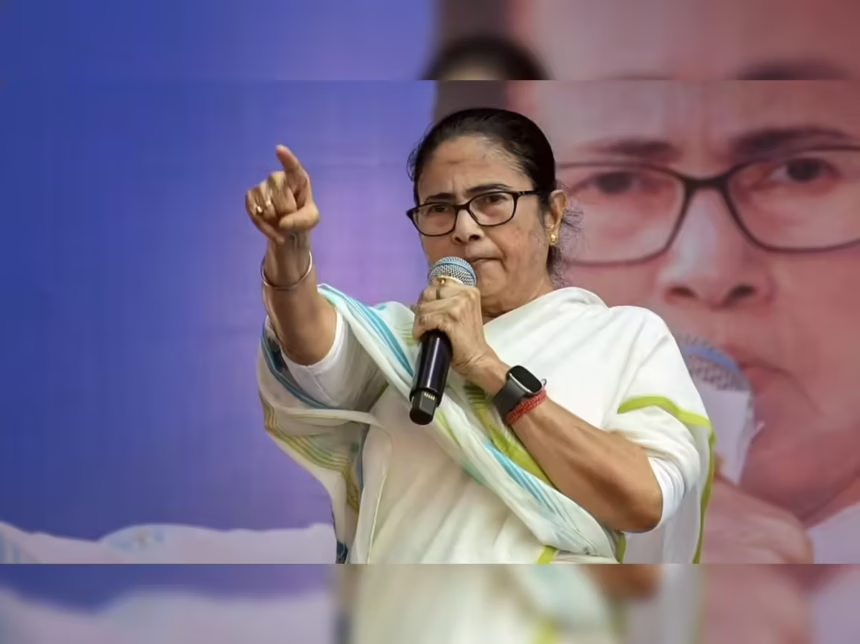
Soon after news of Ajit Pawar’s death broke, Mamata Banerjee expressed grief and said the incident required proper investigation. However, her remarks went beyond condolence.
Speaking publicly, she called for a Supreme Court-monitored probe into the plane crash. She alleged that central agencies could not be trusted and claimed they were completely compromised.
Mamata said that even political leaders were not safe in the country, let alone common citizens. She further suggested that the timing of the incident raised serious questions.
Claims About Political Developments Before the Crash
Remarks That Raised Eyebrows
In her public speech, Mamata referred to a statement allegedly made days earlier by someone from another political party. According to her, Ajit Pawar was reportedly considering leaving the ruling alliance in Maharashtra.
She implied that these political developments and the crash occurring soon after needed deeper scrutiny. Mamata also claimed that Ajit Pawar, who was in the opposition at one point, was expected to return to the original political course of his party in the future.
These remarks, linking political speculation to a tragic accident, became the centre of controversy.
Kangana Ranaut Reacts Sharply
‘This Is Not the Time’
Actor-turned-politician Kangana Ranaut strongly criticised Mamata Banerjee’s comments. She reacted when reporters questioned her while she was exiting Parliament.
Kangana said that everyone was deeply shocked and grieving over such a major tragedy occurring early in the morning. She added that the incident was widely discussed in Parliament and reminded that many political leaders travel by helicopters and aircraft regularly.
According to Kangana, making such statements at a time of mourning was inappropriate. She said Mamata should have exercised restraint instead of making remarks that could fuel speculation and controversy.
Political Leaders Call for Sensitivity
Mamata Banerjee’s comments quickly drew criticism from political leaders and observers who felt that linking a fatal accident to political theories was insensitive.
Many leaders stressed that during moments of tragedy, political discourse should focus on condolence and unity rather than allegations. Some argued that investigations should be left to appropriate authorities without politicising the loss of life.
The controversy also reignited debates about how leaders should communicate during national tragedies.
A Nation in Mourning
Ajit Pawar’s Political Legacy
Ajit Pawar was a towering figure in Maharashtra politics. Over the years, he played a key role in shaping state politics and held several important portfolios.
His sudden death has left a void not only within the NCP but also in Maharashtra’s political landscape. Leaders across party lines expressed shock and sorrow, acknowledging his influence and contributions.
The loss was particularly felt in Baramati, his stronghold, where supporters gathered in large numbers to mourn.
Final Rites and Last Journey
Ajit Pawar’s last rites are scheduled to be held today. His body will be carried in a decorated rath for the Antim Yatra, allowing supporters and party workers to pay their final respects.
Senior leaders from various political parties are expected to attend the ceremony, reflecting the impact Ajit Pawar had beyond party lines.
When Tragedy Meets Politics
The controversy surrounding Mamata Banerjee’s remarks highlights how quickly tragedy can turn into political conflict in India.
While calls for transparency and investigation are not uncommon after major accidents, critics argue that timing and tone matter, especially when the nation is grieving.
Supporters of Mamata, however, maintain that raising questions is part of democratic accountability and that demanding an independent probe should not be dismissed outright.
Bigger Questions Raised
The incident has sparked broader discussions about:
- The safety of political leaders during travel
- Transparency in investigations involving high-profile figures
- The responsibility of leaders to maintain sensitivity in public statements
These debates are likely to continue in the coming days as emotions remain high.
A Moment That Calls for Restraint
As the country mourns the loss of Ajit Pawar, many believe this is a time for reflection rather than confrontation.
The tragedy has underscored the fragile line between political accountability and political opportunism. How leaders choose to speak during such moments can either bring calm or deepen divisions.
For now, the focus remains on paying respects to a leader whose life and career ended far too suddenly.