Mumbai Feels the Winter Chill at Last
Mumbai began its Thursday morning on an unexpectedly cool and crisp note. Clear skies, gentle winds and a light winter nip greeted early risers, giving the city a refreshing break from its usual warm and sticky weather. For many Mumbaikars, this gentle winter feel was a long-awaited delight.
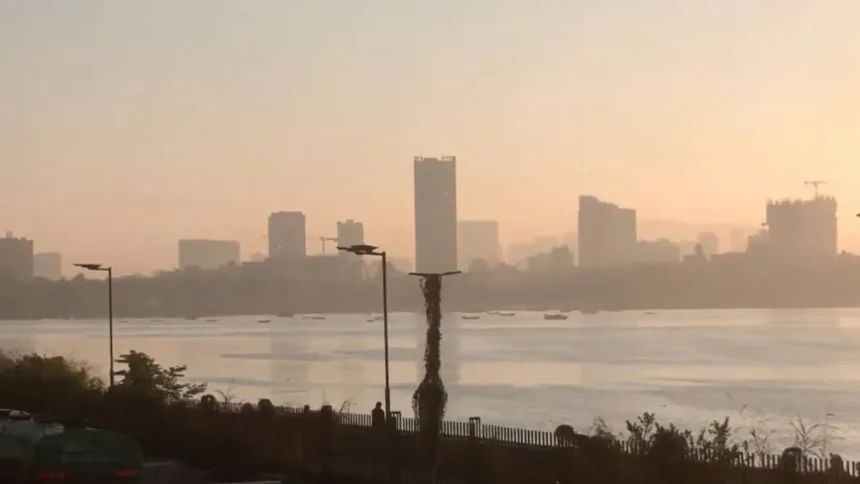
But the pleasant start to the day came with a reminder of the city’s continuing environmental challenges. A faint layer of haze hung over the skyline, hinting at pollution that refuses to loosen its grip.
Air Quality Still in the ‘Poor’ Category
AQI at 144 Despite Clear Skies
According to AQI.in, Mumbai recorded an Air Quality Index (AQI) of 144 in the early hours. This falls under the ‘poor’ category, a level that can cause discomfort, especially for children, the elderly and those with respiratory issues.
The air may have looked cleaner than in November, when pollution levels soared to worrying highs, but the numbers tell another story. Even with the improved weather, the pollution load remains strong enough to affect public health.
IMD Predicts a Pleasant Day Ahead
Temperature Between 15°C and 32°C
The India Meteorological Department (IMD) forecast a comfortable weather pattern for the rest of the day. Temperatures are expected to hover between 15°C and 32°C, offering a mix of mild mornings and warm afternoons — the kind of winter Mumbai usually enjoys.
Breezy conditions and clearer skies are likely to persist, making the city feel cooler than usual without the harsh cold seen in northern states.
Why Is Mumbai’s Pollution Still High?
Even though the weather feels like winter, the pollution levels remain stubbornly elevated. Pollution experts point towards one dominating factor: dust.
Construction Dust at the Heart of the Problem
Mumbai is currently in the middle of a massive infrastructure overhaul. The city is seeing construction simultaneously for:
- Metro rail corridors
- Coastal road project sections
- Bridges and flyovers
- Road-widening works
- Large-scale private construction
All these projects release enormous amounts of dust and fine particulate matter into the air. When light winds are not strong enough to disperse these particles, they settle over the city, causing hazy skies and pushing AQI levels into the poor zone.
Why the Situation Feels Worse Than It Looks
Even when the sky appears clear, pollutants such as PM2.5 and PM10 remain suspended at levels high enough to affect air quality. These microscopic particles are harmful because they penetrate deep into the lungs and can worsen asthma, allergies and chronic lung diseases.
What This Means for City Residents
Vulnerable Groups at Higher Risk
With AQI at 144, regular outdoor activities may not pose a major threat for most people, but sensitive groups should exercise caution. This includes:
- Senior citizens
- Young children
- Pregnant women
- Individuals with heart or lung conditions
Doctors recommend limiting strenuous outdoor activities on days with poor air quality and wearing masks during morning walks when pollution is typically higher.
Winter Can Make Pollution Feel Heavier
Mumbai doesn’t experience harsh winters, but even the slight dip in temperature can trap pollutants closer to the surface. This prevents them from dispersing easily, adding to the haze people notice during early mornings and late evenings.
A City Balancing Development and Clean Air
Mumbai’s rapid infrastructure growth is essential for its future — better transportation, faster connectivity and modern urban design. But with construction happening in almost every corner of the city, the environmental cost is becoming clearer each year.
The city now faces a double challenge:
- Deliver major public projects on time
- Prevent dust pollution from spiraling out of control
Authorities have been pushing contractors to control dust using sprinklers, barricades and anti-smog equipment, but enforcement remains inconsistent.
What Can Be Done?
Short-Term Measures
To curb pollution during peak winter months, experts suggest that the city should strengthen:
- Dust control monitoring at construction sites
- Fines for non-compliant contractors
- Increased green cover around high-traffic roads
- Use of mechanical sweepers on busy streets
Long-Term Solutions
For sustained improvement, Mumbai needs:
- Stricter urban planning
- Reduced private vehicle dependence
- Stronger public transport networks
- Year-round monitoring and pollution management
Only a combined effort from citizens, civic authorities and project developers can lower pollution levels without slowing development.
Winter Has Arrived, But Clean Air Hasn’t
Mumbai may finally be feeling winter in the air, but the fight for cleaner air is far from over. The cool breeze and blue skies offer comfort, yet the AQI numbers serve as a warning that even pleasant weather cannot mask persistent pollution.
As the city continues to build bigger and faster than ever, the challenge now is to ensure that development doesn’t come at the cost of public health.